What Is Sports Physical Therapy? How It Works & Who It Helps

Sports physical therapy is physical therapy built around the demands of sport and training. Instead of only calming the spot that hurts, a sports physical therapist looks at how you run, jump, land, lift, throw, or swing, finds the reason the injury happened, and rebuilds you until your body can handle your sport again.
If you are an athlete, a weekend warrior, or an active adult who keeps getting sidelined by the same problem, this guide explains what sports physical therapy is, how it differs from general physical therapy, what it treats, and what to expect when you start.
What Is Sports Physical Therapy?
Sports physical therapy is a type of physical therapy focused on athletes and active people. It covers three things:
- Treating sports injuries such as sprains, strains, tendon pain, and ligament injuries.
- Rehab after surgery, such as ACL reconstruction, all the way back to full activity.
- Preventing the next injury by correcting the movement problems, weak links, and training mistakes that caused the first one.
The goal is not just “less pain.” The goal is getting back to practice, games, races, rounds, or heavy training with the strength and control your sport asks for.
Sports Physical Therapy vs. Regular Physical Therapy
Both are delivered by licensed physical therapists, and the basic tools overlap. The difference is the finish line and how the plan gets there.
- The end goal. General physical therapy often ends when daily activities feel normal again. Sports physical therapy keeps going until you can handle running at speed, cutting, jumping, landing, throwing, or lifting.
- The assessment. A sports physical therapist looks beyond the painful area to the whole chain: hips, trunk, knees, ankles, and shoulders, and how they work together in your sport.
- The exercise progression. Rehab moves from calming symptoms, to restoring motion, to rebuilding strength, and finally to sport-specific drills at real speed.
- The return-to-sport decision. It is based on testing and how you perform, not on the calendar or on how the injury feels at rest.
Who Sports Physical Therapy Helps
You do not have to be a professional athlete. Sports physical therapy helps:
- Youth and high school athletes who need a safe, age-appropriate plan for their sport and season.
- Adult and weekend athletes, including runners, lifters, CrossFitters, and rec-league players.
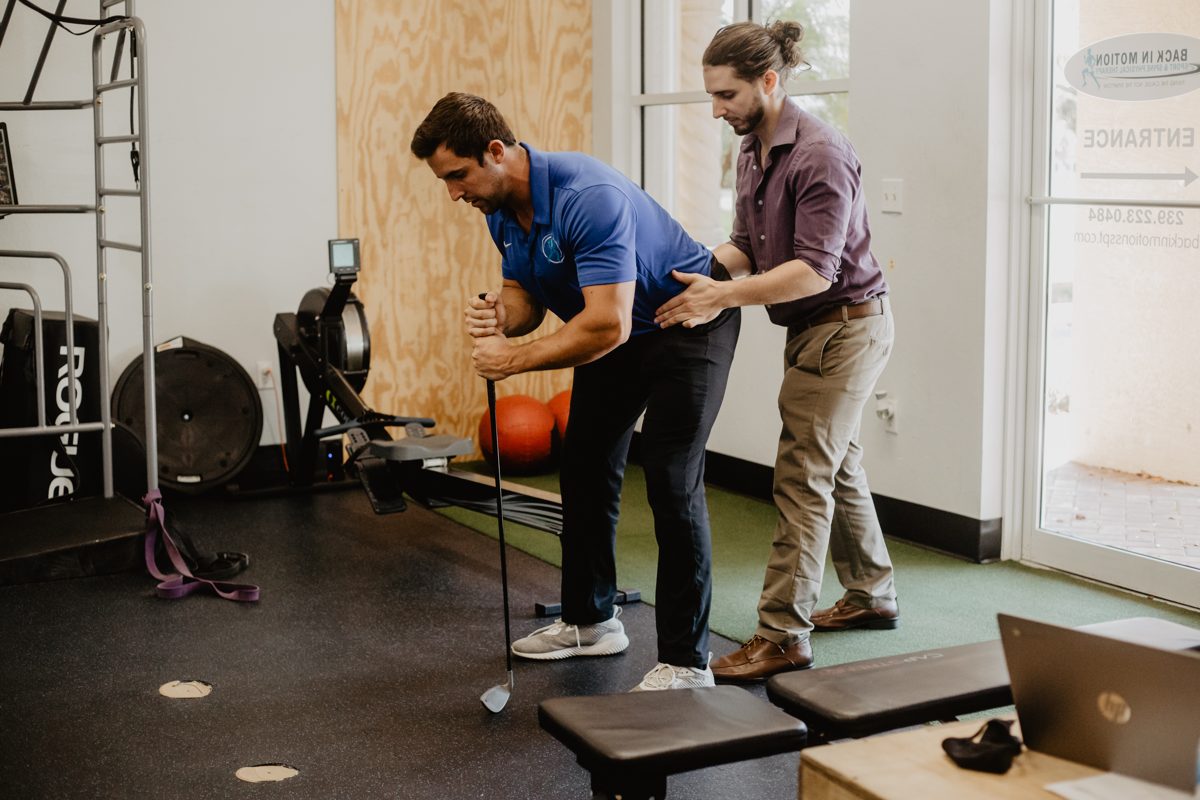
- Active adults 50+, including golfers and pickleball and tennis players who want to keep playing for years.
- Anyone after surgery who wants to return to sport, not just walk normally.
Injuries and Conditions Sports Physical Therapists Treat
Common problems include:
- ACL tears and other knee ligament injuries, before and after surgery
- Ankle sprains and ankles that keep rolling (chronic ankle instability)
- Hamstring, groin, and hip flexor strains, including hamstring strains that keep coming back
- Shoulder and rotator cuff pain from throwing, swimming, tennis, and lifting
- Tendon pain such as Achilles, patellar tendon, and tennis or golfer’s elbow
- Runner’s knee, shin splints, IT band pain, and other running injuries
- Low back pain from lifting, swinging, or running
- Plantar fasciitis and other foot pain that limits training
What Happens at Your First Sports Physical Therapy Visit
A good first visit should leave you with answers, not just a sheet of exercises. Expect:
- A detailed history. How the injury happened, your sport, your training load, past injuries, and your goal.
- A movement assessment. How you squat, balance, land, rotate, or run, plus strength and range of motion on both sides.
- A clear explanation. What is injured, what is driving it, and what is safe to keep doing now.
- A plan. Treatment and exercises for the first phase, and what has to improve before you progress.
What Treatment Includes
- Hands-on care. Manual therapy such as joint mobilization, soft tissue work, myofascial release, and Active Release Technique to restore motion and calm irritated tissue.
- Dry needling when it fits the problem (how dry needling works).
- Movement correction. Fixing the patterns that overload a joint or tendon, such as a knee caving in on landing.
- Progressive strength work. Rebuilding the muscles, tendons, and ligaments so they can handle the load of your sport.
- Education. What to train, what to modify for now, and how to avoid flare-ups between visits.
Return-to-Sport Testing: How You Know You’re Ready
Feeling better and being ready are not the same thing. Before full practice or competition, a sports physical therapist tests what your sport will ask of your body. Depending on the injury, that can include:
- Strength testing that compares your injured side with your healthy side
- Hop and jump tests for knee, ankle, and lower-body injuries
- Movement quality: how you land, cut, squat, rotate, and slow down
- Sport-specific drills such as running, throwing, swinging, or court movement at real speed
Testing can’t remove every risk, but it replaces guessing with clear checkpoints. For a deeper look, read our guide to returning to sport after injury or our article on ACL return-to-sport testing.
Signs You Should See a Sports Physical Therapist
- It calms down with rest, then flares up as soon as you train.
- You need a long warm-up just to feel normal.
- You avoid certain movements so it doesn’t “light up.”
- You’ve hurt the same area more than once.
- You’ve been “cleared,” but you don’t feel 100%.
That isn’t recovery. That’s managing an injury, and the cause can usually be found and fixed. If you’re not sure what to look for in a clinic, read how to choose a sports physical therapist.
Frequently Asked Questions
Is sports physical therapy only for athletes?
No. It is for anyone who wants to get back to an activity they love, whether that’s a sport, the gym, running, golf, or pickleball.
Can sports physical therapy help me avoid surgery?
For many sprains, strains, and tendon problems, a structured rehab plan is the first step. Some injuries, such as many complete ACL tears in athletes, may still need surgery, and sports physical therapy then guides your recovery from before surgery all the way back to sport. Your physical therapist will tell you when a problem needs a surgeon’s opinion.
How long does sports physical therapy take?
It depends on the injury, how long you’ve had it, and what your sport demands. Your progress should be measured by testing and milestones, not a fixed number of visits.
Sports Physical Therapy at Back In Motion
Dr. Scott Gray founded Back In Motion after a college football injury ended his own athletic career. That experience led to The Gray Method™: find the root cause, fix it, and get you back to being you. Every visit is one-on-one with a Doctor of Physical Therapy, and rehab, strength, and sports performance training are under one roof, so you don’t stop at “out of pain.”
If you’re in Southwest Florida, see how our sports physical therapy in Fort Myers works, or start with our Fixing the Cause & Not Just the Symptoms Assessment, a one-on-one visit that finds why you got hurt and maps out a clear plan back to your sport.
Inquire About an Appointment →
Not ready to book yet? Get Dr. Gray’s free book on why pain keeps coming back and how to fix the cause.
About the Author: Dr. Scott Gray


Get Dr. Gray's Best-Selling Book, Free
Why pain keeps coming back, and how The Gray Method™ helps you fix it for good.
Send Me the Free BookOur Most-Read Articles
- 1Three Conditions That Mimic Sciatica PainBack
- 2The Great Plantar Fasciitis Debate: Why Boots & Cortisone Rarely Fix ItFoot
- 3Common Causes of Lower Back Pain: Herniated DiscBack
- 4The 3 Most Common Symptoms of Knee Meniscal TearsKnee
- 5What Is Hip Bursitis?Hip
- 6Pelvic Pain Explained: When It's Not a UTI but Feels Like OnePelvic
What Do You Need Help With?
- 🩺Back, neck & joint pain→
- 💪Fitness for adults 50+→
- 💙Pelvic health→
- ⚡Sports performance→
- ⛳Golf performance→
Talk to a Doctor of Physical Therapy
One-on-one care that finds the cause of your pain. Fort Myers, Cape Coral & Estero.
Inquire About an Appointment Or call (239) 223-0484