

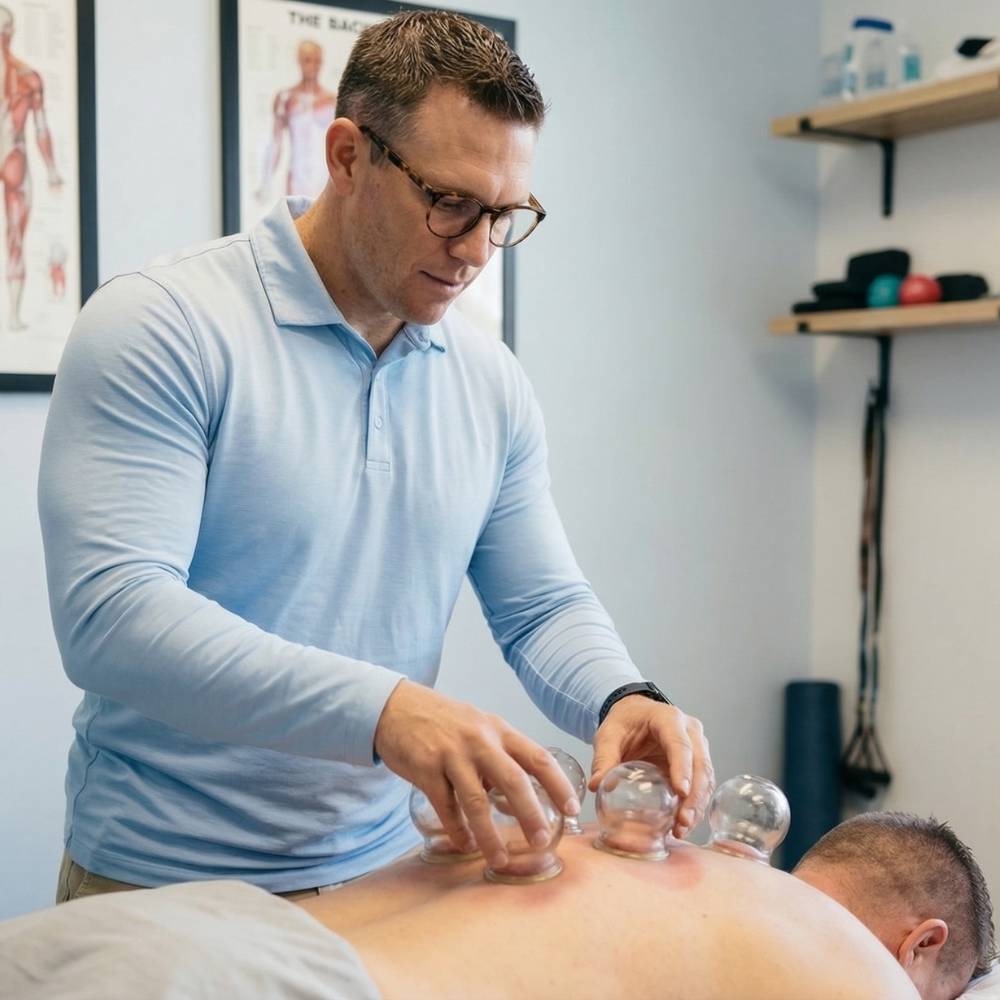
What Is Cupping — And Why Does It Help?
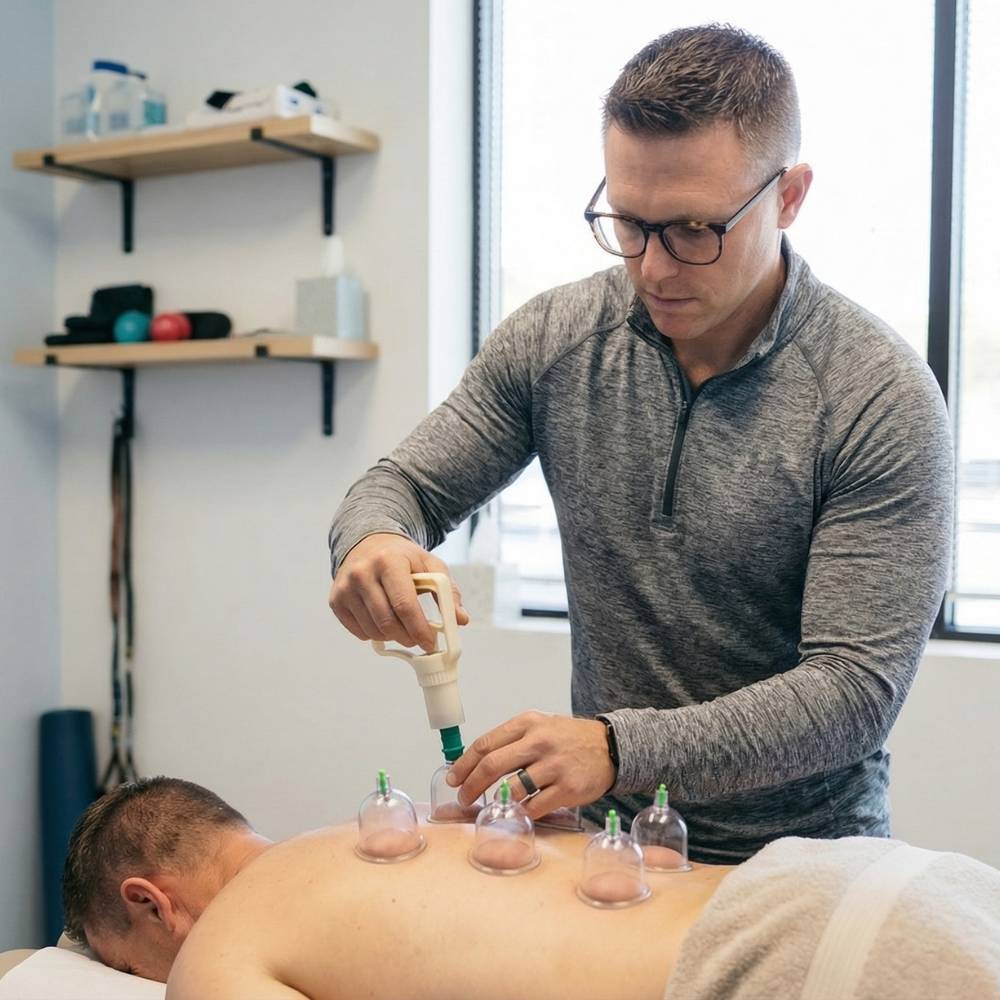
Cupping therapy is a specialized soft tissue treatment designed to decompress tight or restricted tissue.
Instead of pressing down into muscle like traditional massage, cupping gently lifts the tissue using suction. This creates space between layers of muscle and fascia, allowing:
- Improved blood flow
- Reduced tension
- Decreased sensitivity
- Better movement quality
At Back In Motion Physical Therapy & Performance, we don’t use cupping randomly.
We apply it strategically within The Gray Method™ — identifying why tissue is tight, overloaded, or compensating in the first place.
Cupping is not the solution by itself.
It’s a powerful tool when used as part of a structured plan.
Why Our Approach to Cupping Is Different
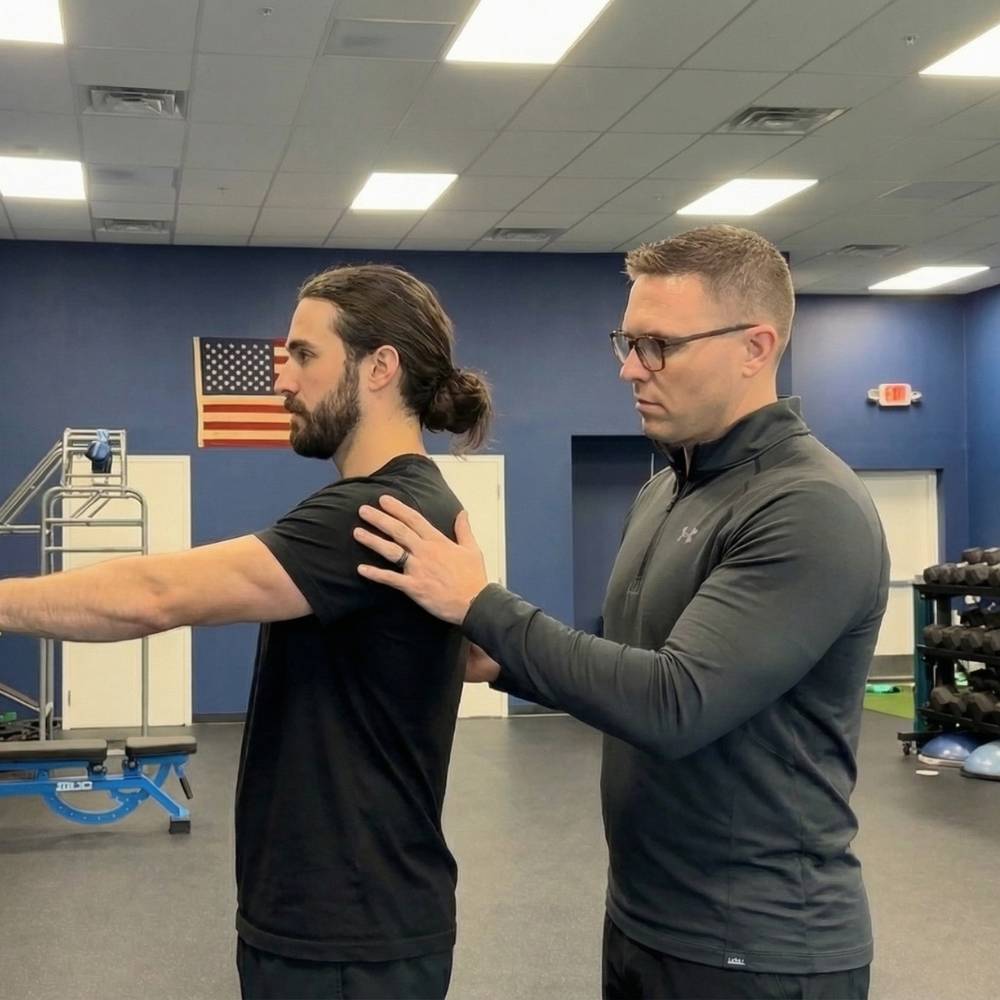
Many places offer cupping as a relaxation service. We use it as a precision-based therapeutic tool. Here’s how we do it differently:
We don’t just “leave cups on and hope.”
We treat with purpose.
Common Conditions We Use Cupping For
Cupping therapy may help if you’re dealing with:

At Back In Motion Physical Therapy & Performance, we commonly use Cupping Therapy for:
It’s especially helpful when tissue feels dense, stubborn, or resistant to traditional stretching.
How Cupping Fits Into The Gray Method™

We don’t rely on passive treatment alone.
Through The Gray Method™, we:
Cupping creates opportunity.
Corrective movement creates lasting change.
That’s the difference.
Why Choose Us?
Pain can be confusing, frustrating, and discouraging — especially when you’ve already tried rest, exercises, or physical therapy and nothing seems to stick. At Back In Motion Physical Therapy & Performance, we don’t just help you feel better temporarily — we help you understand why the pain is happening and what it will take to fix it.

Ready to Loosen What’s Been Holding You Back?
If chronic tightness, stiffness, or lingering pain is limiting your movement, cupping therapy may be a valuable part of your plan. At Back In Motion, we help patients in Fort Myers and Cape Coral reduce restriction, restore movement, and build lasting resilience — not temporary relief.

 Call (239) 788-0838