7 Reasons Why You Should Reconsider a Cortisone Injection
Your knee, shoulder or elbow has been hurting for weeks, and someone suggests a cortisone shot. It sounds like a quick fix, and for a while it often works. But many people end up back in the same chair a few months later, asking for another one.
Here are 7 reasons to reconsider a cortisone injection before you get one, when it can make sense, and what to try instead to fix the cause of your pain.
Although Cortisone May Get Rid of Your Pain Temporarily, Is It Worth It?
Cortisone injections, also called corticosteroid injections, are a common treatment for joint and tendon pain. They calm the immune response in the area, which reduces inflammation and pain.
That relief is real, but it is usually temporary, and the shot does nothing to change why the area got irritated in the first place. Weak muscles, stiff joints and the way you move are all still there when the shot wears off.
The 7 Reasons to Reconsider Cortisone
- Risk of infection: any injection can carry bacteria under the skin, and steroids dampen the local immune response. Infection is uncommon, but it can be serious when it happens.
- Cartilage damage: repeated injections may speed up cartilage loss. In a 2-year trial of people with knee osteoarthritis, shots every 3 months led to more cartilage loss than saline, with no better pain relief (McAlindon et al., 2017).
- Weakened tendons: cortisone can weaken tendon tissue and make it more prone to injury. A large review found the shots reduced tendon pain in the short term, but for tennis elbow, people did worse at 6 and 12 months than those who had no injection (Coombes et al., 2010).
- Skin thinning: the skin and fat at the injection site can thin or lighten, leaving it more prone to bruising.
- Weight gain: steroids can increase appetite and fluid retention, especially with frequent or repeated doses.
- High blood pressure and blood sugar: steroids can raise blood pressure and blood sugar for a few days after a shot. That matters most if you have diabetes, high blood pressure or heart disease.
- Mental health: some people notice mood swings, anxiety or trouble sleeping after steroids, because they affect the chemicals in the brain that control mood.
When a Cortisone Shot Can Make Sense
Cortisone isn’t always wrong. A shot can calm a badly inflamed joint enough for you to start moving and strengthening it. The key is using that window to fix the cause, not as the whole plan. If you get one, ask your doctor:
- What is causing my pain? And what will the shot do about that cause?
- How many shots are safe for this area? And how far apart?
- What should I do after the shot? So the problem doesn’t come back when it wears off
What to Try Instead: Fix the Cause
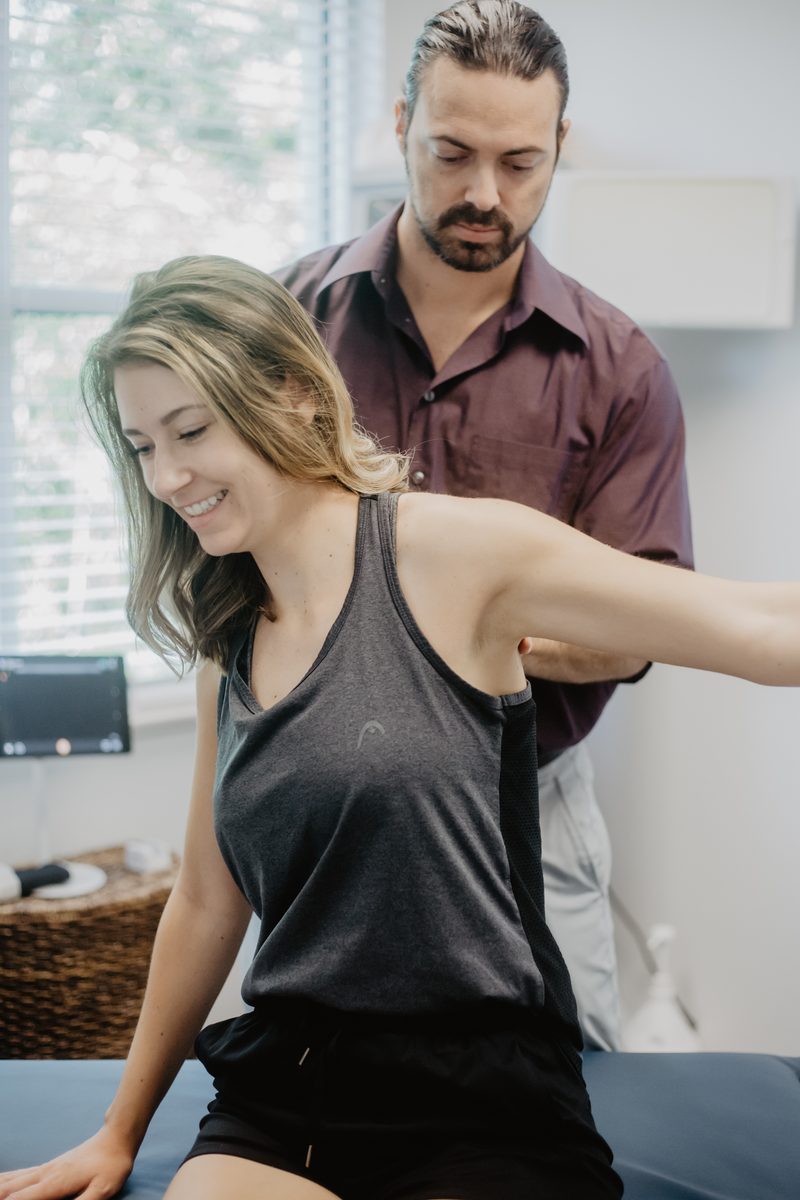
Most joint and tendon pain responds well to the right physical therapy. Instead of quieting the symptom, your plan targets why it hurts:
- Find the driver: a stiff hip behind knee pain, or a weak upper back behind shoulder pain
- Load the tissue the right way: tendons and joints get stronger with gradual, specific exercise
- Hands-on care: to ease stiff joints and tight tissue so you can move better
- Change the habits: how you lift, train, swing or sit, so the pain doesn’t return
Learn more in can physical therapy prevent surgery? and our guide to arthritis.
When to See a Doctor Right Away
- A hot, red, swollen joint: especially with a fever, or after any injection
- Sudden severe pain or a pop: or a joint that won’t take your weight
- Numbness, tingling or weakness: in an arm or leg
- Night pain or unexplained weight loss: along with your pain
Research
- McAlindon, T. E., et al. (2017). Effect of intra-articular triamcinolone vs saline on knee cartilage volume and pain in patients with knee osteoarthritis: a randomized clinical trial. JAMA, 317(19), 1967–1975. PubMed
- Coombes, B. K., Bisset, L., & Vicenzino, B. (2010). Efficacy and safety of corticosteroid injections and other injections for management of tendinopathy: a systematic review of randomised controlled trials. The Lancet, 376(9754), 1751–1767. PubMed
Get Back In Motion Without Cortisone or Drugs
Cortisone may have its place, but it should rarely be your first step. Our physical therapy in Fort Myers gets to the root cause of your pain with The Gray Method™, one-on-one with a Doctor of Physical Therapy at our clinics in Fort Myers, Cape Coral and Estero.
Start with our Fixing the Cause & Not Just the Symptoms Assessment, or Inquire About an Appointment →
Call our office at (239) 223-0484 to schedule your appointment.
About the Author: Dr. Scott Gray


Get Dr. Gray's Best-Selling Book, Free
Why pain keeps coming back, and how The Gray Method™ helps you fix it for good.
Send Me the Free BookOur Most-Read Articles
- 1Three Conditions That Mimic Sciatica PainBack
- 2The Great Plantar Fasciitis Debate: Why Boots & Cortisone Rarely Fix ItFoot
- 3Common Causes of Lower Back Pain: Herniated DiscBack
- 4The 3 Most Common Symptoms of Knee Meniscal TearsKnee
- 5What Is Hip Bursitis?Hip
- 6Pelvic Pain Explained: When It's Not a UTI but Feels Like OnePelvic
What Do You Need Help With?
- 🩺Back, neck & joint pain→
- 💪Fitness for adults 50+→
- 💙Pelvic health→
- ⚡Sports performance→
- ⛳Golf performance→
Talk to a Doctor of Physical Therapy
One-on-one care that finds the cause of your pain. Fort Myers, Cape Coral & Estero.
Inquire About an Appointment Or call (239) 223-0484