What Is the Rotator Cuff? Why It Matters for Your Shoulder
It aches when you reach for the top shelf, it pinches when you put on a jacket, and lately it bothers you when you lie on that side at night. When the shoulder starts to complain like this, the rotator cuff is very often involved. It is a small group of muscles, but it does a big job every time you lift, reach, throw or swing.
Here is what the rotator cuff is, what it does, the most common rotator cuff injuries, the warning signs to take seriously, and how physical therapy gets it working again.
What Is the Rotator Cuff?
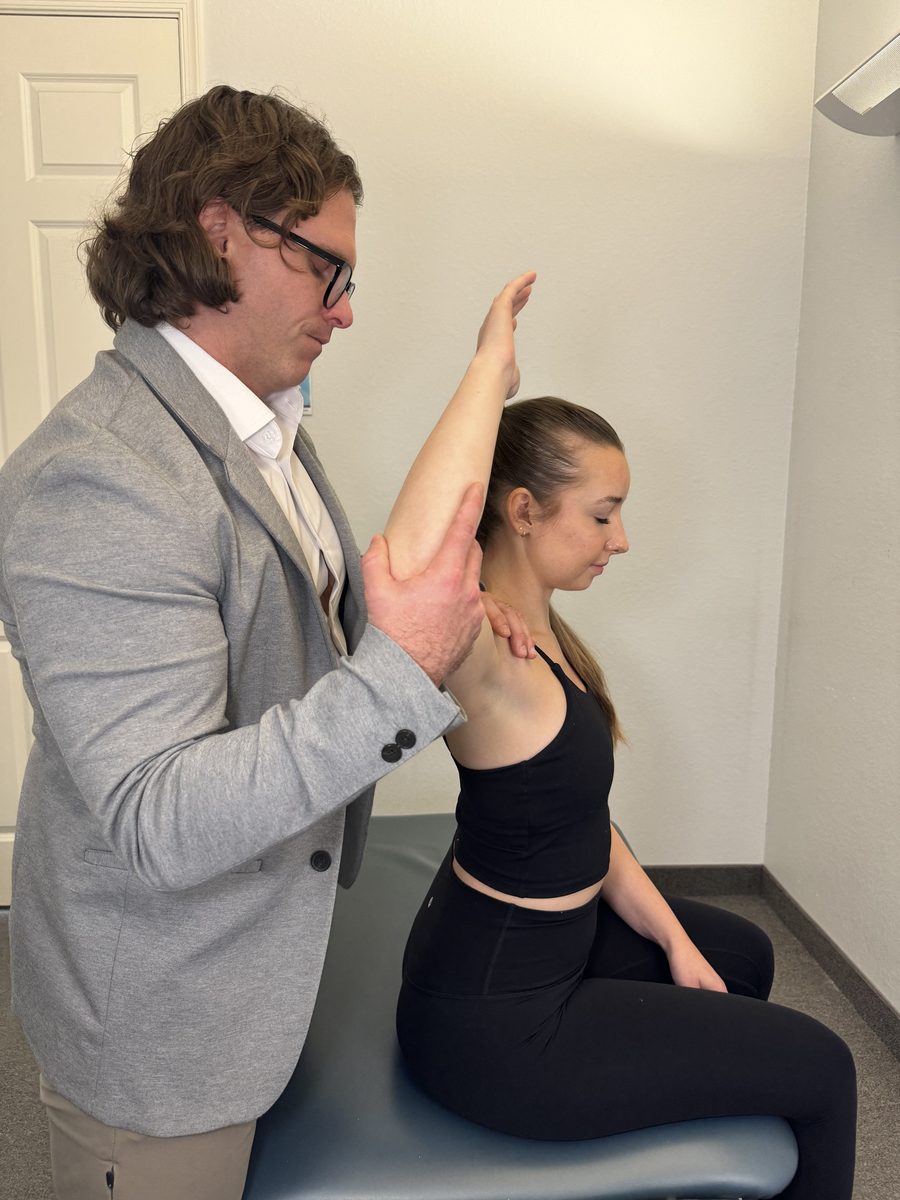
The rotator cuff isn’t one muscle. It is a group of four muscles and their tendons that connect your upper arm bone (the humerus) to your shoulder blade (the scapula). Together they form a “cuff” around the ball of the shoulder and keep it centered in its shallow socket.
- Supraspinatus: sits on top of the shoulder blade and helps lift your arm out to the side
- Infraspinatus: sits on the back of the shoulder blade and rotates your arm outward
- Teres minor: sits just below the infraspinatus and also helps rotate the arm outward
- Subscapularis: sits on the front of the shoulder blade and rotates your arm inward
What Does the Rotator Cuff Do?
The shoulder has more range of motion than any other joint in the body. That freedom is great for a golf swing or a tennis serve, but it also makes the shoulder easy to injure. The rotator cuff is what keeps all that motion under control.
- Stability: it keeps the ball of the shoulder centered in the socket and helps protect against dislocation
- Movement: it helps you lift, rotate and reach, from brushing your hair to hanging a picture
- Control: it constantly adjusts the arm’s position during daily tasks and sport
- Force: despite its size, it helps produce and absorb force when you throw, lift or swing a racquet or club
Common Rotator Cuff Injuries
The rotator cuff is most often irritated by repetitive use, a sudden overload, or gradual wear and tear with age. The most common problems we see are:
Rotator Cuff Tendinitis or Tendinopathy
The tendons become irritated, usually from overuse or repetitive overhead movement. It tends to hurt most when you lift or reach.
Rotator Cuff Tears
A tear can be partial or full-thickness. It can come from a fall or a sudden heavy lift, or it can develop slowly from tendon degeneration or long-standing tendinopathy.
Shoulder Impingement
The rotator cuff tendons get pinched in the space between the top of the shoulder blade (the acromion) and the ball of the shoulder, which causes pain and limits how high you can raise your arm. Our guide to shoulder impingement recovery covers it in detail.
Shoulder Bursitis
The bursa, a small fluid-filled sac that cushions the rotator cuff tendons, becomes inflamed and tender.
Frozen Shoulder (Adhesive Capsulitis)
Frozen shoulder isn’t a rotator cuff injury, but the stiffness it causes limits how well the rotator cuff can do its job.
Signs Your Rotator Cuff May Be Involved
- Pain when reaching: especially overhead, out to the side, or behind your back
- Night pain: aching when you lie on the affected side. If this is your main complaint, read why your shoulder hurts more at night.
- Weakness: the arm feels weak or tired when you lift or rotate it
- Clicking or catching: a crackling or catching feeling as you move the arm
When to Get Your Shoulder Checked Right Away
- After a fall or injury: sudden pain and you can’t lift your arm
- Visible change: the shoulder looks deformed or out of place
- Numbness or tingling: that runs down the arm into the hand
- Fever or a hot, swollen joint: or you feel unwell
- Chest pain or shortness of breath: with left shoulder or arm pain. Call 911.
How Physical Therapy Treats Rotator Cuff Problems
Rest, a sling, anti-inflammatory medication or an injection can calm a sore shoulder for a while. None of them answer the bigger question: why did the rotator cuff get overloaded in the first place? Surgery may be needed for some severe tears, but many rotator cuff problems improve with the right rehab plan.
At Back In Motion Physical Therapy & Performance, our rotator cuff treatment uses The Gray Method™, which looks at the whole chain, not just the sore spot. We check how your shoulder blade moves, how much your upper back rotates and extends, your posture, and how you lift, throw or swing. Then we build the plan around what we find:
- Hands-on treatment: to ease pain and restore joint and tissue mobility
- Progressive strengthening: for the rotator cuff and the muscles that control the shoulder blade
- Mobility work: for the upper back and shoulder where motion is limited
- Movement coaching: for the lifts, swings and daily tasks that keep irritating the shoulder
Our full guide to shoulder physical therapy in Fort Myers explains each of these treatments.
What You Can Do at Home
- Don’t stop moving completely: gentle, pain-free movement keeps the shoulder from stiffening. Avoid only the motions that clearly make it worse.
- Change how you sleep: sleep on the other side and hug a pillow so the sore arm is supported in front of you.
- Reach smarter: use a step stool for high shelves and keep heavy items close to your body when you lift.
- Sit tall: slumping rounds the upper back and shrinks the space the rotator cuff tendons need. Take breaks from the desk and the phone.
Get Your Shoulder Strong and Pain-Free Again
If your shoulder keeps aching when you reach, lift or sleep, our shoulder pain treatment in Fort Myers starts with The Gray Method™, one-on-one with a Doctor of Physical Therapy at our clinics in Fort Myers, Cape Coral and Estero. We find why your rotator cuff is overloaded and build the plan that fixes it.
Start with our Fixing the Cause & Not Just the Symptoms Assessment, or Inquire About an Appointment →
Call our office at (239) 223-0484 to schedule your appointment.
About the Author: Dr. Scott Gray


Get Dr. Gray's Best-Selling Book, Free
Why pain keeps coming back, and how The Gray Method™ helps you fix it for good.
Send Me the Free BookOur Most-Read Articles
- 1Three Conditions That Mimic Sciatica PainBack
- 2The Great Plantar Fasciitis Debate: Why Boots & Cortisone Rarely Fix ItFoot
- 3Common Causes of Lower Back Pain: Herniated DiscBack
- 4The 3 Most Common Symptoms of Knee Meniscal TearsKnee
- 5What Is Hip Bursitis?Hip
- 6Pelvic Pain Explained: When It's Not a UTI but Feels Like OnePelvic
What Do You Need Help With?
- 🩺Back, neck & joint pain→
- 💪Fitness for adults 50+→
- 💙Pelvic health→
- ⚡Sports performance→
- ⛳Golf performance→
Talk to a Doctor of Physical Therapy
One-on-one care that finds the cause of your pain. Fort Myers, Cape Coral & Estero.
Inquire About an Appointment Or call (239) 223-0484