
How to Restore Ankle Mobility and Move Better
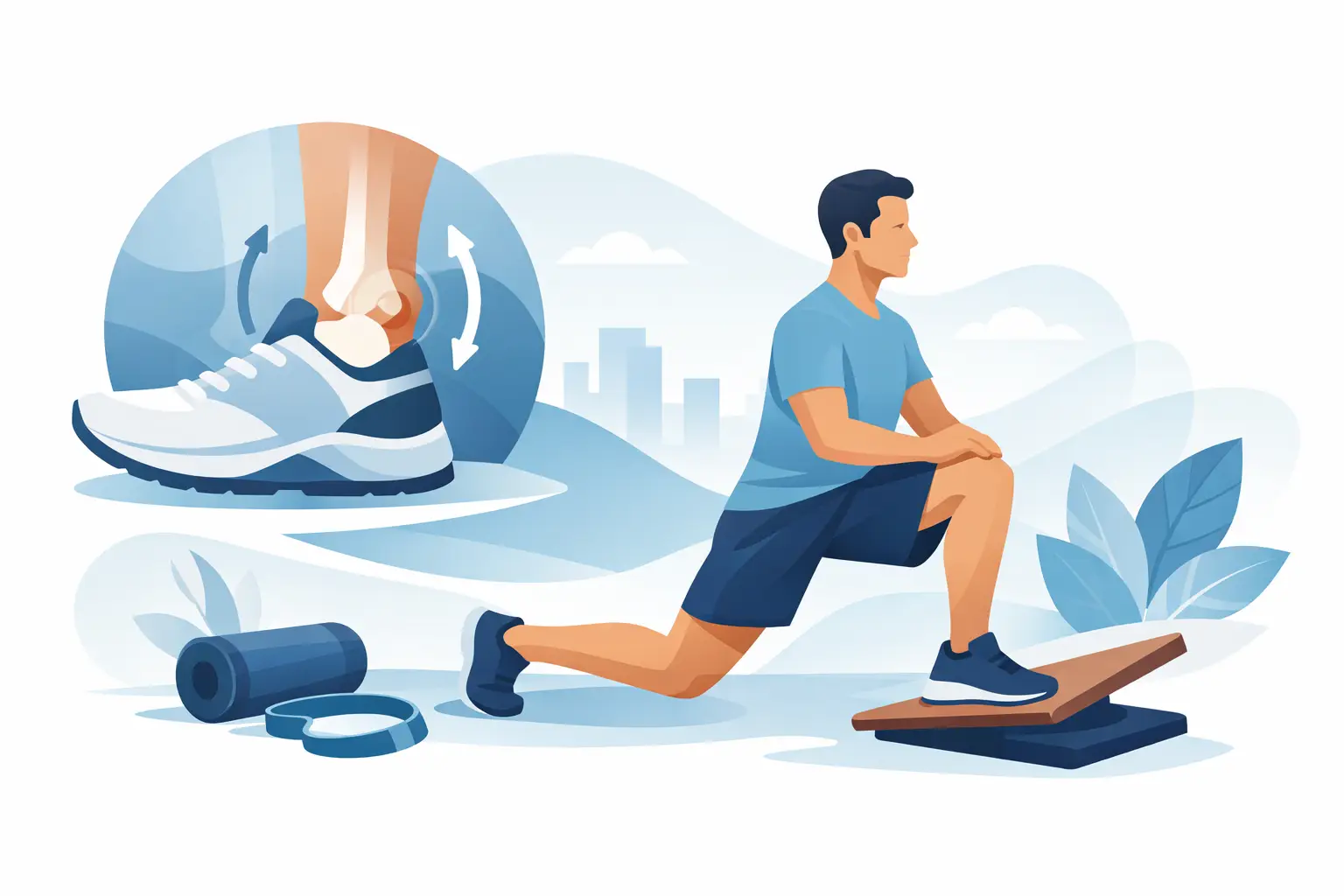
A stiff ankle can show up long before it becomes an ankle problem. You may notice your squat shifting to one side, your heel lifting during a lunge, knee pain on stairs, or less power when you run and jump. Knowing how to restore ankle mobility starts with identifying what is actually limiting the joint – not simply stretching harder.
For active adults and athletes, ankle motion affects far more than the foot. The ankle helps your knee track well, allows your hips to contribute during squats and landings, and lets you absorb force when you walk, cut, or run. When motion is restricted, the body finds another way around it. That compensation may work temporarily, but it often transfers stress to the knee, Achilles, plantar fascia, hip, or low back.
How to restore ankle mobility: find the true restriction
“Ankle mobility” usually refers to dorsiflexion – the ability to bring your shin forward over your foot while keeping the heel down. This motion matters in a deep squat, a step-down, a golf swing, and every stride when running uphill or descending stairs.
But limited dorsiflexion does not always mean the ankle joint itself is the only issue. A previous sprain can leave joint stiffness, swelling, or reduced control. Calf tightness can block motion from the back. The foot may be too rigid or too unstable to create a solid base. In other cases, pain causes the nervous system to guard the area, which makes an aggressive stretch the wrong first move.
A useful starting screen is a knee-to-wall test. Stand facing a wall with one foot flat on the floor. Keeping the heel down and the knee pointed generally over the second or third toe, drive the knee toward the wall. Move the foot back until you find the furthest distance where the knee can still touch without the heel lifting, the arch collapsing, or pain increasing.
Compare sides, but do not obsess over a perfect number. A difference from side to side, a sharp pinch at the front of the ankle, or a clear movement compensation tells you more than forcing an extra inch. If you cannot reach the wall without twisting your foot outward or your heel rising, you have found a movement limitation worth addressing.
Know when mobility work is not enough
Not every stiff ankle should be self-treated with drills. If you recently rolled the ankle, cannot bear weight normally, have significant swelling or bruising, feel instability or repeated giving way, or experience a sharp pinch that persists, get evaluated. These symptoms can reflect more than ordinary tightness.
The same applies if your ankle mobility has plateaued despite consistent work. A history of fracture, surgery, chronic ankle sprains, or Achilles pain changes the plan. The goal is not to chase range at any cost. It is to restore useful motion while protecting the tissues that need time, control, and progressive loading.
Improve the motion you can control
Once you know the movement is appropriate to train, use a combination of joint-focused mobility, calf length, foot control, and strength. Doing one stretch occasionally may feel good, but lasting change usually comes from repeated exposure followed by strength in the new range.
Start with a controlled knee-over-toe mobilization
Use the same knee-to-wall position as your screen. Keep the foot planted and slowly guide the knee forward over the middle toes. Pause briefly near your end range, then return to the start. The movement should feel like a stretch or mild joint pressure, not a sharp pinch.
Perform two to three sets of eight to 12 controlled repetitions. This is often more productive than bouncing or forcing the ankle forward. If the front of the ankle pinches, reduce the range and check whether your arch is collapsing or your knee is drifting inward.
Address the calf, but use both knee positions
The calf has two major contributors with different jobs. The gastrocnemius crosses the knee and is emphasized when the knee is straight. The soleus sits deeper and is emphasized when the knee is bent. Both can influence ankle motion, especially for runners, court athletes, and anyone who spends much of the day in stiff shoes.
Use a straight-knee calf stretch and a bent-knee calf stretch, holding each for 20 to 30 seconds with steady breathing. Two or three rounds can be enough. Do not crank through discomfort. A stretching sensation is expected; numbness, burning, or pain that lingers afterward is a signal to back off.
Build strength at end range
This is where many mobility plans stop too early. Your body needs confidence that it can load the range you gained. Slow calf raises are a practical way to build that confidence. Begin with both feet, rise fully, then lower under control for three seconds. Progress toward single-leg raises as tolerated.
Add a bent-knee version to bias the soleus, which is especially valuable for running, deceleration, and repeated jumping. If your heel cannot stay controlled or you feel tendon pain, reduce the range or volume rather than pushing through it.
Foot strength also matters. Practice maintaining a stable tripod through the heel, base of the big toe, and base of the little toe while standing, squatting, or performing a split squat. This does not mean gripping your toes. It means creating a stable platform that lets the ankle move without the foot collapsing.
Put ankle mobility into real movement
Mobility that only exists on the treatment table or against a wall will not automatically carry over to sport. The next step is using the range in patterns that matter to you.
For squatting and lifting, try a supported squat hold or a goblet squat with a controlled descent. Keep your whole foot connected to the ground and allow the knees to travel forward naturally when your goals and tolerance allow it. If one heel rises, temporarily elevate both heels while continuing to train ankle mobility and leg strength separately. This is a useful modification, not a permanent workaround.
For runners, begin with controlled step-downs, split squats, and calf raises before adding hills, speed work, or high-volume jumping. For tennis, basketball, or field sports, build from balance and single-leg control into small hops, then progress to more demanding lateral movement. The right progression depends on symptoms, your injury history, and the physical demands of your sport.
A common mistake is adding mobility drills while maintaining the same training load that irritated the ankle in the first place. If pain is rising during runs or your ankle feels worse the next morning, adjust volume, intensity, terrain, or footwear. Progress is not always linear, but the overall trend should be toward better motion, better control, and less reactivity.
A practical weekly approach
For a mild, non-painful restriction, perform knee-over-toe mobilizations and calf stretching most days. Add calf and foot strength two to three times per week. Then use the range in your regular strength sessions through squats, split squats, step-downs, or controlled single-leg work.
This sequence matters: create motion, own it with strength, then apply it to the activity you care about. Spending 10 focused minutes four or five days per week is usually more effective than one long session followed by several days of doing nothing.
At Back In Motion Physical Therapy & Performance, the assessment does not stop at whether an ankle feels tight. We look at how the ankle, foot, knee, hip, and training demands interact, then build a plan that progresses from restoring movement to handling real-world load. That distinction matters when recurring stiffness is keeping you from lifting, running, golfing, or playing your sport with confidence.
Your ankle does not need unlimited range. It needs enough usable range, strength, and control for the life and performance you expect from it. Train those qualities together, and each rep becomes a step toward movement that feels stable, powerful, and dependable.
About the Author: Dr. Scott Gray


 Call (239) 223-0484
