
A Guide to Tendon Pain Management That Works
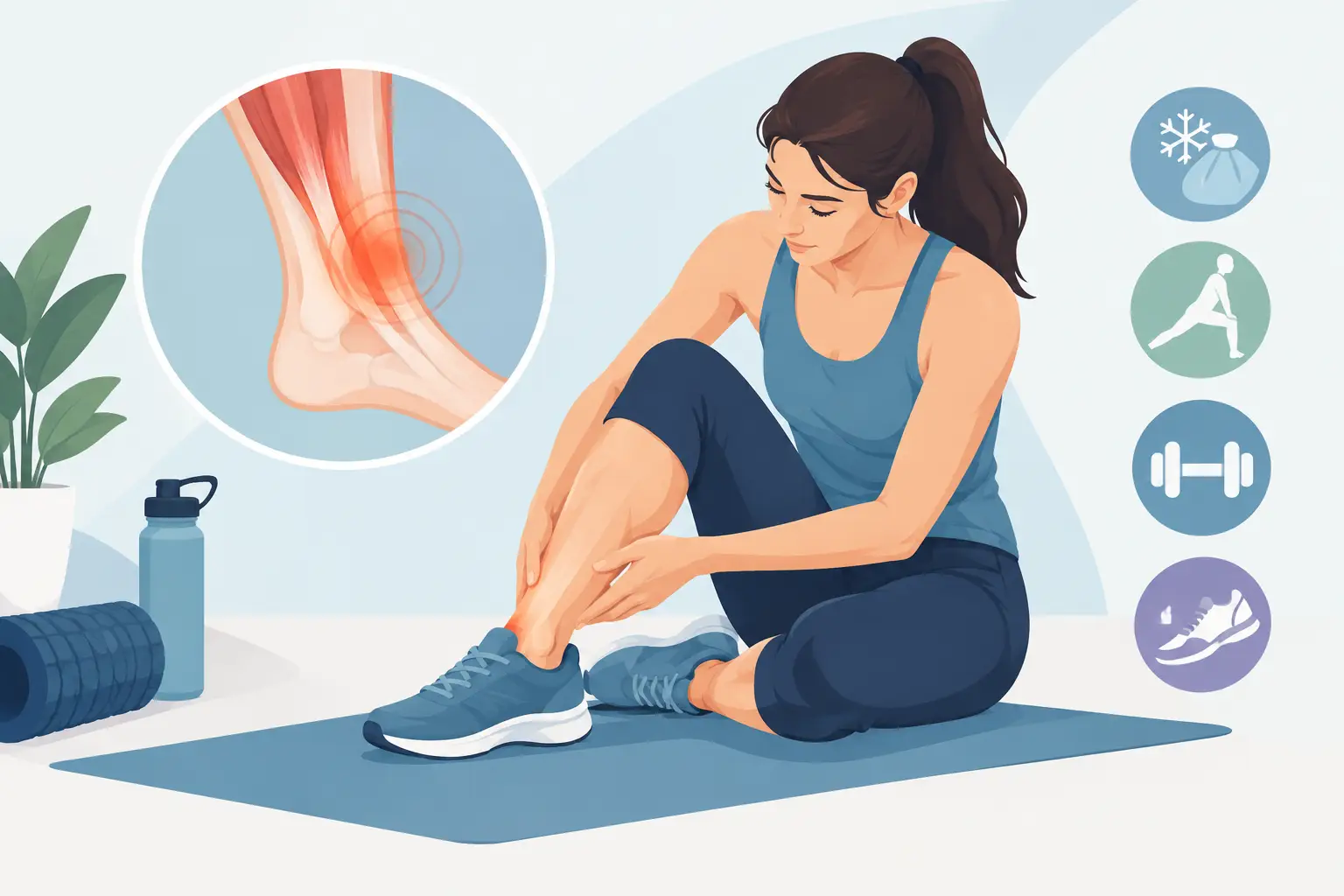
A tendon can feel fine during a workout, then make stairs, gripping a coffee mug, or pushing off for a tennis serve surprisingly difficult the next morning. That delayed, stubborn pattern is why a guide to tendon pain management needs to go beyond rest and stretching. The goal is not simply to quiet symptoms for a few days. It is to rebuild the tendon’s capacity so you can return to training, work, and sport with confidence.
Tendon pain is common in active adults and athletes because tendons transfer force every time you run, jump, lift, swing, throw, or change direction. Achilles, patellar, rotator cuff, gluteal, elbow, and wrist tendons can all become irritated when the demand placed on them exceeds what they can currently tolerate. The answer is rarely complete inactivity. More often, it is the right amount of the right loading, progressed at the right pace.
What Tendon Pain Is Trying to Tell You
Tendons connect muscle to bone. They are built to handle tension, but they adapt gradually. A sudden jump in mileage, a return to pickleball after time away, a new strength program, poor recovery, or repeated work demands can overload the tissue faster than it can adapt.
Pain does not always mean the tendon is torn or permanently damaged. In many cases, it signals that the tendon and the surrounding movement system need a better plan. You may notice stiffness when you first get out of bed, discomfort at the start of activity that improves as you warm up, or pain that builds later that day or the following morning. These patterns can help guide training decisions, but they should not be ignored.
The painful area is also not always the full story. An Achilles tendon may be taking on extra work because ankle mobility, calf strength, hip control, or running mechanics have changed. Elbow pain may persist because grip volume, shoulder strength, and lifting technique have not been addressed. Treating only the sore spot can leave the original overload pattern in place.
A Guide to Tendon Pain Management: Start With Load
The most useful first question is not, “What exercise fixes this?” It is, “What is this tendon being asked to tolerate every week?” Look at the recent changes in your routine: training frequency, intensity, new shoes, hills, court time, lifting volume, job demands, sleep, and recovery. Tendon pain often follows a spike in one or more of these areas.
You do not necessarily need to stop all activity. You may need to modify it temporarily. For a runner with Achilles pain, that could mean reducing hill repeats and sprint work while keeping easier running within a tolerable range. For a golfer with elbow pain, it may mean adjusting practice volume while building grip and forearm capacity. For a lifter with patellar tendon pain, it could mean changing squat depth, load, or weekly exposure rather than abandoning lower-body training altogether.
A practical pain-monitoring approach helps remove guesswork. Mild discomfort during exercise can be acceptable for some tendon conditions if it stays manageable, does not significantly worsen as the session continues, and returns to baseline by the next day. Sharp pain, limping, a major increase in symptoms, or pain that stays elevated for 24 hours or longer is a sign that the dose was too high. The correct threshold depends on the person, the tendon involved, and the stage of recovery, which is why individualized guidance matters.
Build Strength Before You Chase Intensity
Tendons respond to progressive loading. Passive treatments may reduce symptoms temporarily, but lasting improvement requires restoring the strength and control needed for your real-life demands. A runner needs more than a pain-free walk. A tennis player needs more than a pain-free forehand. Your program should prepare the tendon for the forces of running, cutting, jumping, serving, lifting, or a long day on your feet.
Early exercises may use controlled isometrics, where you create tension without much joint movement, to introduce load in a tolerable way. From there, slow resistance training can build strength through a larger range of motion. Later stages may include heavier lifting, faster movements, plyometrics, change-of-direction drills, or sport-specific practice.
The progression matters more than any single exercise. Loading too little for too long can leave the tendon underprepared. Loading aggressively because pain has improved for a few days can trigger another flare-up. Progress should be based on symptoms, strength, movement quality, and your ability to tolerate the demands that matter to you.
Do Not Treat Stretching as the Main Solution
Stretching can feel good when a muscle is tight, but it is not a complete tendon rehabilitation plan. In some cases, repeatedly stretching an already irritable tendon into a compressed or highly loaded position can aggravate symptoms. This is especially relevant with certain insertional tendon problems, such as pain at the back of the heel.
Mobility still has a role when a limitation is changing how you move or shifting stress to the tendon. The key is to identify whether mobility is truly part of the problem and pair any flexibility work with strength, control, and appropriate load management.
Correct the Movement Problem, Not Just the Painful Tissue
A tendon does not work in isolation. If your trunk, hip, knee, ankle, shoulder blade, or wrist cannot control force well, another structure often compensates. That compensation may be subtle enough that you do not notice it until pain begins limiting the activities you enjoy.
A thorough assessment should examine the tendon itself, but also strength deficits, joint mobility, balance, training history, technique, and the specific movements that reproduce symptoms. For example, knee tendon pain in a basketball player may require changes in landing mechanics and hip strength alongside progressive quadriceps loading. Shoulder tendon pain in a swimmer may require attention to thoracic mobility, scapular control, pulling volume, and stroke mechanics.
This is the difference between chasing temporary relief and building durable capacity. Back In Motion Physical Therapy & Performance uses The Gray Method™ to identify the movement limitations and load-management errors contributing to pain, then progress clients from rehabilitation into performance-focused training.
Recovery Habits Still Matter
Tendon adaptation happens between training sessions as well as during them. Poor sleep, inadequate nutrition, high stress, and inconsistent recovery can reduce your ability to tolerate a training increase. They may not be the sole cause of tendon pain, but they can make a manageable issue harder to settle.
Aim for consistent sleep, enough overall calories to support your activity level, and adequate protein across the day. Avoid making multiple major changes at once, such as increasing running volume while starting a new lifting plan and playing more weekend sports. If your schedule is demanding, a slower progression is not a setback. It is a smarter way to protect momentum.
When Tendon Pain Needs a Professional Evaluation
Some tendon pain responds well to simple activity modifications and progressive strengthening. Others need a more detailed assessment, particularly when symptoms have lasted several weeks, keep returning, or interfere with work, sleep, walking, or sport.
Seek prompt medical evaluation for a sudden pop, visible deformity, significant bruising or swelling, inability to bear weight or use the limb normally, numbness, fever, or severe pain after an injury. These signs may indicate a more serious condition than an overuse tendon problem.
You should also get help when you are stuck in the cycle of rest, temporary improvement, and flare-up. A physical therapist can determine whether the pain is actually coming from the tendon, identify what your current training plan is missing, and build a progression that matches your goals. For active adults in Fort Myers, that may mean returning to golf, running the bridges, training in the gym, or keeping up with your kids without constantly calculating your next painful step.
Tendon recovery is rarely about finding a magic exercise or waiting for the pain to disappear on its own. It is about giving your body a clear, measurable path from irritation to capacity. Start where you are, load with purpose, and let every phase of training prepare you for the next one.
About the Author: Dr. Scott Gray




 Call (239) 223-0484
