
Why Knee Pain Months After ACL Surgery Happens
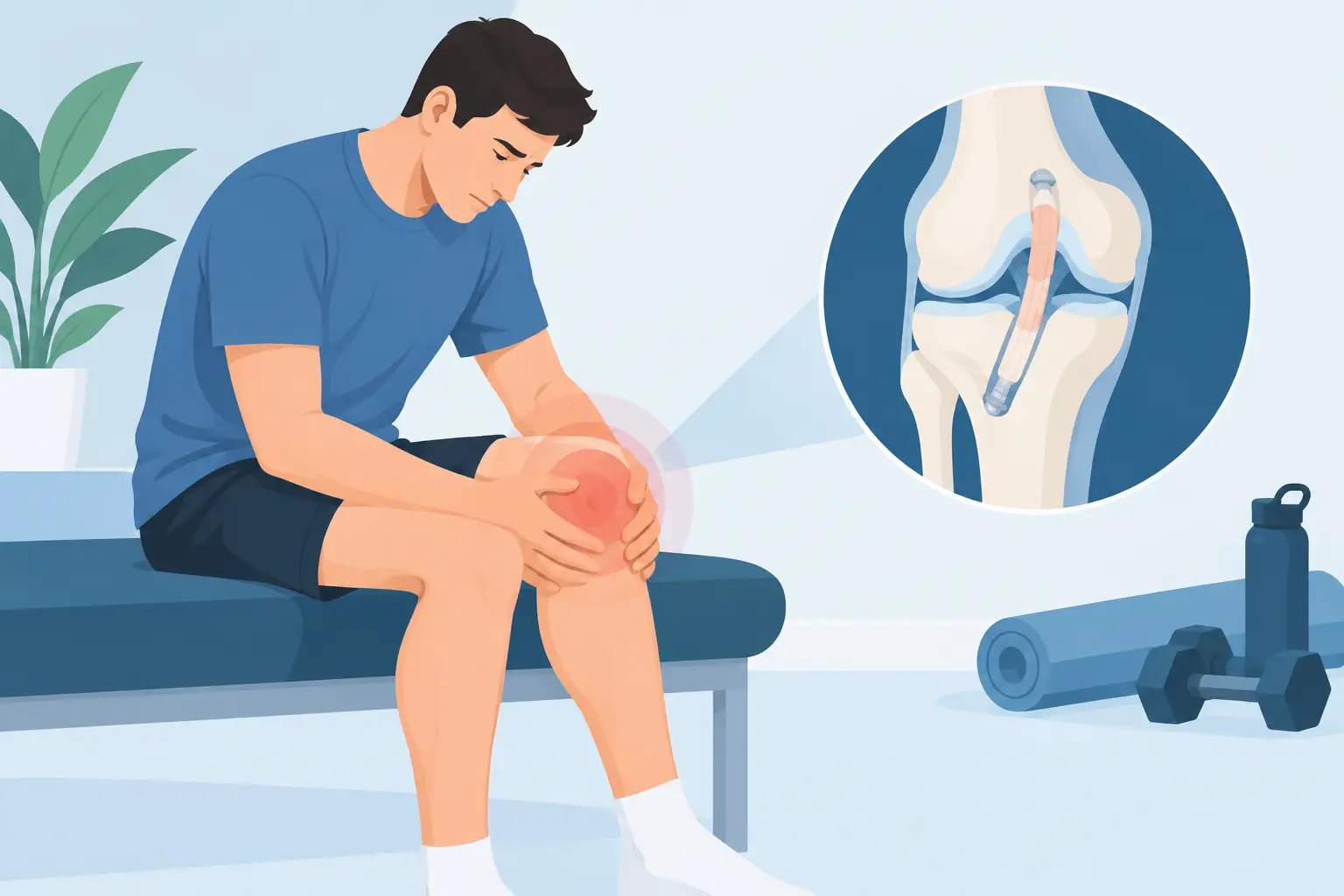
A return to jogging, squatting, or playing a casual game of tennis can feel like a major milestone after ACL reconstruction – until your knee starts hurting again. Knee pain months after ACL surgery is frustrating because it often arrives when you expect to be past the hard part. It does not automatically mean the graft failed or that surgery was unsuccessful. But it is a signal worth assessing, especially if pain is limiting your confidence, training, or normal daily activity.
The right question is not simply, “How do I make this hurt less?” It is, “What is this knee not yet prepared to do?” Recovery after ACL surgery is not just a timeline. It is a progression of motion, strength, coordination, and load tolerance. If one piece falls behind, the knee may protest when activity increases.
What Knee Pain Months After ACL Surgery Can Mean
Some discomfort during ACL rehabilitation is expected. Your knee has undergone significant trauma, and rebuilding capacity takes time. Mild soreness after a challenging therapy session, strength workout, or new running progression can be normal, particularly if it settles within 24 to 48 hours and does not create swelling, instability, or loss of motion.
Persistent or worsening pain is different. Pain that repeatedly shows up with stairs, squats, running, jumping, kneeling, or prolonged sitting usually reflects a mismatch between what the knee is being asked to do and what the surrounding tissues can currently tolerate.
The location, timing, and behavior of the pain matter. Pain in the front of the knee may be connected to the kneecap, patellar tendon, quadriceps weakness, or limited ankle and hip mechanics. Pain along the joint line can require closer evaluation, particularly if it comes with catching, locking, or swelling. Pain behind the knee may relate to stiffness, hamstring irritation, calf restrictions, or a response to increased loading.
A precise assessment should also look beyond the knee. The hip, ankle, trunk, and opposite leg all influence how force moves through the surgical side. Treating the painful spot without identifying the movement pattern that keeps overloading it often leads to a cycle of temporary relief and recurring pain.
Common Reasons Pain Lingers During ACL Recovery
Quadriceps weakness and poor force control
The quadriceps is often significantly weaker after ACL surgery, even when the leg looks strong and daily walking feels normal. This matters because the quad helps absorb force when you sit down, descend stairs, land from a jump, or decelerate while changing direction.
When the quad cannot do its job efficiently, the knee may shift stress to the patellar tendon, kneecap joint, hip, or other tissues. You may notice pain during step-downs, lunges, squats, or after running. Just as important, the issue is not always raw strength. A person may be able to leg press heavy weight but still lack controlled single-leg strength, endurance, or landing mechanics.
Loss of full knee motion
A knee that does not fully straighten can remain irritated long after surgery. Even a small extension deficit can change walking mechanics, reduce quadriceps activation, and make the front of the knee work harder. Limited bend can also make kneeling, deep squatting, cycling, and stair use uncomfortable.
Many people stop prioritizing range of motion once they can function reasonably well. That can be a mistake. Restoring and maintaining knee extension, flexion, and comfortable control through the available range remains essential throughout rehab.
Progressing activity faster than capacity
Your cardiovascular fitness can return faster than your knee’s ability to absorb impact. This is why someone may feel capable of running several miles, returning to pickleball, or participating in a demanding workout before the surgical leg is ready for the repeated forces involved.
Load errors are not always dramatic. Sometimes the problem is a sudden increase in steps, a vacation with more walking, a new strength class, back-to-back golf rounds, or adding sprint work too quickly. The knee does not care whether overload came from one intense workout or several smaller changes stacked together.
Patellofemoral pain or patellar tendon irritation
Pain at the front of the knee is common after ACL reconstruction, particularly with squatting, stairs, jumping, and running. The cause can vary based on surgical approach, tissue healing, quadriceps function, movement mechanics, and training volume.
If a patellar tendon graft was used, the tendon itself may remain sensitive as it recovers from graft harvest. If a hamstring or quadriceps tendon graft was used, front-of-knee symptoms can still develop when the quadriceps is weak or the kneecap is not moving well under load. The answer is rarely to avoid all knee bending. More often, it is to adjust the dose of loading and rebuild tolerance with the right exercise progression.
Movement compensations that were never corrected
A person can complete a standard rehab program and still favor one side during a squat, collapse inward at the knee during a single-leg task, rotate excessively through the pelvis, or land stiffly. These compensations can be subtle. They may not hurt at first, but they become more relevant when speed, fatigue, weight, or sport-specific demands increase.
This is where a return-to-performance approach matters. Being cleared for activity is not the same as being physically prepared for it. A runner needs different testing and progressions than a soccer player, tennis player, or recreational lifter. The plan should match the demands of the life or sport you are returning to.
When Pain Needs Prompt Medical Attention
Not every ache is an emergency, but certain symptoms should not be pushed through. Contact your surgeon or a qualified clinician promptly if you experience a new pop with swelling, repeated giving way, inability to fully bear weight, a sudden loss of motion, calf pain or unusual swelling, fever, redness, drainage, or pain that rapidly escalates.
Mechanical symptoms also deserve attention. Locking, catching that prevents motion, recurrent large swelling after activity, or a feeling that the knee is unstable may require a medical evaluation to rule out concerns involving the graft, meniscus, cartilage, or other structures.
Even without red flags, pain that persists for more than a couple of weeks despite reducing activity is a reason to get reassessed. Guessing your way through a plateau can cost valuable training time.
How to Respond Without Losing Your Progress
The goal is not to stop moving. Complete rest can reduce strength and make the knee less prepared for the next attempt. Instead, temporarily reduce the activity or range of motion that consistently provokes symptoms, then identify what the knee can tolerate while you rebuild capacity.
For example, if deep squats cause sharp front-of-knee pain, a shorter squat range, supported split squat, sled work, or controlled step-up may allow productive training without repeatedly flaring symptoms. If running causes swelling, the next step may be improving single-leg strength and impact control before adding another running day. The right modification depends on your examination, surgical history, and current goals.
A comprehensive assessment should measure knee motion, swelling, quadriceps and hamstring strength, single-leg control, balance, jumping or landing mechanics when appropriate, and how the hip and ankle contribute to the problem. It should also review your actual workload, not just your exercises. Your gym program, work demands, sleep, sport schedule, and recent changes all affect recovery.
At Back In Motion Physical Therapy & Performance, that means connecting the source of pain to a clear progression rather than handing you a generic sheet of exercises. The objective is to restore movement quality, build measurable strength, and prepare the knee for the specific demands ahead.
Returning to Training With More Confidence
Pain-free daily activity is a valuable milestone, but it is not the finish line for an active adult or athlete. Before returning to cutting, jumping, sprinting, heavy lifting, or high-volume sport, the surgical leg needs to demonstrate more than basic function. It needs strength, control, endurance, and the ability to manage force under fatigue.
That process takes patience, but it should not feel vague. A strong plan gives you clear benchmarks: better range of motion, improved side-to-side strength, cleaner single-leg mechanics, greater tolerance for impact, and less swelling or pain after training. Those markers turn recovery from a waiting game into a measurable process.
Your knee is not asking you to be cautious forever. It is asking you to build the capacity that lets you move decisively again. With the right assessment and progression, lingering pain can become useful information – a clear starting point for a stronger return.
About the Author: Dr. Scott Gray




 Call (239) 788-0838