
Can I Exercise With Sciatica? A Smarter Return
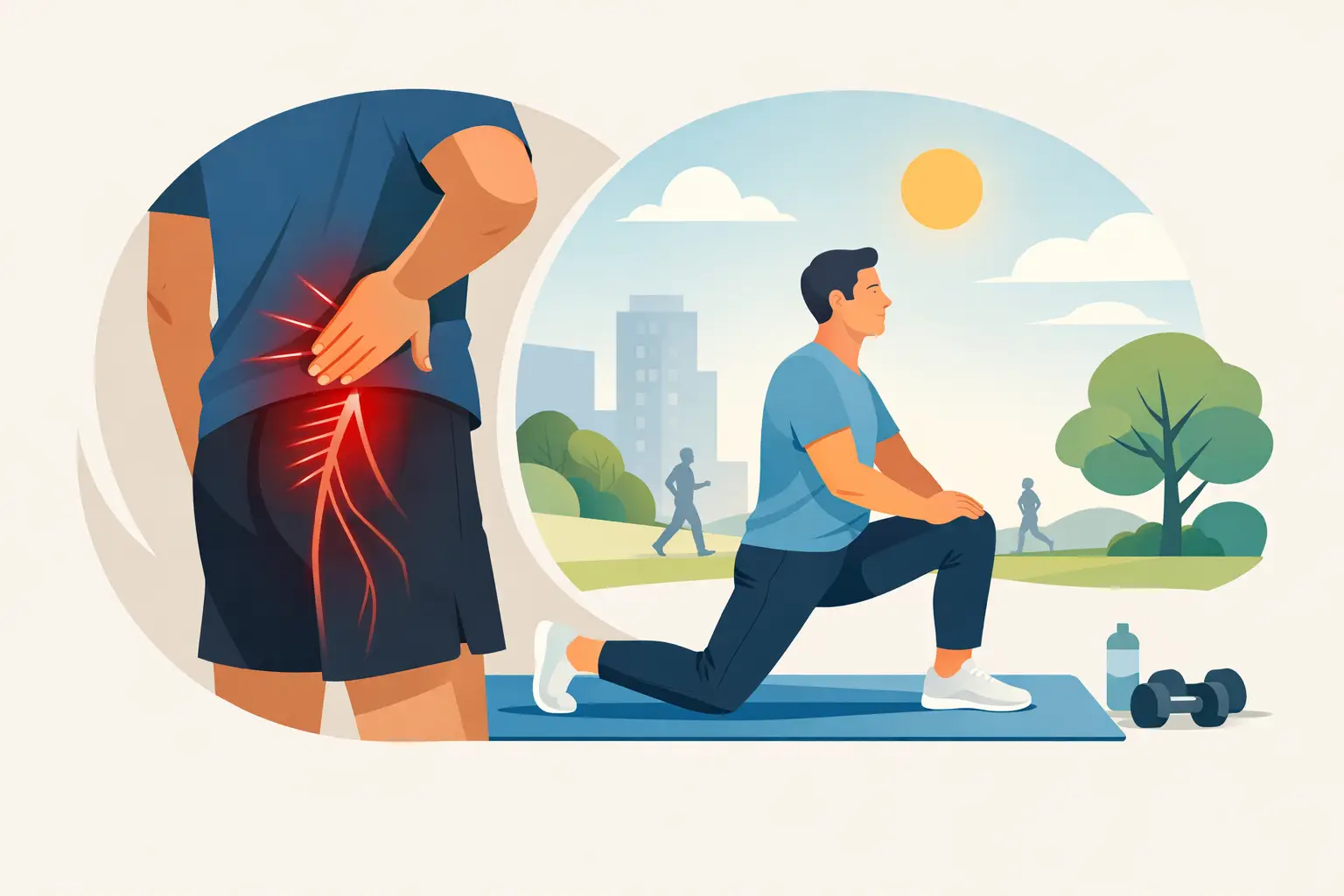
A sharp pull from your low back into your glute, hamstring, calf, or foot can make a normal workout feel like a risky decision. If you are asking, can I exercise with sciatica, the short answer is often yes – but the exercise, amount, and timing matter. The goal is not to push through nerve symptoms or shut down all activity. It is to find movement your body can tolerate, then build capacity with a clear progression.
Sciatica can interrupt everything from a morning run to a round of golf, lifting session, or simply getting in and out of the car. The right plan helps you stay active without repeatedly provoking the symptoms that are holding you back.
Can I Exercise With Sciatica? Start With the Right Question
Sciatica describes symptoms related to irritation or sensitivity along the sciatic nerve pathway. It is not a diagnosis by itself. Pain may originate from the lower back, a disc-related issue, joint irritation, muscle guarding, or other sources. That is why the same online exercise program can help one person and flare up another.
Before choosing exercises, ask: what movements make symptoms travel farther down the leg, what positions calm them, and what can you do now without a significant flare-up afterward? A useful exercise plan is based on your individual symptom behavior, strength, mobility, training history, and goals.
For example, one active adult may feel worse after prolonged sitting and bending forward but improve with walking and gentle backward movement. Another may be aggravated by standing, walking uphill, or extending the low back. These patterns require different starting points. The answer is not to avoid all flexion, extension, lifting, or running forever. It is to identify what your system can currently handle and restore tolerance over time.
When Exercise Is Not the First Step
Most sciatica does not mean you need complete bed rest. In fact, extended inactivity can increase stiffness, reduce confidence, and make a return to normal activity harder. Still, there are situations where you should seek urgent medical evaluation instead of testing exercises on your own.
Get immediate care for new bowel or bladder changes, numbness around the groin or inner thighs, rapidly worsening leg weakness, or symptoms after a significant trauma. Severe, unrelenting pain paired with fever, unexplained weight loss, a history of cancer, or feeling generally ill also deserves prompt medical attention.
Outside of those warning signs, a physical therapy assessment can clarify whether your pain pattern is likely to respond to movement, what positions to modify, and how to train without guessing. This is especially valuable if your symptoms are persistent, recurring, or limiting work, sleep, sport, or daily life.
The Symptom Rules That Keep Training Productive
Pain-free movement is ideal, but it is not the only measure of a productive session. Mild discomfort can sometimes be acceptable when it is predictable, temporary, and does not intensify nerve symptoms. The key is the response during and after activity.
A good sign is when symptoms stay closer to the low back or glute and become less intense. A less favorable sign is when pain, tingling, or numbness spreads farther down the leg, becomes sharper, or remains notably worse later that day or the next morning. That does not mean you have caused damage, but it does mean the dose was probably too high or the movement was not the right choice right now.
Use a simple approach: start with a level of activity that does not create a meaningful next-day flare-up. Change one variable at a time – duration, load, range of motion, speed, or frequency. This gives you useful feedback and prevents the common cycle of doing too much on a good day, then needing several days to recover.
Exercise Options That Often Help
Walking is often one of the best places to start because it promotes circulation, trunk and hip motion, and confidence with everyday movement. The right dose may be five minutes several times a day rather than one long walk. If walking increases leg symptoms, shorter bouts, flatter terrain, a slower pace, or a different starting exercise may be more appropriate.
Gentle movement for the hips and low back can also be useful, provided it matches your presentation. Some people respond well to repeated movements in a specific direction. Others need to reduce compressive positions, improve hip motion, or learn to control their trunk during daily tasks before they can tolerate larger ranges of motion. There is no universal “best stretch” for sciatica.
As symptoms settle, strength work becomes essential. Sciatica recovery is not complete simply because the pain is quieter. You need the capacity to lift groceries, rotate for tennis, hold posture at your desk, run, squat, or return to the gym without fearing the next flare-up. Foundational strength may include controlled hip hinges, bridges, squats to a comfortable depth, step-ups, carries, and trunk-control drills. The specific exercise matters less than clean execution, appropriate loading, and steady progression.
Nerve glides may help some people, but they should be treated as a gentle mobility input, not an aggressive stretch. Forcing a hamstring stretch into tingling or burning can make an irritable nerve more sensitive. A qualified clinician can show you how to use nerve mobility work without overdoing it.
What to Modify at the Gym
You do not necessarily have to abandon training because of sciatica. You may need to adjust it temporarily. Heavy deadlifts from the floor, deep loaded squats, high-impact intervals, or repeated twisting can be poor choices during an acute flare if they reproduce or spread symptoms. That does not make these exercises inherently harmful. It means they may exceed your current tolerance.
A smart modification keeps you training around the problem while addressing it. You might reduce range of motion, lower the load, slow the tempo, use a supported variation, or substitute a movement that trains the same pattern with less irritation. A runner may begin with walk-run intervals. A golfer may work on hip and trunk control before returning to full-volume swings. A lifter may use elevated pulls or split squats while rebuilding confidence with a hinge pattern.
This is the difference between generic rest and a real return-to-performance plan. You preserve what you can do while methodically improving what currently limits you.
Why Stretching Alone Usually Falls Short
Tightness is a common sensation with sciatica, particularly through the hamstring or calf. But the feeling of tightness does not always mean the tissue needs more stretching. Sometimes it is a protective response from a sensitive nervous system, reduced strength, altered movement control, or prolonged positioning.
Aggressive stretching can feel productive in the moment but leave you worse afterward. A better approach combines symptom-guided mobility with strength, movement retraining, and gradual exposure to the activities you want to return to. If sitting triggers symptoms, the answer may involve changing your setup and taking movement breaks, but it may also involve improving your ability to tolerate sitting over time rather than avoiding it indefinitely.
Build Back to the Activity That Matters
The end point of sciatica rehab should be more than getting through the day. It should be returning to the demands that matter to you with more control and less uncertainty. That requires an assessment that looks beyond the painful spot: how you move, where you compensate, how your hips and trunk share load, and what your sport or work actually asks of you.
At Back In Motion, The Gray Method™ uses that progression from identifying the movement limitation to correcting it, strengthening it, and preparing you for real-world performance. For active adults in Fort Myers, that may mean getting back to the gym, the course, the court, the trail, or simply moving through a busy day without guarding every step.
Start where your symptoms allow, make small measurable progressions, and let your response guide the plan. The right exercise should make your world bigger over time, not teach you to avoid the movements you care about.
About the Author: Dr. Scott Gray




 Call (239) 788-0838