
Manual Therapy Versus Exercise Therapy: What Works?
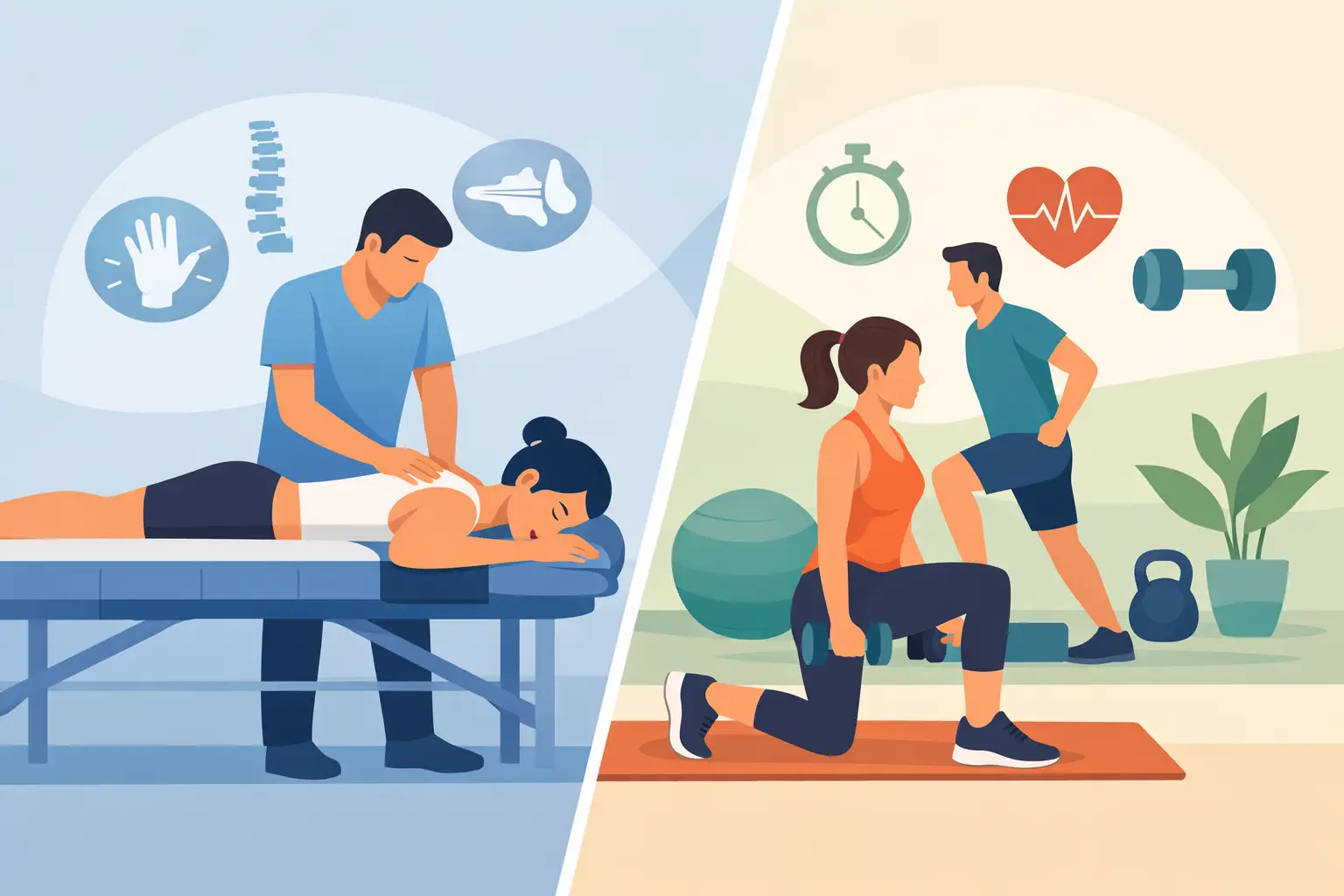
A stiff shoulder that will not reach overhead, back pain that returns after every golf round, or a knee that protests during a run creates the same question: what will actually fix this? In the conversation around manual therapy versus exercise therapy, the wrong answer is often presented as an either-or choice. The more useful question is which approach your body needs now – and what will help you keep moving well after the pain settles down.
Manual therapy can create an immediate change in pain, mobility, or muscle guarding. Exercise therapy develops the strength, control, and capacity needed to make that change stick. For active adults and athletes, the best plan is rarely passive care alone or a generic exercise sheet alone. It is a precise progression based on what is driving the problem.
What Manual Therapy Can Do
Manual therapy is hands-on treatment performed by a licensed physical therapist. Depending on the assessment, it may include joint mobilization, soft-tissue techniques, assisted stretching, trigger-point work, or other skilled techniques designed to improve motion and reduce symptoms.
The value of manual therapy is not that a therapist can “put something back in place.” Joints, muscles, nerves, and connective tissue are more complex than that. Its value is that it can change how an area feels and moves enough to create a better starting point for rehab.
For example, someone with a painful, limited shoulder may have difficulty reaching overhead because the joint is stiff, the surrounding muscles are guarded, or the movement is poorly coordinated. Hands-on treatment may improve range of motion and reduce discomfort during that visit. That can make it possible to begin pressing, pulling, reaching, or throwing with better mechanics.
Manual therapy is especially useful when pain is high, mobility is restricted, or a person cannot yet tolerate the exercises needed to restore function. It can also help a runner with a guarded hip, a golfer who cannot rotate comfortably, or a new parent experiencing pelvic or low-back discomfort move with less resistance.
But there is an important trade-off: feeling better after hands-on work does not automatically mean the underlying capacity problem is solved. If the body cannot control the newly available motion or tolerate the demands of sport, work, and training, symptoms often return.
What Exercise Therapy Builds
Exercise therapy uses purposeful movement to restore mobility, strength, balance, coordination, endurance, and confidence. It is not simply being told to stretch more or given a list of band exercises. Effective exercise therapy is selected, dosed, and progressed according to your current ability and your actual goals.
A program for a tennis player returning from elbow pain should not look the same as one for a retiree rebuilding balance after a fall, even if both include some of the same muscles. The needed loads, positions, speed, and progression are different.
Exercise therapy addresses the question that manual therapy alone cannot: can your body repeatedly perform the task that matters to you? That may mean lifting a grandchild without back pain, completing 18 holes, cutting on a soccer field, or returning to strength training without fear of reinjury.
The process usually starts with movements you can perform well and progresses toward the demands you want to meet. Early exercises may improve range of motion or help you regain awareness of a movement pattern. Later, they should build meaningful strength and load tolerance. For athletes, the final phase may include jumping, sprinting, rotational power, deceleration, or sport-specific drills.
Exercise is also where long-term independence is built. A skilled provider can guide the plan, but your body adapts through consistent, appropriately challenging movement.
Manual Therapy Versus Exercise Therapy: The Real Answer
If you are choosing between manual therapy versus exercise therapy, exercise therapy usually has the stronger role in long-term recovery. It builds the physical capacity that protects against recurring symptoms and supports a return to activity. Manual therapy can still be highly valuable when it helps you move better, train more comfortably, or break through a restriction that is limiting progress.
Think of manual therapy as a way to open a window of opportunity. Exercise therapy is how you use that opportunity.
There are situations where hands-on care may play a larger role at first. Acute pain, marked stiffness after surgery, a severe muscle spasm, or a flare-up that makes normal movement difficult may require symptom reduction before loading is tolerable. Even then, the goal should be to transition toward active movement as soon as appropriate.
There are also situations where exercise is the clear priority from the start. Chronic tendinopathy, recurrent low-back pain, poor single-leg control, deconditioning, and many overuse injuries usually respond best to a progressive loading plan. Passive treatment may provide short-term relief, but it cannot replace the adaptation that comes from building strength and tolerance.
Why Generic Rehab Often Falls Short
Many people have experienced treatment that feels disconnected: a few minutes of heat or massage, a standard exercise handout, and no clear explanation of why the injury happened. Others have been told to rest until pain disappears, only to have it return as soon as they resume normal activity.
The problem is not manual therapy or exercise itself. The problem is using either one without a complete assessment and a progression plan.
Pain may show up at the knee while the biggest movement limitation is at the hip or ankle. Shoulder irritation may be influenced by thoracic mobility, training volume, grip strength, or poor control overhead. Pelvic floor symptoms may require more than isolated muscle contractions – breathing mechanics, hip strength, pressure management, and daily movement habits can all matter.
A root-cause-driven evaluation looks beyond the sore spot. It identifies what is limited, what is overloaded, and what your body is currently able to tolerate. From there, treatment becomes more specific: hands-on care when it serves a purpose, followed by exercise that reinforces the gains and prepares you for real life.
A Better Rehab-to-Performance Progression
At Back In Motion Physical Therapy & Performance, the goal is not to keep you dependent on treatment. The goal is to move you from pain and limitation toward confidence and capability. That requires more than chasing symptoms.
A strong progression begins by reducing the barriers that are keeping you from moving well. That may include manual therapy, targeted mobility work, education about activity modification, or a temporary reduction in aggravating training volume. Next comes rebuilding control and strength in the positions that matter.
The final stage is where many rehab plans stop too early. Being able to perform a basic exercise in the clinic is not the same as being ready to run, lift, play tennis, or handle a demanding workday. Your program should eventually challenge you with the load, speed, range of motion, and fatigue levels your life requires.
That does not mean every person needs advanced athletic drills. It means the plan should match the person. For one client, success may be walking the Fort Myers riverfront comfortably. For another, it may be returning to a competitive race, a heavy deadlift, or a pain-free golf swing.
How to Know What You Need Right Now
If you have a painful restriction that is preventing you from starting exercise, manual therapy may help create a more comfortable path forward. If your pain keeps returning after temporary relief, you likely need a more intentional strength and movement progression. If you are recovering from surgery or a significant injury, you may need both, carefully timed around healing and your surgeon’s guidance.
The right treatment also depends on your history, medical considerations, training demands, sleep, stress, and recovery habits. There is no responsible one-size-fits-all answer. A thorough assessment should give you clarity on what is driving the issue, what needs attention first, and how progress will be measured.
The most productive rehab plan gives you a clear next step: move better today, get stronger over time, and return to the activities you care about with a body prepared to handle them.
About the Author: Dr. Scott Gray




 Call (239) 788-0838