
When Should I Stop Exercising? Signs to Respect
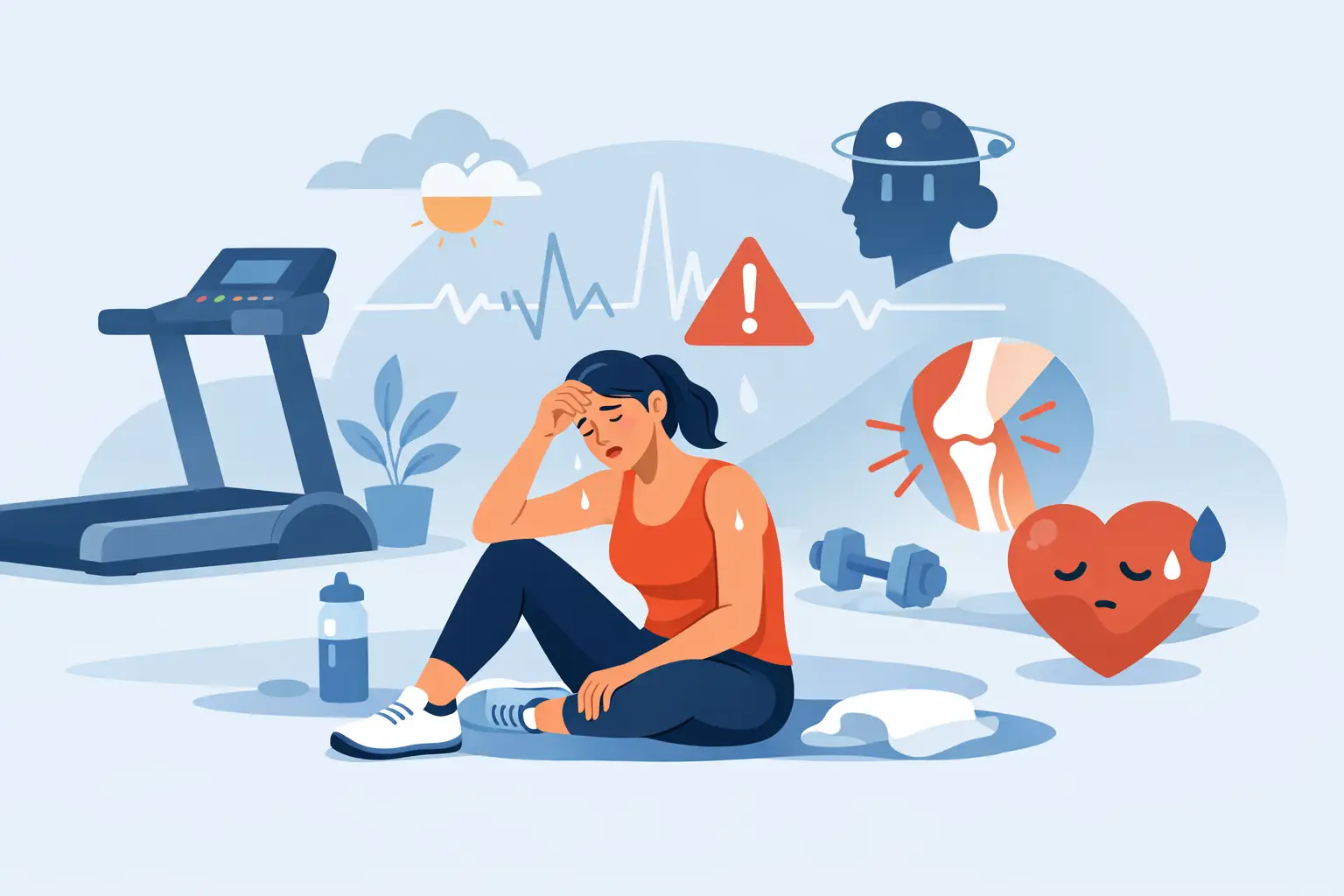
A hard workout can leave your lungs working, your legs heavy, and your muscles sore the next day. That is often part of training. But if you are asking, when should I stop exercising, you may be dealing with a signal that deserves more than the usual “push through it” advice.
The goal is not to become fearful of discomfort. Progress requires effort, and effort is not always comfortable. The skill is knowing the difference between normal training fatigue and symptoms that suggest your body needs immediate rest, medical attention, or a better plan.
When should I stop exercising immediately?
Stop exercising right away if you have chest pain, pressure, tightness, or discomfort that is new, severe, or spreading into your jaw, neck, back, shoulder, or arm. The same applies to sudden shortness of breath that feels out of proportion to the activity, fainting, severe dizziness, confusion, or a racing or irregular heartbeat that does not settle quickly with rest.
These symptoms are not a test of mental toughness. Sit or lie down in a safe position, tell someone nearby, and seek urgent medical care. If symptoms are severe, persistent, or accompanied by sweating, nausea, or a feeling that something is seriously wrong, call 911. Do not drive yourself.
You should also stop immediately for a sudden severe headache, new weakness or numbness on one side of the body, trouble speaking, vision changes, or loss of coordination. Those are medical red flags, not workout problems to troubleshoot between sets.
In Southwest Florida, heat adds another layer. Stop activity if you develop confusion, faintness, chills or goosebumps in the heat, severe headache, nausea, or unusually hot skin. Move to a cooler environment, begin cooling down, and get medical help when symptoms are significant or do not improve promptly. Hydration matters, but it does not make heat illness safe to train through.
Pain that means you should stop and reassess
Not all pain is an emergency, but sharp, sudden, or escalating pain is a clear reason to stop the exercise causing it. A muscle working hard may burn. A joint that pinches, catches, gives way, locks, or produces a sharp pain is giving you different information.
Stop and reassess if pain changes your movement. Limping through a run, shifting your weight off one leg during a squat, avoiding rotation in a golf swing, or holding your breath to get through a lift are compensations. They may help you finish the session, but they can move stress into another area and make the original problem harder to solve.
Swelling, bruising, deformity, a pop followed by loss of function, or an inability to bear weight are also reasons to stop. The appropriate next step depends on the injury, but continuing to “see if it loosens up” is rarely the right call when function drops suddenly.
Pain during exercise is not always a simple stop-or-go decision. Mild discomfort that stays low, does not worsen, and settles quickly may be manageable with a change in range of motion, load, speed, or exercise selection. That decision should be based on your injury history, goals, and movement quality, not a generic pain scale alone.
Normal soreness versus a warning sign
Delayed-onset muscle soreness usually appears 12 to 24 hours after a new or challenging workout, peaks over the next day or two, and gradually improves. It is typically felt in the muscles you trained and may make stairs, sitting, or lifting your arms feel temporarily difficult. That is different from pain that begins suddenly during one repetition or continues to intensify day after day.
A useful question is whether your symptoms behave predictably. Normal soreness tends to improve as you warm up and resolve over several days. A warning sign often feels sharp, unstable, localized to a joint or tendon, or worse with each session. If you are repeatedly modifying workouts around the same area, your body is asking for more than rest days.
Severe muscle pain with major swelling, unusual weakness, or dark, cola-colored urine requires prompt medical evaluation. While uncommon, these symptoms can be associated with serious muscle breakdown after extreme exertion.
Stop the workout, not necessarily all movement
Stopping a painful exercise does not automatically mean you need complete rest. In fact, total inactivity can leave some injuries feeling stiffer and more sensitive. The better question is: what movement can you do without aggravating the problem or reinforcing compensation?
For example, a runner with increasing Achilles pain may need to pause running temporarily while maintaining fitness with cycling, pool work, or strength training that does not worsen symptoms. A lifter with shoulder pain during overhead pressing may still be able to train lower body, carry loads, row with a controlled range, and rebuild shoulder capacity with a targeted progression.
This is where generic advice falls short. “Rest until it feels better” can be too vague, while “no pain, no gain” can be reckless. The right plan identifies what is irritated, what movement limitation or loading error contributed to it, and how to keep you active while restoring capacity.
Signs your training load is exceeding recovery
You do not need a dramatic injury to benefit from backing off. Sometimes the warning signs are quieter: performance is falling despite consistent effort, soreness lingers longer than usual, sleep is disrupted, motivation disappears, or your normal warm-up suddenly feels difficult.
One bad workout is not a crisis. A demanding work week, poor sleep, travel, illness, dehydration, or a hard prior session can all affect performance. The concern is a pattern that persists while you keep adding intensity, mileage, or weight.
Recovery is part of training, especially for active adults balancing careers, family, and sport. If you play tennis three nights a week, run on weekends, and lift whenever you can fit it in, your calendar may contain more high-intensity work than you realize. Your tissues do not distinguish between stress from training, poor sleep, and a demanding workday as neatly as your schedule does.
Instead of stopping all exercise, reduce one variable at a time. Lower the load, shorten the session, limit range of motion, reduce speed, or replace high-impact work with lower-impact conditioning. This preserves the training habit while giving your body a realistic chance to adapt.
When exercise symptoms need professional guidance
Schedule an evaluation if pain persists beyond a few days without meaningful improvement, returns every time you resume training, or forces you to change how you move. Recurring back pain during deadlifts, knee pain on stairs after runs, pelvic pressure with lifting, or shoulder pain during tennis are not simply problems to tolerate.
A precise assessment looks beyond the painful spot. The area that hurts may be overloaded because of restricted mobility elsewhere, poor force control, a recent spike in workload, or a strength deficit that only shows up under fatigue. This is the difference between repeatedly treating symptoms and building a durable return to activity.
At Back In Motion, the focus is not just getting you through today’s workout. The Gray Method™ evaluates the movement pattern, identifies the limitation driving overload, and progresses you from pain relief to strength, confidence, and performance. For an athlete, that may mean returning to sprinting or cutting. For an active adult, it may mean lifting, golfing, playing with your kids, or getting through a workday without guarding every movement.
A smarter rule for training through discomfort
Use this practical standard: discomfort that is mild, controlled, and stable may be trainable. Pain that is sharp, escalating, alters your form, creates swelling or instability, or lingers worse after training is a signal to stop and modify.
Then check what happens over the next 24 hours. If symptoms settle to baseline and function remains normal, your current dose may be appropriate. If pain increases later that day, disrupts sleep, or makes normal activities harder the next morning, the session exceeded your capacity. Adjust before repeating the same mistake.
The strongest athletes are not the ones who ignore every signal. They are the ones who recognize when to push, when to adapt, and when to get a clear answer. Respecting a warning sign early can protect far more than one workout – it can keep you moving toward the life and sport you want to maintain.
About the Author: Dr. Scott Gray




 Call (239) 788-0838