
Guide to Sports Injury Recovery That Works
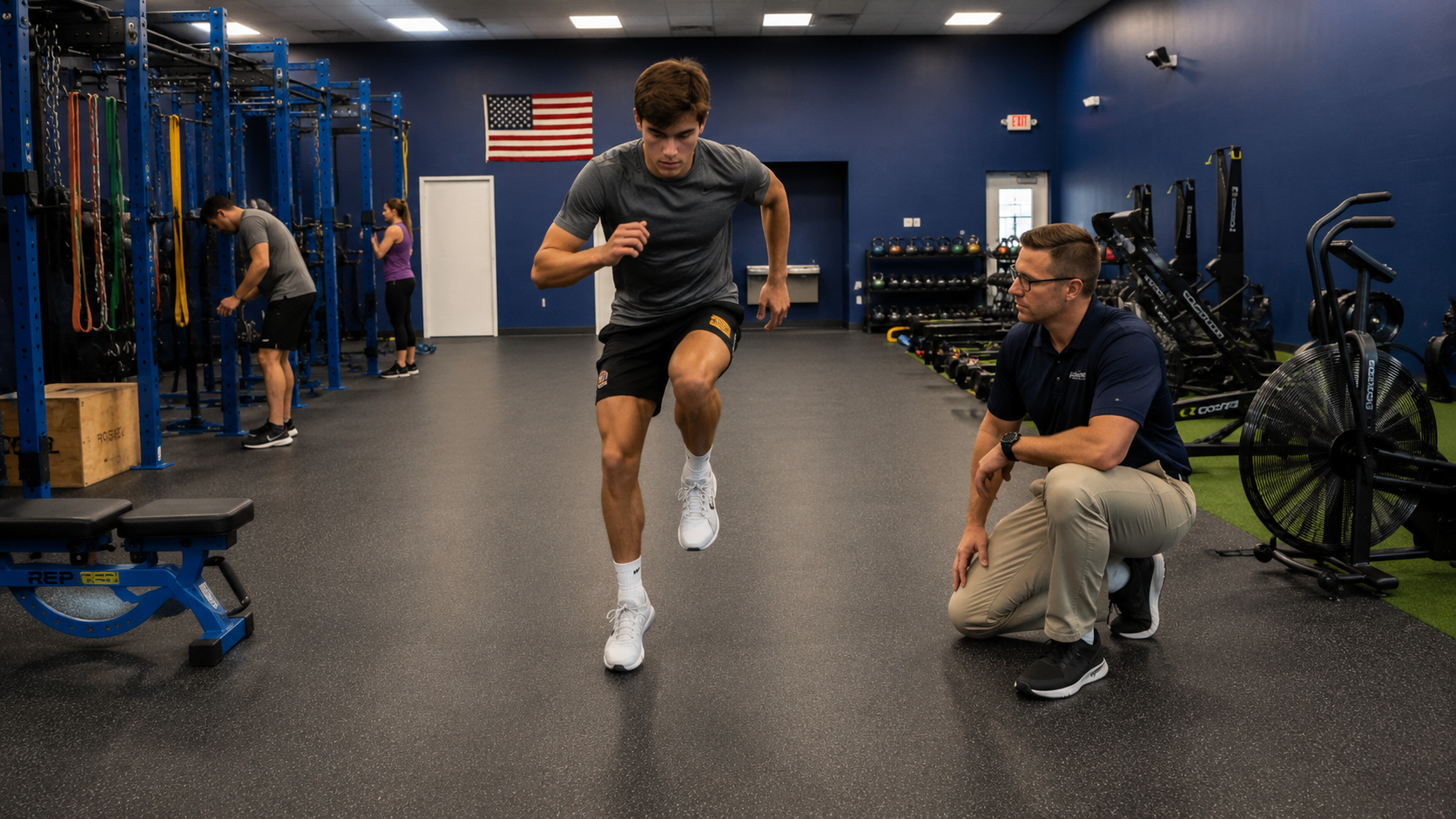
The frustrating part of an injury usually is not the pain. It is the uncertainty. One day you are running, lifting, playing tennis, or getting through a hard workout, and the next you are wondering whether rest is enough, whether training will make it worse, and how long it will take to feel normal again. A good guide to sports injury recovery should remove that guesswork. Recovery is not just about calming symptoms. It is about identifying what was overloaded, what was compensating, and what needs to change so you can return stronger and stay there.
Too many people get stuck in a cycle of brief rest, partial improvement, and quick relapse. That happens when rehab is treated like a waiting game instead of a progression. The body does heal, but tissues also respond to load, movement quality, sleep, stress, and training decisions. If you want a better outcome, your recovery plan has to account for all of it.
What sports injury recovery actually requires
Most injuries do not improve because of one magic exercise or one week off. They improve when the right stress is applied at the right time. Early on, that may mean reducing irritation and protecting the injured area. Soon after, it usually means restoring motion, rebuilding strength, and gradually returning to higher-speed or higher-impact tasks.
This is where people often lose time. If you do too little for too long, strength drops, coordination declines, and confidence erodes. If you do too much too early, symptoms spike and you end up back at the beginning. Good rehab lives between those two extremes.
It also helps to understand that pain and tissue healing are not the same thing. You can still feel stiff or guarded even when healing is moving in the right direction. On the other hand, you can have less pain without being ready for running, cutting, jumping, or heavy lifting. That is why symptom relief alone is not the finish line.
The 4 phases in this guide to sports injury recovery
Phase 1: Settle the injury without shutting everything down
The first goal is to calm the area enough that healing can start, but not to become completely inactive unless your provider tells you to. In many cases, smart movement is better than total rest. The exact plan depends on the injury, but the principle stays the same: reduce aggravating load, keep what you can moving, and protect the pattern that is irritated.
For a runner with Achilles pain, that might mean stopping speed work and hills while maintaining some low-irritation cardio. For a tennis player with shoulder pain, it might mean pausing overhead serving but keeping lower-body and trunk training in place. For a lifter with back pain, it may mean modifying depth, tempo, or loading instead of abandoning strength work altogether.
This phase should be active, not passive. Ice, heat, and manual therapy can be useful in certain situations, but they do not replace a plan. The real question is what movement can you tolerate, and how do you use that movement to support healing instead of delaying it?
Phase 2: Restore mobility and control
Once symptoms are less reactive, the next step is not jumping straight back into full training. You need enough mobility to move well and enough control to own that motion. This is where root causes start to show up.
Sometimes the painful area is the problem. Sometimes it is the area paying the price for a limitation somewhere else. A knee may be irritated because the hip is weak or the ankle is stiff. A shoulder may be overloaded because the thoracic spine does not move well or the scapula is not being controlled effectively. A hamstring strain may keep returning because the athlete never restored pelvic control or sprint mechanics.
This phase matters because compensation can feel surprisingly functional until speed or fatigue exposes it. If your body has been protecting an area for weeks, you need to retrain more than flexibility. You need positional control, balance, coordination, and confidence in movement.
Phase 3: Rebuild strength and tissue capacity
This is the phase many active adults want to rush, but it is also the one that protects your long-term result. Strength is not just for performance. It is one of the clearest ways to improve tissue capacity so that the same activity that triggered pain no longer exceeds what your body can handle.
Your program should match both the injury and the demands of your sport or activity. A golfer returning from back pain needs rotational strength and endurance. A basketball player recovering from an ankle injury needs force absorption, single-leg stability, and change-of-direction control. A runner coming back from a calf strain needs calf strength, elastic loading tolerance, and a realistic progression back to mileage.
This is where individualized care makes a major difference. Generic rehab often stops when pain drops. Effective rehab keeps going until the body can handle real life and real sport again. At Back In Motion, that rehab-to-performance bridge is what keeps people from getting stranded between “better” and truly ready.
Phase 4: Return to sport with objective progression
Getting back to activity is not one decision. It is a progression. The body should demonstrate readiness before you ask it to handle full practice, competitive intensity, or unrestricted lifting.
That may include testing range of motion, strength symmetry, impact tolerance, power, acceleration, deceleration, and sport-specific skills. It depends on the injury. A soccer player and a recreational pickleball player may both want to move without pain, but the physical demands and risk profile are not the same.
A return-to-sport plan should also respect exposure. You may be able to tolerate one hard session but not three in a row. You may feel good in a controlled setting and still need work before chaotic play or tournament volume. Progression works best when it is measured, not guessed.
Common mistakes that slow recovery
One of the biggest mistakes is waiting too long to get a proper assessment. If pain keeps returning, there is usually a reason. More stretching, more foam rolling, or more rest will not solve a problem that has never been clearly identified.
Another common issue is chasing symptoms only. If every treatment session is focused on temporary relief but no one is addressing load management, mechanics, strength deficits, or training errors, progress tends to stall.
People also underestimate how much deconditioning can happen during recovery. If your rehab never progresses beyond low-level activation work, you may feel okay walking around but still be far from ready for your sport. That gap is where re-injury often happens.
Then there is the mindset problem. Some athletes ignore pain signals and push through too early. Others become so cautious that they stop trusting the injured area altogether. Both can delay progress. Recovery requires clear checkpoints so you know when to push and when to hold.
How to know if your plan is working
A strong recovery plan should give you measurable signs of progress. Pain should become less reactive, not just temporarily numbed. Range of motion should improve where it needs to. Strength should build in ways that relate to your activity. Daily movement should feel more normal. Most importantly, you should be able to tolerate gradually increasing demands without a symptom spike that lingers for days.
Some soreness during rehab can be normal. A flare-up is not always failure. The key is response. If symptoms are mild, short-lived, and tied to an understandable increase in load, your plan may simply need adjustment. If every attempt to progress causes a major setback, you likely need a more precise assessment.
Why individualized rehab beats generic protocols
There is a place for general guidelines, but recovery is rarely one-size-fits-all. Two people can have the same diagnosis and need different plans because their movement history, sport, strength levels, and recovery timelines are different.
That is especially true for active adults who do not just want to be pain-free. They want to lift, run, compete, train, travel, and keep up with life without constantly modifying around pain. That requires more than a handout of basic exercises. It requires a system that evaluates the real driver of the problem, corrects it, and then builds the capacity to return to higher-level activity.
The best guide to sports injury recovery is not the one with the longest list of tips. It is the one that helps you answer the right questions. What is actually injured? What is contributing to it? What can you safely do now? What has to improve before you return to full activity? And how will you know when you are ready?
If you are dealing with an injury now, think less about how fast you can get back and more about how completely you can rebuild. When recovery is done with precision, you do not just return to activity. You return with better movement, better strength, and a lot more confidence in what your body can handle.
About the Author: Dr. Scott Gray




 Call (239) 223-0484
