
How to Train Pain Free and Keep Progressing
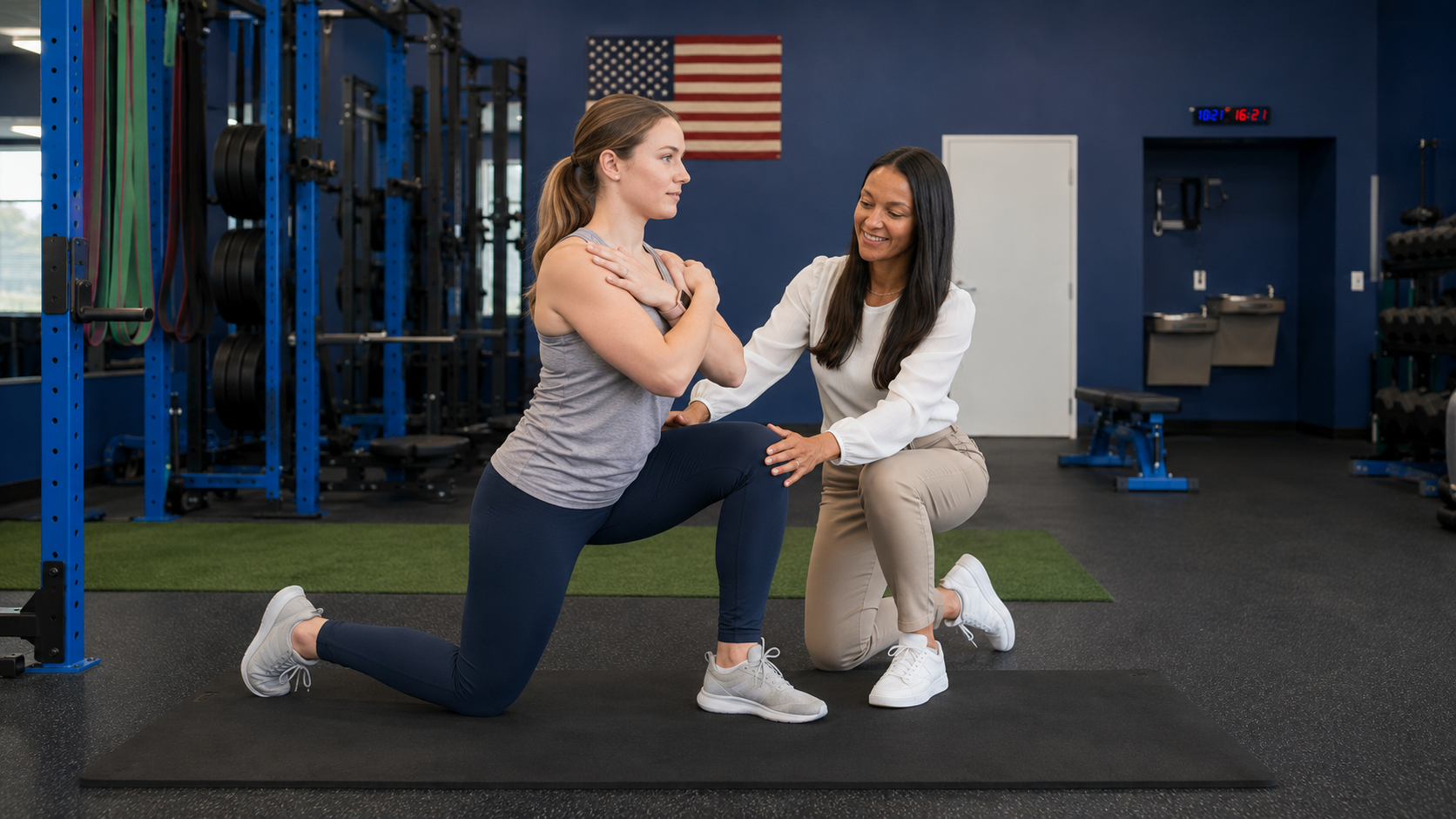
Pain during training usually does not start with one bad rep. More often, it builds from missed warning signs – a stiff hip you work around, a shoulder that only hurts after pressing, a knee that flares when volume climbs. If you want to know how to train pain free, the goal is not to avoid effort. The goal is to train with enough precision that your body adapts instead of breaking down.
That distinction matters. A lot of active adults and athletes think the answer is to stop lifting, stop running, or push through and hope it goes away. Neither option solves much. One leads to deconditioning, the other often turns a manageable issue into a longer recovery. Pain-free training sits in the middle. It means understanding what your body is tolerating, what it is compensating for, and how to build capacity without feeding the problem.
What pain free training actually means
Training pain free does not mean you never feel discomfort, fatigue, or challenge. Hard training should feel hard. Muscles burn. Breathing gets heavy. Recovery takes work. That is normal.
What is not normal is pain that consistently changes your movement, lingers long after the session, or gets worse week after week. If your back locks up every time you deadlift, or your shoulder pinches every pressing day, that is not just soreness. It is information.
The best approach is not to label every symptom as damage. Pain is more complex than that. Sometimes tissue is irritated. Sometimes the issue is poor load management. Sometimes your technique is fine, but your mobility, stability, or recovery is not supporting the demands you are placing on the body. The right answer depends on the person, which is why generic advice often falls short.
How to train pain free starts with the right assessment
If pain keeps returning, the first step is not another random stretch from social media. You need to identify the driver.
That means looking at more than the painful area. Knee pain can be influenced by ankle mobility and hip control. Shoulder pain can be tied to thoracic stiffness, rib position, cuff weakness, or training volume that outpaced your capacity. Pelvic or low back symptoms can be affected by breathing mechanics, pressure management, strength deficits, and movement habits under load.
A strong assessment asks clear questions. What movements trigger symptoms? At what intensity? During the session, after, or the next morning? Has training volume changed recently? Are you sleeping well? Have you lost range of motion, strength, or confidence in a pattern?
This is where a root-cause approach changes the game. Instead of chasing symptoms, you identify the movement limitation, strength gap, or programming error that keeps recreating the same pain response.
Load management is usually the first fix
Most training-related pain is not caused by exercise itself. It is caused by a mismatch between load and capacity.
Load includes more than weight on the bar. It is volume, intensity, speed, exercise selection, frequency, and total life stress. Capacity is what your body can currently handle and recover from. When load jumps too fast, pain often shows up before a true injury does.
This is why people get frustrated when an exercise feels fine for weeks and then suddenly hurts. The movement may not be the problem. The dosage may be.
If you want to keep training, adjust the variables instead of shutting everything down. Reduce range of motion temporarily. Lower volume. Change the tempo. Swap the implement. Use a variation that trains the same pattern with less irritation. A front squat may be better tolerated than a back squat. A landmine press may work better than a barbell overhead press. Trap bar deadlifts may calm down a cranky back better than pulling from the floor.
The key is to keep the body working while removing the aggravating layer. Complete rest is sometimes necessary, but less often than people think.
Respect pain, but do not surrender to it
One of the biggest mistakes in trying to train pain free is using pain as the only decision-maker. Some people ignore it completely. Others stop all activity the moment they feel anything. Both extremes create problems.
A better framework is to monitor response. Mild symptoms during training are not always a stop sign if they stay controlled, do not alter mechanics, and settle quickly after the session. On the other hand, sharp pain, instability, progressive worsening, or symptoms that linger for 24 to 48 hours deserve a change in plan.
Think in terms of response, not fear. Your body is giving feedback. Listen to it, adjust, and keep moving forward with intention.
Movement quality matters, but perfect form is not the goal
Technique matters because it affects efficiency, control, and how force is distributed. But chasing perfect form on every rep can become its own problem.
The real goal is repeatable, efficient movement that your body can own under the demands of training. If you cannot control your ribcage and pelvis under load, your low back may keep doing extra work. If your hip does not move well, your knee may absorb stress it was not meant to handle. If your shoulder blade does not upwardly rotate well, pressing overhead may keep irritating the same tissue.
This is where focused corrective work has value, but only if it connects to the training pattern. Mobility drills alone do not solve much if you never build strength in the new range. Activation work is not enough if you do not integrate it into real movement.
Good programming bridges the gap. Improve the restriction, reinforce the position, then load it progressively.
Strength is protective when built the right way
Many people in pain get stuck in a cycle of treatment without progression. They get temporary relief, but they never rebuild enough strength to become resilient.
Pain-free training is not just about reducing symptoms. It is about increasing your margin. Stronger tissues handle more. Better-conditioned athletes recover faster. More stable joints tolerate higher output. Capacity is one of the best forms of protection you can build.
That said, strength has to be earned through the right starting point. If an athlete cannot control single-leg loading, jumping and sprinting volume may need to wait. If a lifter loses position every time the bar gets heavy, max effort attempts may not be the next step. Regressions are not setbacks when they create a better path back to full performance.
For active adults, this often means rebuilding the basics with intention – squatting, hinging, pushing, pulling, carrying, rotating, and controlling impact. For athletes, it means layering sport-specific speed and power on top of a foundation that can support it.
Recovery is part of how to train pain free
You cannot out-program poor recovery forever. If your sleep is inconsistent, your stress is high, and your body never gets enough time or fuel to adapt, pain thresholds tend to drop and performance usually follows.
Recovery does not need to be complicated. It needs to be consistent. Sleep enough. Eat to support training. Hydrate. Respect rest days when your system is telling you it needs them. If you are adding rehab work on top of hard training, account for that total workload.
This is especially relevant for runners, golfers, tennis players, and busy adults who stack activity on top of already demanding weeks. A body that is under-recovered is often more reactive, less coordinated, and slower to calm down after irritation.
When pain is a signal to get expert help
If you have changed your training, improved warm-ups, and managed volume but the same pain keeps coming back, it is time for a more precise plan.
That is especially true if you are dealing with recurrent back pain, shoulder pain during lifting, running-related knee pain, pelvic floor symptoms during exercise, or a loss of strength and confidence after an injury. These problems rarely improve long term with guesswork.
A detailed movement and performance assessment can show whether the issue is mobility, motor control, tissue irritability, programming, or a combination of factors. From there, the right plan should do three things: reduce symptoms, restore clean movement, and progressively reload you back into meaningful training.
That progression is where a lot of people get let down. They receive treatment, but not a clear bridge back to lifting, running, or sport. At Back In Motion Physical Therapy & Performance, that rehab-to-performance model is the difference. The goal is not just to calm pain down. It is to help you return stronger and better prepared than before.
The standard to aim for
If you want to train pain free, stop asking whether you should push through or stop completely. Ask better questions. What is this pain responding to? What pattern is limited? What load is too high right now? What can I keep training while I fix the problem?
That mindset creates progress. It keeps you active, accountable, and focused on capacity instead of fear. Pain-free training is rarely about doing less forever. More often, it is about doing the right things in the right order so your body can trust the work again.
You do not need a generic plan or another temporary workaround. You need a strategy that matches how your body moves, what your goals demand, and what resilience actually requires.
About the Author: Dr. Scott Gray


Get Dr. Gray's Best-Selling Book, Free
Why pain keeps coming back, and how The Gray Method™ helps you fix it for good.
Send Me the Free BookOur Most-Read Articles
- 1Three Conditions That Mimic Sciatica PainBack
- 2The Great Plantar Fasciitis Debate: Why Boots & Cortisone Rarely Fix ItFoot
- 3Common Causes of Lower Back Pain: Herniated DiscBack
- 4The 3 Most Common Symptoms of Knee Meniscal TearsKnee
- 5What Is Hip Bursitis?Hip
- 6Pelvic Pain Explained: When It's Not a UTI but Feels Like OnePelvic
What Do You Need Help With?
- 🩺Back, neck & joint pain→
- 💪Fitness for adults 50+→
- 💙Pelvic health→
- ⚡Sports performance→
- ⛳Golf performance→
Talk to a Doctor of Physical Therapy
One-on-one care that finds the cause of your pain. Fort Myers, Cape Coral & Estero.
Inquire About an Appointment Or call (239) 223-0484
