
Your Guide to Shoulder Impingement Recovery
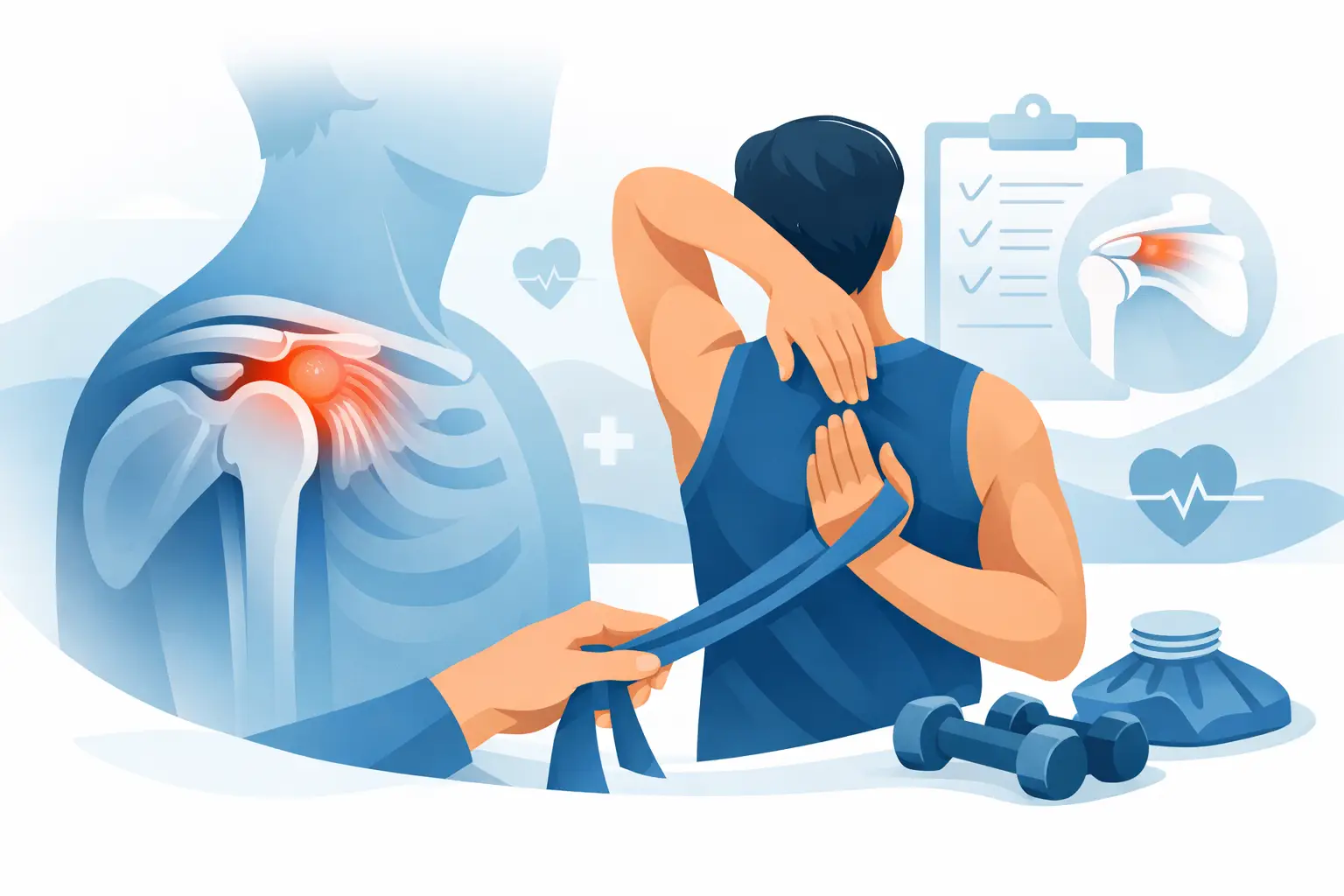
Shoulder pain that shows up when you reach into a cabinet, serve a tennis ball, press overhead, or sleep on your side can make even simple movement feel uncertain. This guide to shoulder impingement recovery gives you a clearer path forward: reduce the sensitivity, restore the motion and strength your shoulder needs, then rebuild confidence under real-world load.
The goal is not to avoid using your arm forever or chase a perfectly pain-free shoulder before you get stronger. The goal is to understand what your shoulder currently tolerates, address the movement and loading factors contributing to symptoms, and progress with purpose.
What “Shoulder Impingement” Usually Means
Shoulder impingement is a common term for pain felt around the front or outside of the shoulder, often during lifting, reaching, throwing, or overhead activity. Some people feel a sharp pinch during a specific portion of the lift. Others notice an ache afterward, weakness with pressing, or pain when lying on that side.
The label can be useful, but it does not explain the full problem. Your pain may involve the rotator cuff tendons, bursa, long head of the biceps tendon, joint stiffness, poor load tolerance, or a combination of these factors. The shape of the bones in your shoulder is only one piece of the picture. It does not automatically mean something is permanently trapped or damaged.
For active adults and athletes, the more productive question is: why has this shoulder become sensitive to the demands you place on it? A thoughtful assessment looks beyond the painful spot. It considers shoulder range of motion, rotator cuff strength, shoulder blade control, thoracic spine mobility, neck symptoms, training volume, technique, sleep, and the specific activities that trigger pain.
First, Know When to Get Evaluated
Most gradual-onset shoulder pain can improve with appropriate load management and progressive rehabilitation. Still, some symptoms warrant a prompt medical evaluation. Seek care if you have a visible deformity after an injury, sudden inability to lift the arm, rapidly increasing swelling, numbness or tingling that persists into the hand, fever, unexplained weight loss, or severe pain that does not settle at rest.
A skilled physical therapy evaluation is also worthwhile when pain has persisted for several weeks, keeps returning every time you resume training, or makes work, sleep, sport, or daily life harder. The right plan should identify what is limiting you instead of handing you generic band exercises and hoping they stick.
Step 1: Calm the Shoulder Without Stopping Your Life
During an irritated phase, your shoulder may not tolerate its normal volume, range, or intensity. That does not mean you need complete rest. Prolonged avoidance can make the shoulder weaker and more sensitive when you eventually return to activity.
Start by modifying the movements that reliably provoke symptoms. For example, a barbell overhead press may need to become a landmine press, incline dumbbell press, or cable press temporarily. Pull-ups may need to become pulldowns or assisted variations. A swimmer may reduce hard intervals before returning to full-volume strokes.
Use pain as feedback, not as a reason to panic. Mild discomfort during a rehab exercise can be acceptable when it stays manageable, does not sharply worsen as you continue, and returns to baseline by the next day. Sharp pain, increasing weakness, pain that lingers for days, or symptoms that steadily escalate are signs the current dose is too aggressive.
Sleep can matter more than people expect. If lying on the painful shoulder wakes you up, use a pillow to support the arm in front of your body or sleep on the opposite side with the affected arm supported. It is a small adjustment that can reduce repeated nighttime irritation.
Step 2: Restore Motion That Your Shoulder Can Use
Not every painful shoulder needs more stretching. Some shoulders lack mobility, while others already have plenty of motion but lack control and strength at end range. This is why an individualized assessment matters.
Common restrictions can include limited overhead elevation, reduced external rotation, stiffness through the upper back, or difficulty reaching behind the back. Restoring useful motion may involve targeted shoulder mobility work, thoracic extension and rotation drills, and hands-on treatment when appropriate. The goal is not to force range through pain. It is to gradually improve movement options so the shoulder can distribute load more effectively.
Your rib cage and upper back influence how the shoulder blade moves. If you spend long hours driving, working at a desk, or leaning over a phone, your upper body may become less adaptable. Better thoracic mobility alone will not solve every shoulder problem, but it can make overhead movement feel less restricted and give your shoulder blade a stronger foundation.
Step 3: Build Rotator Cuff and Shoulder Blade Strength
The rotator cuff does not simply “hold the shoulder in place.” It helps center and control the upper arm bone as you reach, lift, throw, and press. When the cuff has lost capacity, overhead activity can feel painful, unstable, or weak.
Early strengthening often starts with low-irritability positions, such as isometric external rotation or internal rotation. As symptoms settle, progress to controlled resistance exercises through larger ranges. Side-lying external rotation, cable rotation variations, and pressing or pulling patterns can all be useful when selected and loaded correctly.
Shoulder blade strength matters too, but it should not become an endless cycle of squeezing your shoulder blades down and back. Your shoulder blade needs to upwardly rotate, posteriorly tilt, and move naturally as your arm goes overhead. Serratus anterior work, rows, carries, push-up progressions, and reaching drills may all have a place depending on your movement presentation.
A good program is measured. You should know the resistance, repetitions, range, pain response, and progression target. Randomly changing exercises every session can feel busy without creating the consistent stimulus required to build capacity.
Strength Is Specific to the Demand
If your goal is to return to golf, you need more than pain-free band rotations. You need trunk rotation, shoulder control through the swing, and the ability to tolerate repeated practice. If you are a tennis player, your shoulder must handle high-velocity serving and deceleration. If you lift weights, your recovery must eventually include pressing, pulling, carries, and overhead loading.
Rehab should prepare you for the activity you value, not stop at the point where you can perform a few light exercises in a clinic.
Step 4: Return to Overhead Training Gradually
The mistake many active people make is testing the shoulder at full intensity as soon as it feels better. Pain often improves before tissue capacity, coordination, and confidence have fully returned. That gap is where flare-ups happen.
Reintroduce overhead work in stages. Begin with a variation your shoulder tolerates, use a manageable range of motion, and keep the total workload modest. A half-kneeling landmine press may come before a dumbbell press, which may come before a barbell overhead press. The order depends on your goals, symptoms, and mechanics, not on a universal exercise hierarchy.
Track how your shoulder responds during training, later that day, and the next morning. If it handles the session well, increase one variable at a time: load, repetitions, sets, range, speed, or frequency. Changing all of them at once makes it difficult to know what caused a setback.
For throwing and overhead sports, return-to-play should also include sport-specific volume. A baseball player may need a structured throwing progression. A swimmer may need to build distance and intensity separately. A recreational athlete who only practices once a week may need more strength preparation between sessions than someone training regularly.
What Often Delays Recovery
The biggest obstacle is usually not one “bad” exercise. It is a mismatch between your current capacity and your current demand. You may be doing excellent cuff exercises but still playing through several hours of painful tennis each week. Or you may have stopped all training for months, leaving the shoulder unprepared when you try to return.
Another common issue is treating the shoulder in isolation. Restricted thoracic motion, poor trunk control, training errors, reduced hip contribution, or neck-related symptoms can all affect how the shoulder performs. The painful area deserves attention, but it should be evaluated within the whole movement system.
Passive treatments can help reduce symptoms for some people, especially when pain is high. But massage, dry needling, manual therapy, heat, or modalities should support an active plan, not replace one. Long-term recovery requires your shoulder to regain usable strength and tolerance.
A Better Standard for Recovery
A successful outcome is not merely reaching overhead once without a pinch. It is being able to train, work, sleep, play, and compete without constantly wondering whether your shoulder will flare up again. That takes a plan that progresses from symptom relief to mobility, strength, and performance.
At Back In Motion Physical Therapy & Performance, that progression begins with identifying the movement limitations and loading patterns behind the pain, then building a plan around the activities you want to return to. Whether your goal is lifting again, serving without hesitation, or simply reaching for a seatbelt without discomfort, your recovery should be specific enough to move you forward.
Your shoulder does not need perfect movement to become capable again. It needs the right challenge, delivered consistently, with progress that matches the life and sport you are working to reclaim.
About the Author: Dr. Scott Gray




 Call (239) 223-0484
