
Personal Training That Builds Strength Without Guesswork
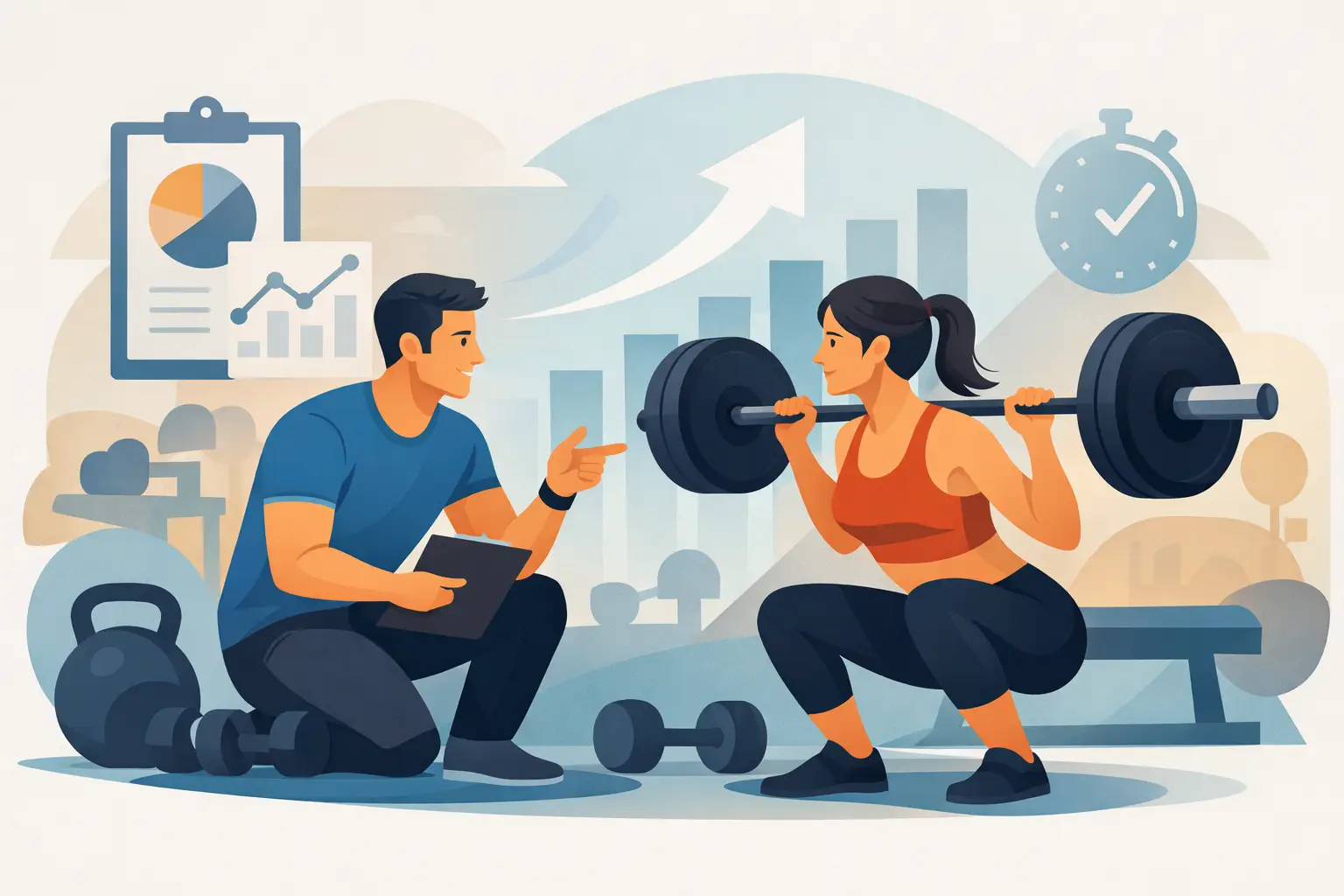
A hard workout is not automatically a productive one. If your knee hurts after lunges, your back tightens during deadlifts, or you keep restarting after the same injury, personal training needs to be more than someone counting reps and increasing the weight. It needs to identify what your body can do now, what is limiting you, and how to build capacity without repeating the pattern that put you on the sidelines.
For active adults and athletes, the goal is rarely to just exercise more. You want to run, golf, lift, play tennis, keep up with your kids, or compete with confidence. The right training plan creates a clear path from where you are today to the activities that matter most.
Personal Training Starts With Movement, Not a Template
Generic programs can look effective on paper. Squat, press, pull, repeat. But the same exercise can produce very different results depending on your mobility, injury history, strength level, coordination, sport demands, and recovery capacity.
A productive first step is a thorough movement assessment. This is not about finding a “perfect” posture or labeling every asymmetry as a problem. It is about understanding how you move under control, where your range of motion changes, how you load each side, and what happens when fatigue or resistance enters the picture.
For example, a client who feels pain at the front of the knee during squats may not need to avoid all lower-body training. The issue could involve ankle mobility, hip control, quad strength, training volume, or the way they are currently loading the movement. A precise assessment helps determine the likely driver and choose a starting point that is challenging without being reckless.
At Back In Motion, this progression is guided by The Gray Method™: assess the source of dysfunction, address movement limitations, and build strength that holds up in real life and sport. Training is not separated from the way your body moves. It is built on it.
Strength Is the Goal, but Capacity Is the Standard
Strength matters because it gives you options. Stronger legs make stairs, hiking, sprinting, and getting up from the floor easier. A stronger trunk helps transfer force while lifting, swinging a golf club, or changing direction. Strong shoulders and upper back can support overhead work, racquet sports, and daily tasks that require reaching and carrying.
But strength alone is not the full picture. Capacity is your ability to repeatedly perform a task at the demand your life requires. Someone may be strong enough to deadlift a heavy bar once but not ready to handle 18 holes of golf, a long run, or a weekend tournament. Another person may have good endurance but lack the force control needed to decelerate safely after a quick change of direction.
Effective programming develops both. It uses resistance training to build force, controlled repetitions to improve movement quality, and appropriate conditioning to prepare you for the duration and intensity of your activity. The mix depends on your goal. A recreational runner, a tennis player recovering from shoulder pain, and a parent returning to the gym after pelvic health concerns should not receive the same plan.
The Best Program Fits Your Current Starting Point
There is a difference between being challenged and being overwhelmed. Training should create enough stress to drive adaptation, but not so much that pain spikes, form falls apart, or recovery becomes impossible.
That balance often requires modifying exercises without removing the goal. If a barbell back squat is not appropriate today, a split squat, goblet squat, leg press, or supported variation may still build lower-body strength. If overhead pressing irritates your shoulder, landmine pressing or a different range of motion may let you train the same general pattern while rebuilding tolerance.
Modification is not a watered-down workout. It is a strategic decision based on the body in front of you. The best exercise is not the trendiest movement or the one that looks most advanced online. It is the one that moves you toward your goal while respecting your current limitations.
This is especially important after physical therapy. Many people finish rehab with less pain but no clear plan for returning to heavier lifting, running, jumping, or sport. That gap is where setbacks often happen. A gradual, structured bridge from rehabilitation into performance training helps turn short-term symptom improvement into durable confidence.
What Personal Training Should Include
Good coaching is not limited to the hour you spend in the gym. It gives you a framework for making smart decisions between sessions, including when to push, when to adjust, and how to measure progress beyond the scale.
A quality plan should include four connected elements:
- A clear starting assessment that considers movement, strength, pain history, goals, and the demands of your sport or daily life.
- A progression plan that explains what you are building now and what needs to happen before the next phase.
- Coaching that improves technique and helps you understand the purpose behind each exercise.
- Ongoing adjustments based on your response, schedule, recovery, symptoms, and performance.
Measurable progress may include lifting more weight, completing more comfortable repetitions, improving range of motion, running farther without symptoms, recovering faster between points, or simply moving through your day with less hesitation. The right metric depends on what you want to return to.
Pain Changes the Training Conversation
Pain does not always mean damage, and the absence of pain does not always mean you are ready for full intensity. That is why a simple “no pain, no gain” approach can be costly, particularly for someone with a recent injury or a history of recurring symptoms.
Some discomfort from training is normal. Muscles may feel fatigued, and new training can create temporary soreness. Sharp pain, worsening symptoms during a session, pain that significantly lingers afterward, or a loss of normal function deserves a closer look. The response may be as simple as changing load, volume, range of motion, or exercise selection. In other cases, a physical therapy evaluation is the smarter next step.
This integrated approach matters for people dealing with back pain, knee pain, shoulder issues, post-surgical recovery, or pelvic health concerns. You should not have to choose between getting clinical guidance and getting stronger. When rehabilitation and training work together, the plan can evolve as your body is ready rather than forcing you into an arbitrary timeline.
Why Technique Matters, but Perfection Is Not the Goal
Technique is a tool for loading your body with control. It helps you use the intended muscles, manage joint stress, and repeat a movement consistently as resistance increases. That does not mean every repetition needs to look identical or that there is only one safe way to squat, hinge, press, or run.
Bodies are built differently. Hip structure, limb length, prior injury, mobility, and sport demands all influence what a strong movement looks like for you. The goal is not to copy someone else’s form. The goal is to find efficient, repeatable positions that allow you to train hard and recover well.
A skilled coach watches for more than obvious breakdowns. They notice whether you can control the lowering phase, maintain balance, breathe effectively under effort, and keep quality as fatigue rises. Those details often determine whether a program keeps producing results over months instead of creating another cycle of flare-ups.
Train for the Life and Sport You Actually Have
The most effective program fits into your real schedule. A busy professional may make strong progress with two focused sessions per week and a simple home routine. A high school athlete in season may need lower training volume while preserving strength and movement quality. A golfer preparing for a tournament may benefit from rotational strength, hip mobility, and a conditioning plan that does not leave them sore on the first tee.
More is not always better. Consistency is better. A plan you can perform, recover from, and progress over time will outperform an aggressive routine you abandon after three weeks.
If you are unsure whether you need personal training, physical therapy, or both, start by asking a practical question: what is stopping you from doing what you want to do? If pain, stiffness, or a recent injury is the main barrier, assessment and rehabilitation may lead. If you are cleared to train but lack confidence, structure, or a progression plan, training may be the right starting point. Often, the answer is a coordinated blend of both.
Your body does not need more random effort. It needs the right next step, repeated consistently. Build from what you can control today, progress with purpose, and let strength become the reason you return to the activities you care about with confidence.
About the Author: Dr. Scott Gray




 Call (239) 223-0484
