
Strength Training for Beginners That Works
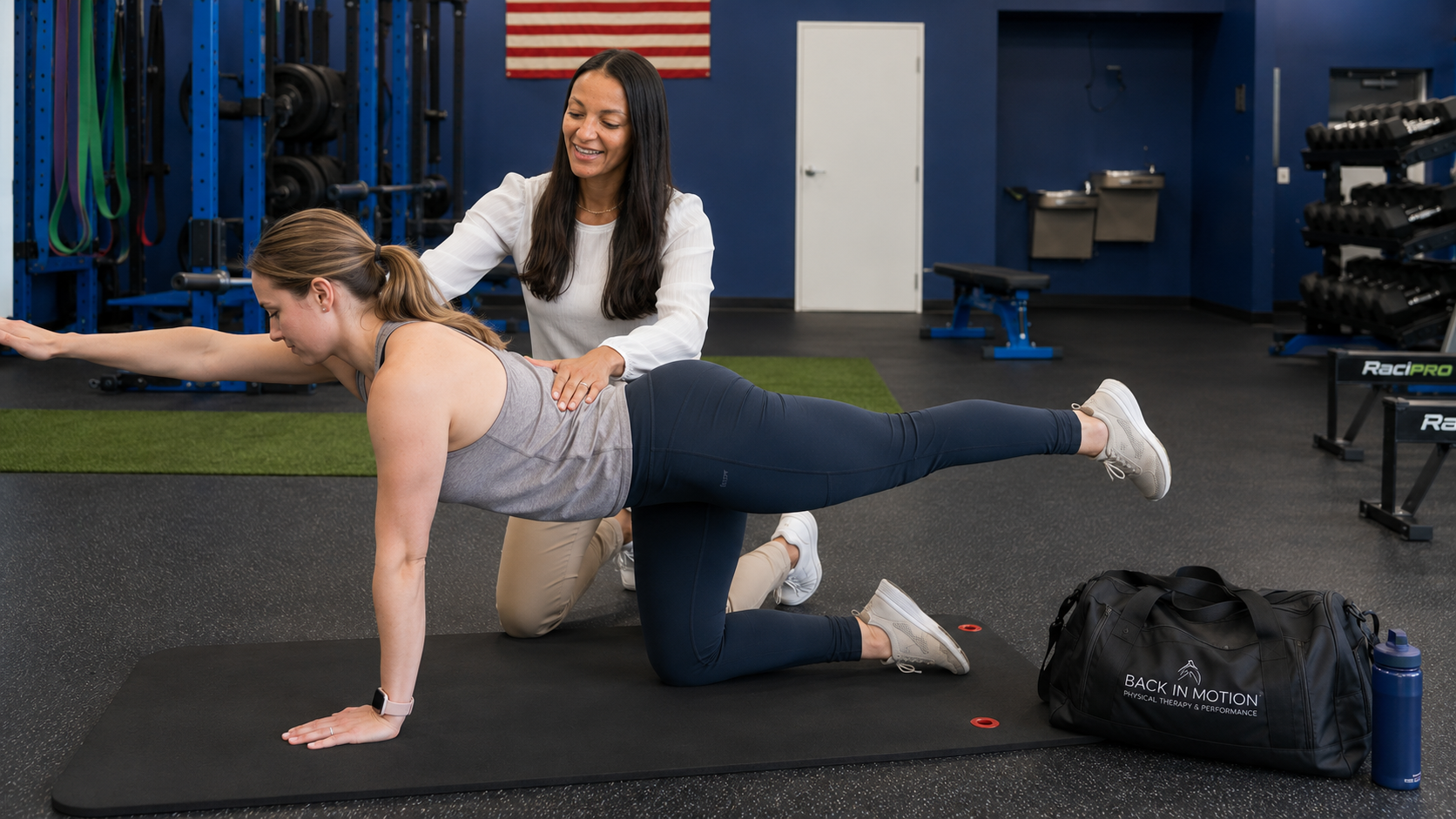
Most beginners do not get hurt because they are weak. They get hurt because they start strength training for beginners with the wrong entry point – too much weight, too little control, and no clear progression. If you want lasting results, the goal is not to survive hard workouts. The goal is to build strength on top of good movement so your body becomes more capable, more resilient, and easier to trust.
That matters whether you want to get back to running without knee pain, carry your kids without your back tightening up, or feel more confident in the gym. Strength training should improve how you move in real life. If it is making you feel beat up, the plan needs work.
What strength training for beginners should actually focus on
Beginners often think they need more exercises, more sweat, or more soreness. Usually, they need the opposite. A good starting plan is simple, repeatable, and built around patterns your body uses every day: squatting, hinging, pushing, pulling, carrying, and controlling your trunk.
At Back In Motion, we see this all the time with active adults who are motivated but unsure where to begin. The issue is rarely effort. It is usually a lack of structure. When your program matches your current mobility, balance, and coordination, strength comes faster and with fewer setbacks.
This is why movement quality comes first. If you cannot keep your ribs down during an overhead press, control your knees in a squat, or hinge without rounding through your lower back, adding load too quickly can reinforce the same pattern that already irritates you. That does not mean you are broken. It means your body is giving you useful information.
Start with movement, not ego
The best first workout is one you can repeat consistently and recover from well. For most beginners, that means two or three full-body sessions per week with at least one day between them. You do not need marathon sessions. Forty to sixty minutes is enough if the work is focused.
A productive beginner session might include a squat variation such as a box squat or goblet squat, a hinge pattern like a kettlebell deadlift, an upper-body push such as an incline push-up or dumbbell press, an upper-body pull like a cable row or dumbbell row, and a carry or anti-rotation core exercise. That gives you broad coverage without turning training into a random circuit.
The exact exercise choices depend on your starting point. If your ankles are stiff, a squat to a box may be a better fit than a deep barbell squat. If shoulder motion is limited, a landmine press may feel better than pressing straight overhead. This is where beginners often get confused. There is no single perfect exercise. There is only the right exercise for your body right now.
How much weight should a beginner use?
A simple rule works well here: start with a load you can control for 8 to 10 clean repetitions while still feeling like you had 2 or 3 good reps left. Technique should stay steady from the first rep to the last. If your form changes just to finish the set, the weight is too heavy.
This approach helps you learn what effort feels like without turning every session into a test. Strength is built through repeated quality exposure, not constant maxing out. Beginners who chase fatigue too early usually stall because they never build a reliable base.
You should also expect some trial and error. The right weight on a goblet squat may feel wrong on a row. Your left side may be more stable than your right. That is normal. Early strength training is as much about body awareness as it is about muscle.
The role of pain, stiffness, and soreness
This is where nuance matters. Mild muscle soreness after a new workout is common. Sharp pain, joint pinching, or symptoms that worsen during the session are different. Do not treat all discomfort as the same thing.
A little effort-related burning in the muscles you are training is expected. Pain that changes your mechanics is a red flag. If your knee caves in because a squat hurts, or your back grabs every time you hinge, you should not just push through and hope it improves. You may need to change the range of motion, reduce the load, or choose a different variation.
That does not mean strength training is off-limits if you have pain. In many cases, the right strength plan is part of the solution. But the dose has to match the problem. If you have recurring shoulder pain, postpartum core issues, or an old ankle injury that keeps changing how you move, a more individualized starting point makes a real difference.
A beginner program should feel progressive, not random
One of the fastest ways to waste effort is to change everything every workout. Variety has a place, but beginners improve faster when they practice the same key lifts long enough to get better at them.
Pick a small group of foundational exercises and keep them in your program for four to six weeks. During that time, progress one variable at a time. You might add a few pounds, perform one more rep per set, slow the lowering phase, or improve the depth and control of the movement. All of those count as progress.
This is especially important for adults returning to exercise after injury or long breaks. Your tissues need time to adapt, but so does your nervous system. Repetition builds coordination. Coordination makes strength safer and more efficient.
Common mistakes in strength training for beginners
The biggest mistake is doing too much too soon. That includes jumping into high-volume bootcamps, copying advanced lifters online, or training hard every day because motivation is high. Motivation is useful. It is not a replacement for progression.
The second mistake is skipping the basics because they seem too simple. Bodyweight squats, controlled deadlift patterns, rows, split squats, and carries do not look flashy, but they build the foundation most people are missing. If your basics improve, your ceiling goes up.
The third mistake is ignoring mobility and recovery. You do not need a long pre-workout routine, but you do need enough motion to get into good positions. If your hips are tight, your thoracic spine is stiff, or your breathing strategy keeps you stuck in extension, strength work may feel harder than it needs to. Recovery matters too. Sleep, protein intake, and spacing out hard sessions all influence how well you adapt.
When beginners need more than a generic program
Some people can start with a basic plan and do very well. Others need a more precise approach. If you have a history of injury, recurring pain, pelvic floor symptoms, major side-to-side differences, or a sport you want to return to, generic programming may leave too many gaps.
That is where assessment matters. Before you add intensity, it helps to know what your body is doing under load. Are you lacking hip rotation? Are you borrowing motion from your lower back? Are you stable enough on one leg to run, cut, or change direction well? Those details shape exercise selection and progression.
For active adults in Fort Myers trying to get back to golf, tennis, running, or simply training without aggravating old injuries, this step can save months of frustration. A smarter starting point often means fewer flare-ups and faster momentum.
What results should beginners expect?
If you train two or three times per week, use good exercise selection, and progress gradually, you can usually expect noticeable changes within the first six to eight weeks. You may feel more stable getting off the floor, less fatigued during daily activity, and more confident with weights that used to feel intimidating.
Visible muscle gain and major strength jumps take longer, but function improves early. That matters. Better control, improved posture under load, and reduced fear around movement are meaningful wins, especially if pain or injury has made you hesitant to train.
The key is consistency. Not perfect workouts. Not constant soreness. Just enough quality work, repeated over time, with a plan that respects where you are starting.
Strength training for beginners does not need to be complicated to be effective. It needs to be matched to your body, progressed with intention, and built around movement you can own. Start there, and the gym stops feeling like a risk. It starts becoming one of the most reliable ways to move better, feel stronger, and get back to doing the things that matter to you.
About the Author: Dr. Scott Gray


 Call (239) 223-0484
