How The Gray Method™ Can Help With Bunions

The bump at the base of your big toe keeps getting more sore, your favorite shoes rub in all the wrong places, and long walks on the beach end with an aching foot. Maybe you’ve even had a bunion removed, only to feel it start coming back. Most painful bunions need more than a wider shoe for long-term relief, and the good news is that there are non-surgical options.
Surgery is often the first thing people are offered for a painful bunion. But surgery doesn’t always address what caused it, which is one reason some bunions return. Here’s what a bunion is, its common causes and symptoms, the warning signs to take seriously, and how The Gray Method™ helps without surgery.
What Is a Bunion?
A bunion is a bony bump that forms on the side of the foot, usually at the joint where the big toe meets the foot. Bunions range from mild to moderate, large and severe. The most common causes include:
- Foot shape
- Flat arches
- Loose joints
- Weak or tight hips
- Osteoarthritis
- Heredity
Tight or ill-fitting shoes make bunions worse, because the shoe rubs against the bump and increases swelling and pain.
Why Bunions Can Come Back After Surgery
If a bunion is driven by weak or tight hips, for example, removing the bunion doesn’t change the hips. Your foot keeps compensating for the hip, and the stress that created the bunion is still there.
Fixing the root cause means retraining how you move. Sometimes that is as simple as strengthening the whole chain from the hip to the foot. More often, it means finding and correcting the specific problem that led to the bunion in the first place.
Symptoms of a Bunion
Bunions are more common in women and older adults. Common signs include:
- Joint pain: swelling, irritation and pain around the big toe joint, often worse with movement
- A growing bump: the bump slowly gets bigger, making walking more painful
- A change in how you walk: you start favoring the foot or shifting your weight
- Shoe pain: discomfort in shoes, especially tight, closed-toe shoes
- Balance changes: a less stable foot can raise the risk of falling
- Crowded toes: the big toe angles in toward the smaller toes
When to Get Your Foot Checked Right Away
- Sudden hot, red swelling: at the big toe joint, especially with fever
- Numbness or tingling: in the toes or foot
- Can’t bear weight: or pain after an injury
- Diabetes: with a sore, blister or wound over the bunion that isn’t healing
How Physical Therapy Helps With Bunions
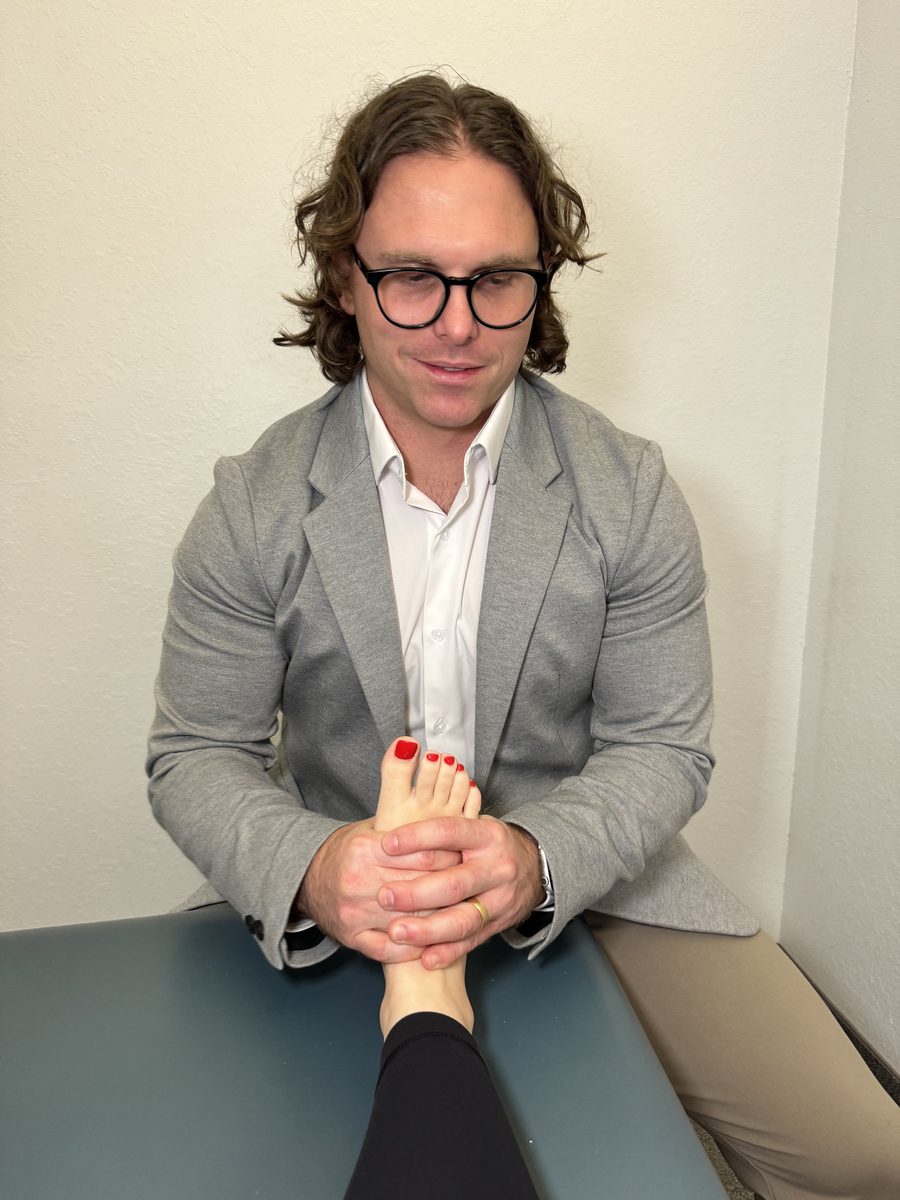
A Doctor of Physical Therapy looks at more than the toe. We watch how you walk, how your foot lands and pushes off, and how your ankle, knee and hip are working, then check how severe the bunion is. At Back In Motion Physical Therapy & Performance, The Gray Method™ uses that full-body assessment to find the root cause, and our foot and ankle pain treatment is built around it. The goal is to ease the pain, take stress off the big toe joint, and improve strength, flexibility and mobility. Treatment usually includes:
Manual Therapy
Gentle hands-on work to move the big toe and nearby joints, reduce stiffness and restore range of motion. It also reaches problems that are hard to treat on your own.
Exercise
Movements that restore normal foot mobility and reduce the stress on the big toe, including stretching and gait training. Strong, mobile ankles matter here too. See our ankle mobility exercises.
Functional Training
Once you’ve regained strength and motion in the toe, foot and ankle, the program gets more demanding. We build a series of exercises that reduce the stress on the bunion during the activities you care about, often including hip strength. Our exercises for hip stability show the kind of work involved.
Orthotics and Other Supports
Splints can ease the stress on the big toe. Arch supports, either over-the-counter or custom foot orthotics, help keep the foot and ankle in a better position while you walk. When pain is severe, a cane can take pressure off the foot for a short time.
What You Can Do at Home
- Check your shoes: choose a wide toe box and avoid tight, pointed or high-heeled shoes.
- Keep the toe moving: gently move the big toe through a comfortable range a few times a day.
- Strengthen your feet: simple exercises like towel scrunches build the small muscles that support the arch.
- Don’t ignore your hips: weak hips can change how your foot lands with every step.
Your Path to Non-Surgical Bunion Treatment
If you’ve been told you need bunion surgery, or you’re thinking about it, it’s worth finding out what is driving your bunion first. We’ve helped hundreds of people just like you ease their bunion pain. Our foot and ankle physical therapy in Fort Myers starts with The Gray Method™, one-on-one with a Doctor of Physical Therapy at our clinics in Fort Myers, Cape Coral and Estero.
Start with our Fixing the Cause & Not Just the Symptoms Assessment, or Inquire About an Appointment →
Call our office at (239) 223-0484 to schedule your appointment.
About the Author: Dr. Scott Gray


Get Dr. Gray's Best-Selling Book, Free
Why pain keeps coming back, and how The Gray Method™ helps you fix it for good.
Send Me the Free BookOur Most-Read Articles
- 1Three Conditions That Mimic Sciatica PainBack
- 2The Great Plantar Fasciitis Debate: Why Boots & Cortisone Rarely Fix ItFoot
- 3Common Causes of Lower Back Pain: Herniated DiscBack
- 4The 3 Most Common Symptoms of Knee Meniscal TearsKnee
- 5What Is Hip Bursitis?Hip
- 6Pelvic Pain Explained: When It's Not a UTI but Feels Like OnePelvic
What Do You Need Help With?
- 🩺Back, neck & joint pain→
- 💪Fitness for adults 50+→
- 💙Pelvic health→
- ⚡Sports performance→
- ⛳Golf performance→
Talk to a Doctor of Physical Therapy
One-on-one care that finds the cause of your pain. Fort Myers, Cape Coral & Estero.
Inquire About an Appointment Or call (239) 223-0484