
Youth Athlete Performance Training That Works
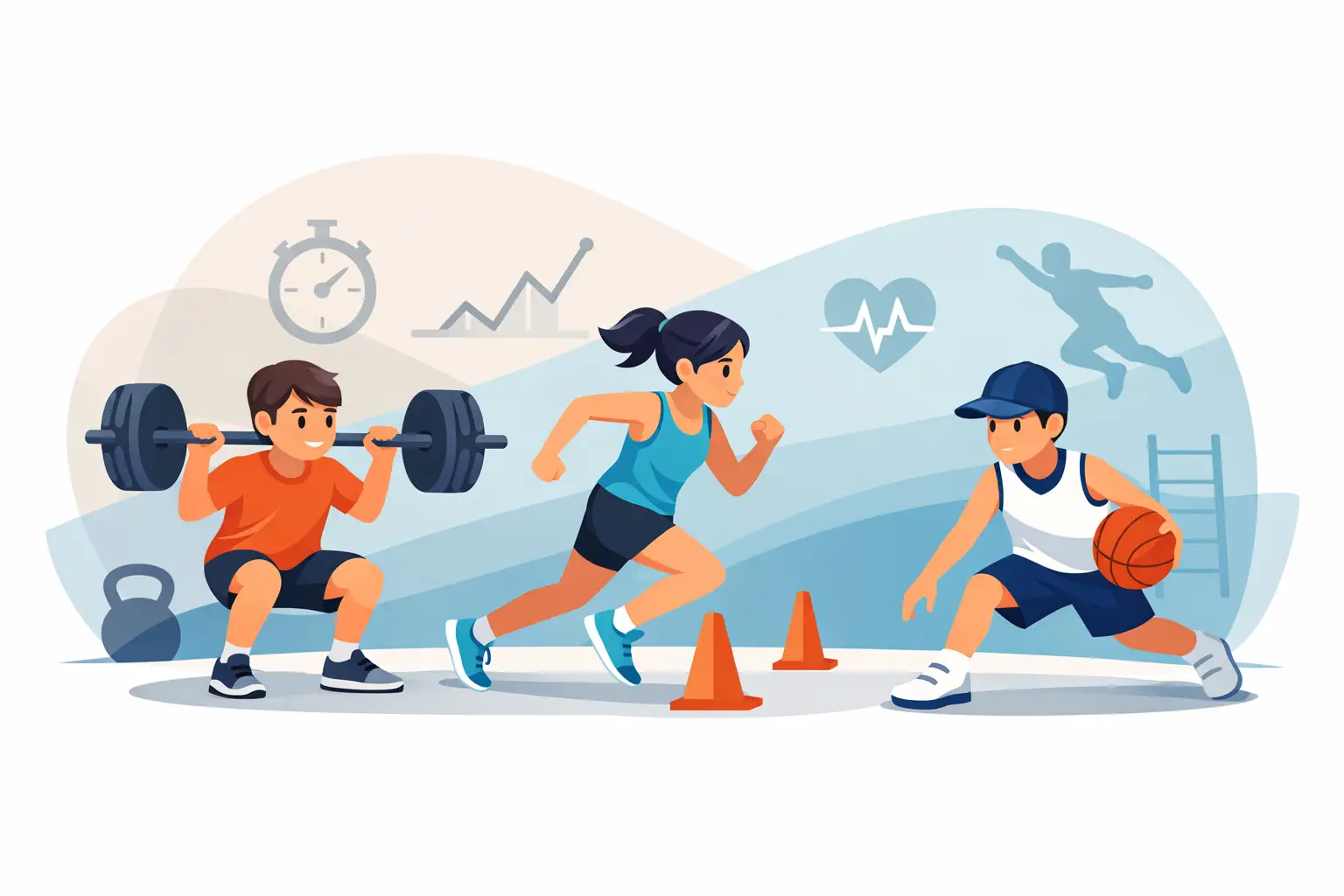
A 12-year-old does not need the same training plan as a varsity starter, and neither athlete benefits from a program built around random drills, exhaustion, or social media trends. Good youth athlete performance training is not about making kids look busy. It is about building movement quality, strength, speed, coordination, and confidence in the right order so performance improves without raising injury risk.
That distinction matters more than most families realize. Young athletes are often playing year-round, practicing with multiple teams, and chasing skill work on top of school and competition demands. When training is added without a clear reason, the result is usually fatigue, soreness, stalled progress, or overuse issues. When training is individualized and progressed correctly, it supports the athlete instead of competing with the sport.
What youth athlete performance training should actually do
At its best, youth athlete performance training prepares a young athlete to handle the demands of practice and competition more effectively. That includes improving force production, deceleration, body control, landing mechanics, change of direction, and overall resilience. It also means respecting the athlete’s stage of development rather than chasing adult-style outcomes too early.
The goal is not just to jump higher or run faster, although those are valuable outcomes. The bigger goal is to create an athlete who moves well under pressure, tolerates training loads, and recovers well enough to keep progressing. Performance and durability are tied together. If a young athlete is always fighting pain, poor mobility, or recurring breakdowns, performance work is incomplete.
That is why the best programs do not separate movement quality from performance. They start by identifying restrictions, control deficits, asymmetries, and weak points that may limit output or increase compensation. From there, training becomes more precise. Instead of throwing volume at the problem, you solve the reason progress has stalled.
Why random workouts fail young athletes
Many youth programs look intense from the outside. There are cones, ladders, sprints, medicine balls, and a coach yelling encouragement. But intensity alone is not a system.
Random training usually fails for one of three reasons. First, it ignores the athlete’s actual needs. A soccer player with poor hip control, limited ankle mobility, and recurring knee pain does not need the same plan as a baseball player who lacks rotational strength and upper-body power. Second, it often piles onto an already full schedule. More work is not better if recovery is poor. Third, it skips progression. Young athletes need a clear sequence that moves from control to capacity to higher-level output.
This is where parents and coaches can get misled. A tired athlete may feel like they had a great session, but fatigue is not proof of improvement. Better training produces measurable adaptation over time. That could mean cleaner mechanics, stronger positions, better sprint times, more efficient deceleration, or fewer pain flare-ups across a season.
The foundation comes before the flashy stuff
Speed and power matter, but they rest on basic physical qualities that are often rushed or skipped. Before a youth athlete spends large amounts of time on advanced plyometrics or overloaded speed work, they should show solid posture, control, coordination, and strength in simple patterns.
That includes squatting, hinging, lunging, pushing, pulling, bracing, and landing with good mechanics. It also includes the ability to organize the body during acceleration, deceleration, and cutting. If those pieces are missing, high-speed training can expose problems faster than it solves them.
This does not mean young athletes need overly cautious training. It means they need smart training. A well-built program can absolutely challenge them. It just does so with intent. Load, volume, exercise selection, and progression all need to match the athlete in front of you.
Strength training is not the problem
Some parents still worry that strength work is unsafe for young athletes. In reality, properly coached strength training is one of the most valuable tools in a performance program. It can improve force production, coordination, tissue tolerance, and confidence, while helping reduce injury risk when paired with sound movement instruction.
The key phrase is properly coached. Youth athletes do not need max-effort testing, ego lifting, or programs copied from college football. They need age-appropriate resistance training that teaches control first and adds challenge over time. For one athlete, that may start with bodyweight and tempo work. For another, it may include loaded squats, split squats, trap bar deadlifts, or medicine ball throws once technique and readiness are established.
There is no single age when strength training suddenly becomes appropriate. Readiness depends on maturity, attention, coaching quality, and movement competency. A younger athlete with good focus and coaching may do very well in a structured strength setting. An older athlete with poor body control may need a simpler starting point.
Speed training is more than running hard
Speed is one of the most requested outcomes in youth sports, but true speed development is more technical than people expect. Faster athletes are not just trying harder. They create better positions, produce force more effectively, and apply it at the right time.
That means speed training should include acceleration mechanics, posture, front-side action, arm timing, projection angles, and deceleration control. It also means managing volume carefully. Sprinting is a high-demand activity. If an athlete is already overloaded from practices and games, adding excessive sprint volume can backfire quickly.
For some athletes, better speed starts with improving mobility and strength. For others, it starts with teaching them how to strike the ground, hold position, or stop efficiently before they can change direction again. This is why assessment matters. The limiting factor is not always obvious from the bleachers.
Injury prevention is built into the program, not added later
Families often think about performance training and rehab as separate services. In reality, the best systems connect them. A young athlete with recurring ankle sprains, knee pain, shoulder irritation, or hamstring tightness should not be pushed through a generic speed and strength template and told to stretch more.
Instead, those recurring issues should shape the program. If the athlete cannot control hip rotation, absorb force well, or stabilize through the trunk, the training plan should address that directly. Corrective work has value, but only when it leads into stronger, more efficient movement under real training demands.
This rehab-to-performance mindset is where individualized coaching stands apart. At Back In Motion Physical Therapy & Performance, that kind of progression matters because the goal is not just to calm symptoms down. The goal is to build an athlete who can return to sport stronger, move with more confidence, and tolerate the demands of competition without falling back into the same pattern.
What parents should look for in a training program
A good youth performance program should be able to explain why each phase exists and how progress is measured. If every athlete does the exact same workout regardless of sport, training age, injury history, or current schedule, that is a red flag.
Parents should look for coaching that values assessment, movement quality, and progression. That does not mean the sessions should feel slow or overly clinical. It means the challenge should be purposeful. Athletes should understand what they are working on and why it matters to their sport.
It also helps to ask how the program accounts for in-season versus off-season demands. A basketball player in the middle of a heavy competition stretch may need a very different dose than a baseball player in an off-season development block. Good coaching adjusts for context instead of forcing the same intensity all year.
Long-term development beats early specialization shortcuts
One of the biggest mistakes in youth sports is chasing short-term results at the cost of long-term growth. That might look like year-round competition without enough strength work, overemphasis on one narrow skill set, or training that rewards burnout more than development.
A better model builds broad athletic qualities early and layers sport-specific demands more strategically over time. Young athletes benefit from coordination, strength, speed, balance, and movement literacy across multiple patterns. Those qualities transfer well and create a stronger base for future specialization.
It depends on the athlete, of course. Some need more power. Some need more control. Some need to reduce volume before adding anything new. But almost all benefit from a system that looks beyond the next tournament and asks a better question: what does this athlete need to stay healthy, get stronger, and keep improving over the next few years?
That is the standard worth aiming for. Youth athlete performance training should not be about doing more for the sake of more. It should give young athletes a clear path to move better, train smarter, and compete with confidence when the game speeds up.
About the Author: Dr. Scott Gray


Get Dr. Gray's Best-Selling Book, Free
Why pain keeps coming back, and how The Gray Method™ helps you fix it for good.
Send Me the Free BookOur Most-Read Articles
- 1Three Conditions That Mimic Sciatica PainBack
- 2The Great Plantar Fasciitis Debate: Why Boots & Cortisone Rarely Fix ItFoot
- 3Common Causes of Lower Back Pain: Herniated DiscBack
- 4The 3 Most Common Symptoms of Knee Meniscal TearsKnee
- 5What Is Hip Bursitis?Hip
- 6Pelvic Pain Explained: When It's Not a UTI but Feels Like OnePelvic
What Do You Need Help With?
- 🩺Back, neck & joint pain→
- 💪Fitness for adults 50+→
- 💙Pelvic health→
- ⚡Sports performance→
- ⛳Golf performance→
Talk to a Doctor of Physical Therapy
One-on-one care that finds the cause of your pain. Fort Myers, Cape Coral & Estero.
Inquire About an Appointment Or call (239) 223-0484
