Why Most Fitness Plans Fail After 30 Days
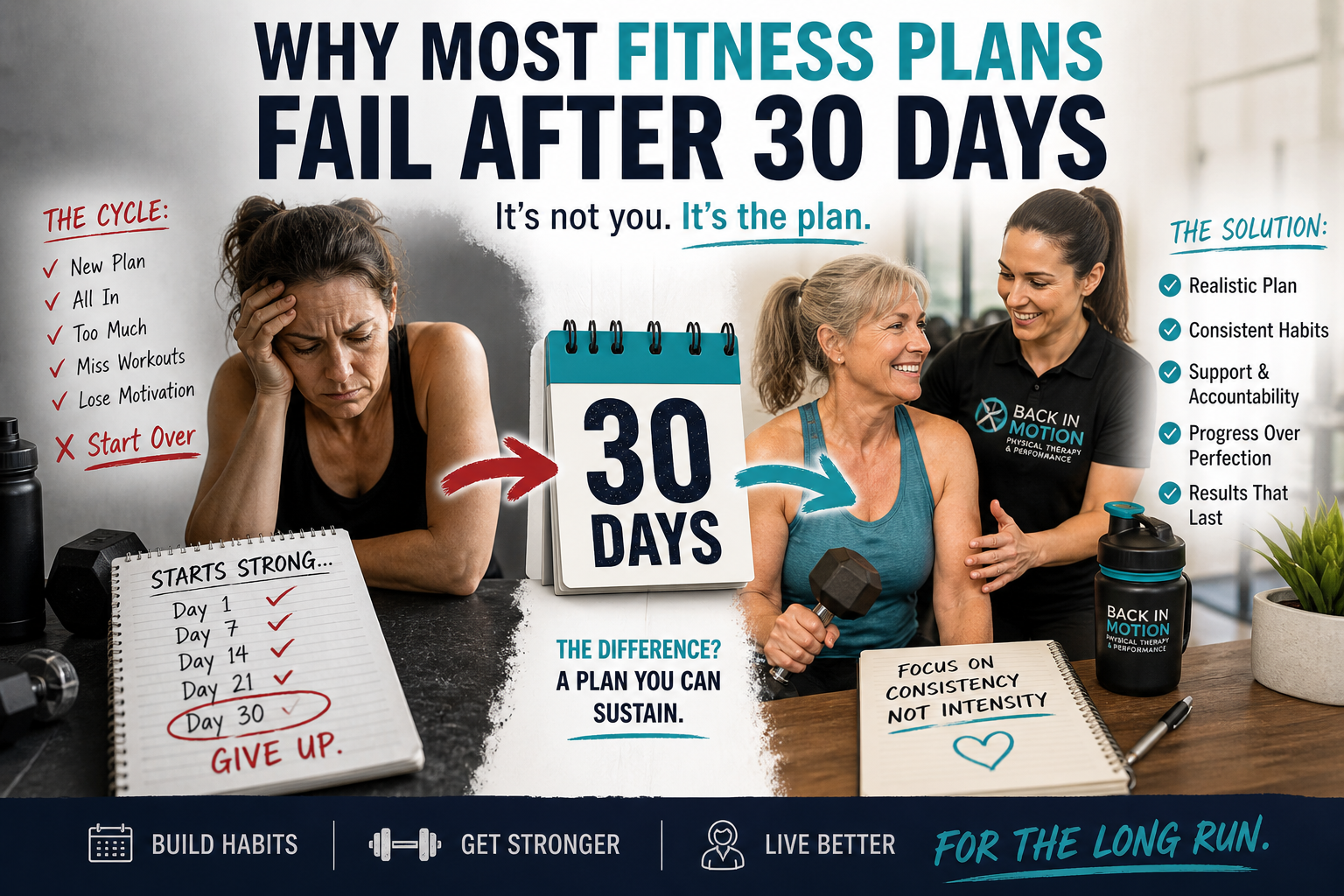
Why Most Fitness Plans Fail After 30 Days
Introduction
Every May, many people decide it’s time to get back on track.
Summer is around the corner, the weather is improving, and motivation starts to rise. People want to feel stronger, leaner, healthier, and more confident. So they commit to a new fitness plan.
They join a gym. Start a challenge. Download an app. Buy a meal plan. Promise themselves this time will be different.
Then 30 days later, they’re back where they started.
This cycle is incredibly common—and it usually has nothing to do with laziness or lack of discipline.
Most fitness plans fail after 30 days because they’re built on intensity instead of sustainability.
If you want real results this summer and beyond, it helps to understand why so many plans break down—and what actually works long term.
1. Most Plans Rely on Motivation Instead of Systems
Motivation is powerful, but temporary.
At the beginning of any new goal, energy is high. You’re excited. You’re focused. You’re ready to change. But motivation naturally rises and falls depending on sleep, stress, schedule, work demands, family life, and mood.
When a plan only works on your most motivated days, it usually fails on your busiest ones.
That’s why many people do great for two or three weeks, then miss a few workouts, lose momentum, and disappear completely.
Successful fitness doesn’t come from feeling inspired every day.
It comes from having a repeatable system.
That might mean:
- Scheduled training times
- A coach or accountability structure
- Realistic weekly goals
- Workouts that fit your schedule
- Progress tracking
- A plan that adjusts when life gets busy
Research consistently shows that habit formation and environmental structure play a major role in long-term behavior change.
Motivation can get you started.
Systems keep you going.
2. Most Plans Are Too Extreme to Sustain
Another major reason plans fail is because they ask too much, too soon.
Examples:
- Working out 6 days a week after doing nothing
- Cutting calories aggressively
- Two-a-day workouts
- Random high-intensity classes every day
- Trying to “make up for lost time”
These approaches often create fast fatigue, soreness, frustration, and schedule burnout.
People assume they need to suffer to succeed.
But fitness is not punishment.
It’s a skill built through repetition.
Research from the American College of Sports Medicine supports progressive exercise prescription—gradually increasing volume and intensity over time for better adherence and reduced injury risk.
The best program is not the hardest one.
It’s the one you can still follow 3 months from now.
For many adults, three strength sessions per week done consistently will outperform an extreme six-day plan that only lasts 18 days.
3. Most Plans Focus on Weight Loss Instead of Identity Change
This is the deepest reason people relapse.
If the only goal is:
- lose 10 pounds
- fit into clothes
- look good for vacation
- get summer ready
…then motivation often disappears once progress slows.
Short-term appearance goals can start the journey, but they rarely sustain it.
Lasting success usually happens when someone begins to see themselves differently:
- I am someone who trains regularly
- I take care of my health
- I keep promises to myself
- I am getting stronger with age
- Fitness is part of who I am now
That shift matters.
When exercise becomes identity-based rather than event-based, consistency becomes easier.
Instead of asking, “Do I feel like working out?”
You ask, “What does a healthy person like me do today?”
That mindset builds resilience when life gets messy.
Conclusion
Most fitness plans fail after 30 days because they depend on short-term motivation, unrealistic intensity, and shallow goals.
They are designed for excitement—not real life.
The plans that succeed are built differently.
They focus on:
- Structure over hype
- Consistency over extremes
- Progression over punishment
- Identity over urgency
As we head into summer, many people are searching for the fastest path to results.
But the fastest path is often the one you can sustain.
You do not need another 30-day reset.
You need a program you can still believe in by day 90.
That’s where real transformation happens.
This May, don’t chase intensity.
Build consistency—and let results follow.
About the Author: Ashley Gray