Banish Your Tension Headaches, Once and for All

It starts as a tight band across your forehead or a dull ache at the base of your skull, and by late afternoon it’s all you can think about. Tension headaches are the most common type of headache, and when they show up day after day, they can wear you down and leave you feeling exhausted and isolated.
Pills may take the edge off, but they treat the symptom, not the cause, so the headaches keep coming back. Here is what causes tension headaches, how a physical therapist finds the source, and how treatment can relieve them for good.
What Is a Tension Headache?
A tension headache, also called a stress-related headache, usually feels like pressure or tightness around the forehead, temples or back of the head. Tension headaches aren’t usually as severe as migraines, but they’re a sign that something in your body is “off.”
They often come from tight, overworked muscles in the neck, shoulders and scalp. That’s why physical therapy, which looks at how your neck and upper back move, can help when headaches keep returning.
What Causes Tension Headaches?
Stress is a common trigger. It’s right there in the name. But emotional stress isn’t the only cause. When your neck muscles are overloaded because of stiffness, weakness or an old injury, the pain can spread across your whole head.
- Poor posture: a forward head position keeps the neck muscles working all day. Read the signs of poor posture.
- Old injuries: a neck, back or jaw injury from years ago can still be causing headaches today.
- Arthritis and stiff neck joints: stiffness at the top of the neck often refers pain into the head.
- Stress, anxiety and depression: they keep the neck and shoulder muscles tense.
- Lifestyle triggers: poor sleep, dehydration, smoking, alcohol, low iron and not exercising.
When a Headache Needs Medical Care Right Away
- Sudden, severe pain: the “worst headache of your life,” or one that comes on like a thunderclap
- Neurological signs: weakness, numbness, confusion, trouble speaking, or vision changes
- Fever or stiff neck: a headache with fever, a stiff neck or a rash
- After a head injury: any headache after a blow to the head
- A new pattern: headaches that are new after age 50 or are steadily getting worse
How a Physical Therapist Finds the Source
Your physical therapist will work with you to understand your headaches before starting treatment. That begins with your history: past neck, back or jaw injuries, your work and sleep habits, and where the pain shows up, whether it’s the face, forehead or back of the neck.
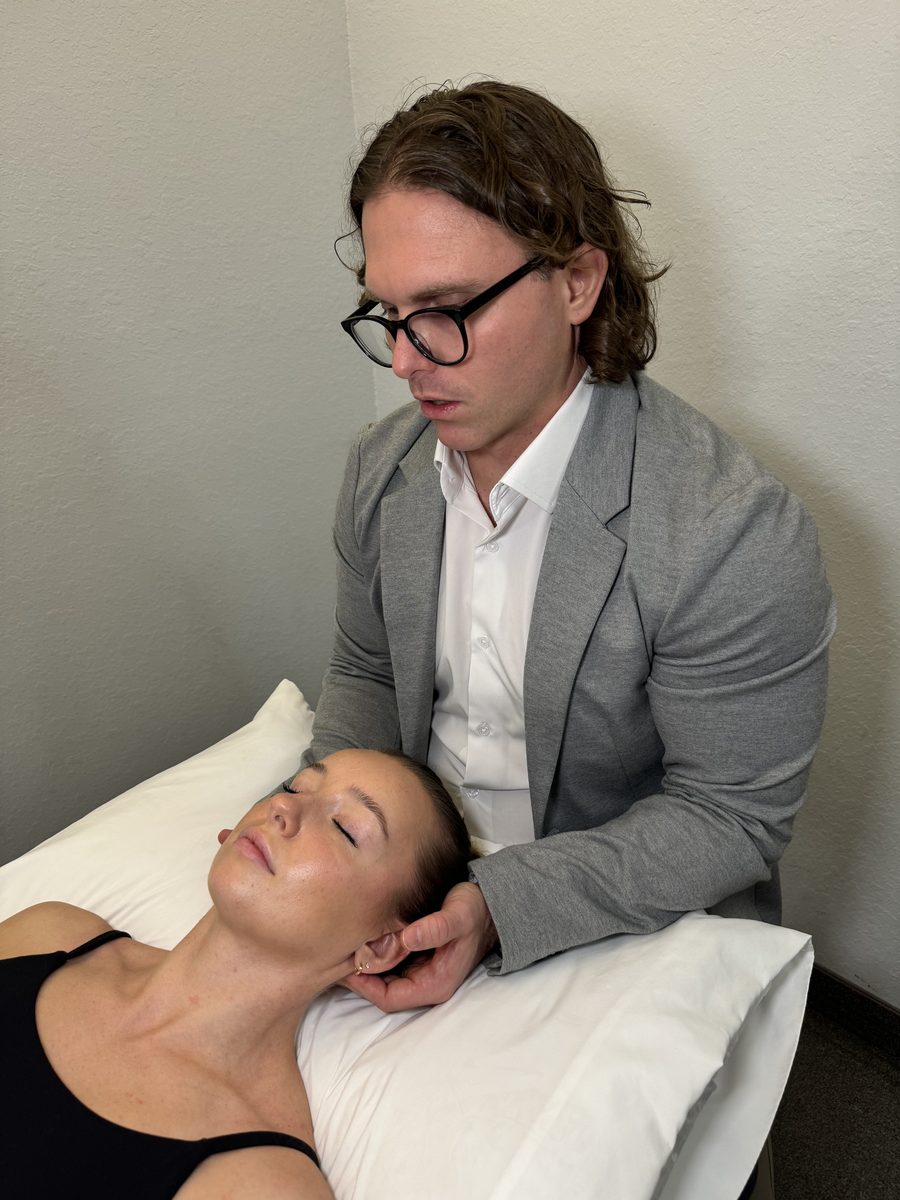
Next comes a hands-on exam. Your therapist will check your posture in different positions, test the strength and range of motion of your neck and shoulders, and feel how the joints at the top of your neck move. With The Gray Method™, we also look above and below the neck, at the upper back, shoulders and jaw, because the neck is often working overtime for an area that isn’t doing its job.
How Physical Therapy Treats Tension Headaches
Your plan depends on what we find. If an old injury is driving your headaches, the plan will look different than if posture and muscle tension are the main problem. Treatment often includes:
- Manual therapy: hands-on techniques to loosen tight muscles and restore movement to stiff neck joints.
- Soft tissue work and dry needling: to ease muscle spasms in the neck and shoulders, when it’s a good fit.
- Traction and McKenzie-based movements: to take pressure off the neck.
- Strength and posture training: exercises for the deep neck and upper back muscles so you can sit and stand longer without tension building up.
- Home program and lifestyle changes: stretches, exercises, and spotting the situations that trigger your headaches.
What Physical Therapy Can Do for You
Our goal is to stop your tension headaches, not just manage them. Along the way, most people also notice:
- Less neck pain: more range of motion and less tension in the neck muscles.
- More strength: a stronger neck and upper back that hold good posture with less effort.
- Better posture: one of the leading causes of tension headaches, addressed at the source.
If your headaches come with jaw clicking or pain when you chew, our TMJ treatment may also help. For more on keeping neck pain from returning, read why neck pain keeps coming back.
Make Tension Headaches a Thing of the Past
There’s no reason to keep living with constant headaches. Our headache treatment in Fort Myers uses The Gray Method™ to find what’s really driving your pain, one-on-one with a Doctor of Physical Therapy at our clinics in Fort Myers, Cape Coral and Estero.
Start with our Fixing the Cause & Not Just the Symptoms Assessment, or Inquire About an Appointment →
Call our office at (239) 223-0484 to schedule your appointment.
About the Author: Dr. Scott Gray


Get Dr. Gray's Best-Selling Book, Free
Why pain keeps coming back, and how The Gray Method™ helps you fix it for good.
Send Me the Free BookOur Most-Read Articles
- 1Three Conditions That Mimic Sciatica PainBack
- 2The Great Plantar Fasciitis Debate: Why Boots & Cortisone Rarely Fix ItFoot
- 3Common Causes of Lower Back Pain: Herniated DiscBack
- 4The 3 Most Common Symptoms of Knee Meniscal TearsKnee
- 5What Is Hip Bursitis?Hip
- 6Pelvic Pain Explained: When It's Not a UTI but Feels Like OnePelvic
What Do You Need Help With?
- 🩺Back, neck & joint pain→
- 💪Fitness for adults 50+→
- 💙Pelvic health→
- ⚡Sports performance→
- ⛳Golf performance→
Talk to a Doctor of Physical Therapy
One-on-one care that finds the cause of your pain. Fort Myers, Cape Coral & Estero.
Inquire About an Appointment Or call (239) 223-0484