
Sports Rehab Cape Coral Athletes Can Trust
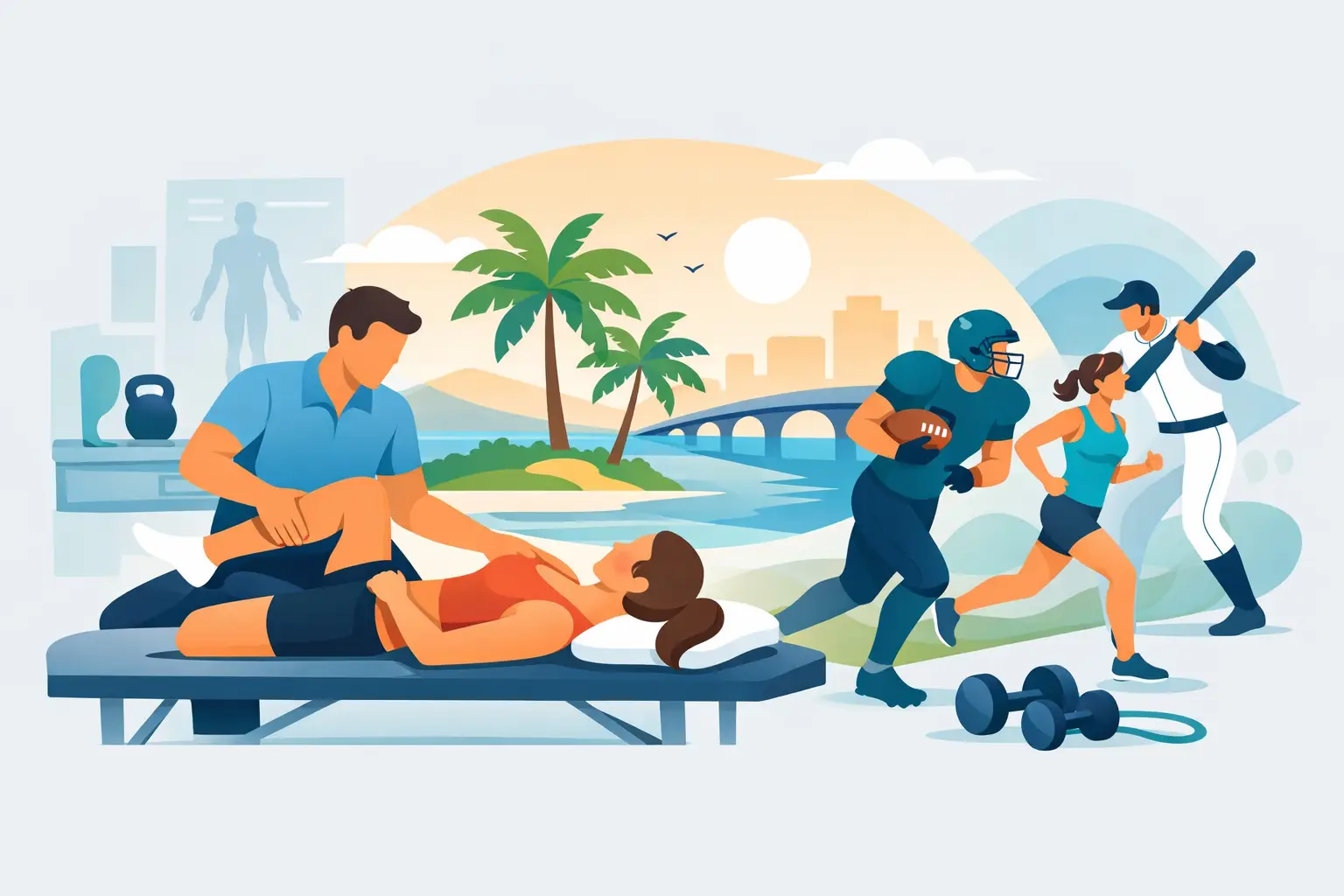
A sore knee after pickleball is easy to brush off. The shoulder that tightens up every time you serve, swing, or press overhead is easier to ignore when life is busy. But when pain keeps showing up, or performance starts slipping, you do not need more rest guesses or random exercises from social media. You need sports rehab Cape Coral athletes and active adults can rely on to identify the real problem and build a plan that actually moves you forward.
What sports rehab in Cape Coral should actually do
Good rehab is not just about calming symptoms down for a week. It should answer three questions clearly: what is driving the pain, what needs to change, and how do you return to training or sport without ending up in the same cycle again.
That is where many people get frustrated. They ice it, stretch it, take a few days off, and then go right back to the same movement pattern, same weakness, or same mobility restriction that caused the issue in the first place. The pain may fade for a bit, but the problem is still there.
A stronger sports rehab process looks at the full chain. If your knee hurts while running, the issue may also involve hip control, ankle mobility, load tolerance, or training volume. If your shoulder is irritated, it may not be only the shoulder. Thoracic mobility, rib positioning, scapular control, and exercise selection all matter. Real progress happens when rehab moves beyond the painful area and addresses how your body is actually moving.
Why active adults often stall in recovery
Most active people are willing to do the work. The problem is not effort. The problem is usually direction.
Some people are given a generic handout with the same exercises everyone else gets. Others are told to stop activity completely, even when a smarter modification would keep them progressing. Some get passive treatment that feels good in the moment but never builds the strength, control, and capacity needed to hold up under real life or real sport.
That is why sports rehab has to be individualized. A runner coming back from Achilles pain does not need the same progression as a golfer with back stiffness or a teenage athlete recovering from a hamstring strain. Even two people with the same diagnosis may need very different plans based on their movement quality, training history, goals, and timeline.
If your rehab does not account for how you train and what you want to get back to, it is incomplete.
The difference between symptom relief and real recovery
Pain relief matters. If you cannot sleep, train, or get through the workday comfortably, reducing pain is a priority. But pain reduction is just the first phase, not the finish line.
Real recovery means your body can handle load again. It means the ankle can absorb force, the hip can control rotation, the core can transfer energy, and the shoulder can move without compensation. It means you are not just less irritated. You are more prepared.
That is the gap many people feel after standard treatment. They are told they are “better” because symptoms are down, but as soon as they return to lifting, tennis, distance running, or recreational leagues, the pain returns. The tissue may be calmer, but the system is not ready.
A better model is rehab that progresses on purpose. First reduce irritation. Then restore mobility and movement options. Then rebuild strength and control. Then reintroduce speed, power, impact, and sport-specific demand. Skip steps, and you usually pay for it later.
Sports rehab Cape Coral athletes need is more than a few stretches
Stretching has its place, but it is rarely the whole answer. If a movement limitation is caused by poor control, weakness, guarding, or bad mechanics under load, stretching alone will not fix it. The same goes for massage, dry needling, or passive modalities. These tools can help, but they should support a plan, not replace one.
Effective sports rehab is active. It is built around assessment, progression, and measurable change. Your plan should evolve as your symptoms improve and your capacity increases. What you do in week one should not be what you are still doing in week six unless progress has stalled for a reason.
For example, someone with patellar tendon pain may start with load management and isometric work to calm symptoms. Later, they need progressive strength training, single-leg control, and eventually jumping and deceleration drills if they want to get back to court sports. If rehab stops at basic exercises on a treatment table, return to sport becomes a gamble.
What to expect from a high-level evaluation
The first visit should give you clarity, not more confusion. You should leave understanding what is likely contributing to your pain, what the priorities are, and what the path back looks like.
That means the evaluation has to go deeper than asking where it hurts. A high-level assessment looks at joint mobility, strength deficits, movement quality, stability, training history, aggravating patterns, and recovery demands. It should also consider your actual goals. There is a difference between wanting to walk pain-free and wanting to return to sprinting, heavy lifting, or tournament play.
At Back In Motion Physical Therapy & Performance, that type of process is central to care. The goal is not to chase symptoms. It is to identify the root cause, correct the movement issues that keep stress in the wrong places, and build your body back up with intention.
That matters because the right plan creates confidence. When you know why something hurts and what each phase is designed to do, rehab stops feeling random.
The rehab-to-performance advantage
One of the biggest mistakes in injury recovery is treating rehab and training like two separate worlds. They are not. The strongest recovery plan connects them.
If you finish physical therapy but have no bridge back to strength work, running, jumping, rotational power, or sport-specific loading, you are left to figure it out on your own. That is often when reinjury happens. The body may tolerate daily life, but sport asks for much more.
A rehab-to-performance model closes that gap. It takes you from pain and limitation to controlled movement, then to strength, then to the higher demands of your activity. For active adults and athletes, this is not a luxury. It is the standard that makes return to sport more predictable.
There is some nuance here. Not every person needs advanced performance training after injury. A recreational exerciser with mild shoulder pain may simply need better mobility, smart strength progressions, and a return to the gym with cleaner mechanics. A competitive athlete may need more detailed speed, power, or change-of-direction work. The right answer depends on your goal, not a one-size-fits-all checklist.
Who benefits most from sports rehab
Sports rehab is not only for serious athletes. It is for anyone whose lifestyle depends on moving well.
That includes runners dealing with recurring calf or knee pain, golfers whose backs tighten up after a round, tennis and pickleball players with elbow or shoulder issues, lifters who cannot squat or press without irritation, and active adults who want to train hard without wondering what will flare up next. It also helps youth athletes who need a smart return after injury instead of being rushed back too soon.
The common thread is this: you want more than temporary relief. You want a body that can handle the demands you place on it.
How to know if your current plan is not enough
If you have been in treatment and still feel unsure, pay attention to the signs. If no one has explained why the injury happened, if your exercises feel disconnected from your sport, if progress has plateaued, or if you are afraid to return to normal activity, your plan may be missing key pieces.
You should not need to guess whether you are ready. Rehab should build objective confidence through movement quality, strength gains, symptom response, and staged return to activity. There is always some judgment involved, but it should be informed judgment, not hope.
That is especially true when pain has been recurring for months. By that point, the issue usually is not just inflammation or overuse. There is often a deeper combination of mobility restriction, poor load management, compensation, or underdeveloped strength capacity that needs to be addressed directly.
Choosing the right sports rehab in Cape Coral
When looking for sports rehab in Cape Coral, do not just ask what treatments are offered. Ask how decisions are made. Ask how the provider evaluates movement. Ask how they progress care. Ask what return to activity looks like and how they reduce the chance of the same problem coming back.
The best rehab environment will feel focused, specific, and accountable. You should know what you are working on, why it matters, and what progress looks like over time. That level of precision is what turns rehab from a holding pattern into a true rebuild.
Pain may be the thing that brings you in. Better movement, stronger tissue capacity, and more confidence should be what takes you out. The right plan does more than help you feel normal again. It gives you a clearer path to move, train, and compete with fewer setbacks.
About the Author: Dr. Scott Gray


 Call (239) 223-0484
