
Return to Lifting After Injury the Right Way
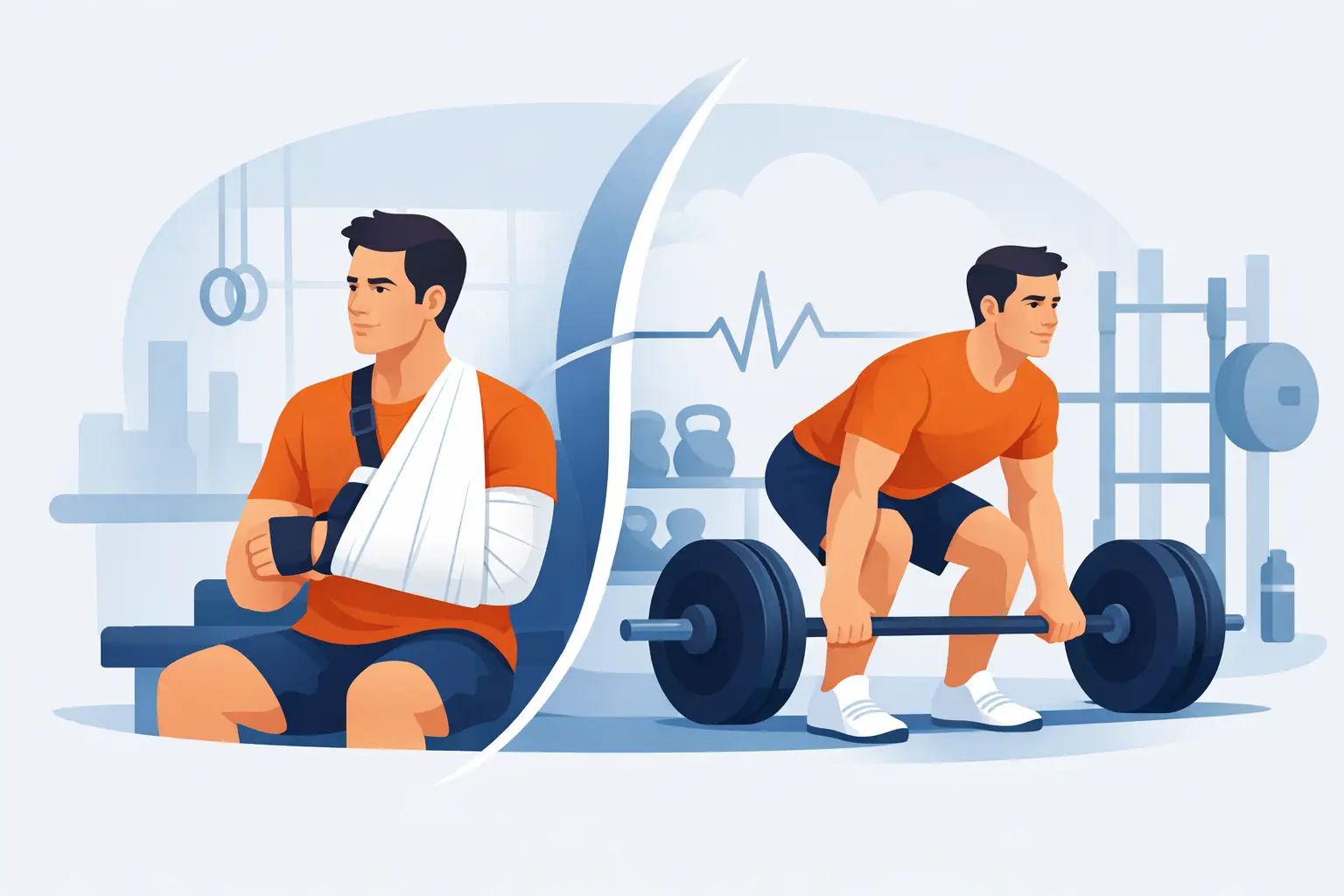
That first day back under the bar can mess with your head more than your body. You might feel fine in daily life, but the second you think about squatting, pressing, or deadlifting again, the question shows up fast: am I actually ready? A smart return to lifting after injury is not about testing your luck. It is about knowing what your tissue can tolerate, how your movement looks under load, and how to build strength without feeding the same problem that took you out.
This is where many active adults and athletes get stuck. They either wait too long and lose momentum, or they come back too aggressively and end up right back in pain. Neither approach works well. The better path is a structured progression that respects healing, restores capacity, and gets you back to training with purpose.
Why returning too soon – or too late – both cause problems
After an injury, pain is only one piece of the picture. You can be pain-free and still lack mobility, stability, strength, coordination, or confidence. On the other hand, you can still feel some symptoms and be safe to train if the right variables are managed. That is why the simple idea of waiting until everything feels perfect usually fails.
Coming back too soon often means loading tissues that are not ready for the demand. That can show up as sharp pain, swelling, guarding, compensation, or the feeling that every rep is a negotiation. Waiting too long creates a different issue. Strength drops, tolerance to load falls off, movement becomes deconditioned, and fear of re-injury grows. When you finally return, normal training feels harder than it should.
The goal is not to find a magical day when you are 100 percent healed. The goal is to progress when your body can handle the next step.
What a safe return to lifting after injury actually looks like
A safe return does not start with max effort. It starts with assessment. Before you think about percentages, volume, or personal records, you need honest answers to a few questions.
Can you control the positions required for the lift? Can you create force without compensation? Do you have enough mobility to get where you need to go, and enough stability to own that position under load? Does the injured area tolerate repeated effort, or does it flare up later that day or the next morning?
Those details matter because lifting is not just about moving weight from point A to point B. It is about how your body distributes force. If one area is still limited, another area usually pays for it.
At Back In Motion, this is the kind of gap we look for. The issue is not always the place that hurts. Sometimes the shoulder pain is tied to thoracic stiffness or poor scapular control. Sometimes recurring low back pain shows up in a lifter who cannot control hip rotation or lacks trunk stiffness under fatigue. If you only treat symptoms, your comeback stays fragile.
Pain during lifting is not always a stop sign
This is one of the most misunderstood parts of rehab. Any pain at all does not automatically mean damage, and zero pain does not automatically mean readiness. Context matters.
Mild discomfort during a return phase can be acceptable if it stays low, does not worsen as you train, and settles quickly afterward. A pain spike that changes your movement, creates guarding, or lingers into the next day is a different story. The same goes for swelling, instability, catching, or loss of strength.
This is why simple pain scales can only tell you so much. You also need to track response over the next 24 hours, quality of movement, and whether your training capacity is improving week to week. Good progression feels repeatable. Bad progression feels like guessing.
Start with the movement pattern, not your old numbers
The fastest way to derail your comeback is to train based on what you used to lift. Your body does not care what was on the bar six months ago. It only responds to the stress you give it now.
Start by rebuilding the lift pattern with loads and variations you can control. That might mean a goblet squat before a back squat, a trap bar deadlift before pulling from the floor, or a landmine press before a barbell overhead press. The exercise is not easier because it is inferior. It is smarter because it gives you a cleaner entry point.
The right regression lets you train around limitations while still driving adaptation. You keep the pattern, reduce the threat, and create momentum. Then you earn your way forward.
Adjust the variables that matter most
Most setbacks happen because the wrong variable gets pushed too quickly. Load is the obvious one, but it is not the only one. Range of motion, tempo, total volume, frequency, exercise selection, and fatigue level all matter.
If a full-depth squat still irritates your hip, a box squat or pin squat may let you train the pattern without provoking symptoms. If pressing overhead feels unstable, incline pressing may be a better bridge. If heavy deadlifts are too much, tempo RDLs or block pulls can build capacity with less stress.
When people say they returned too fast, they usually mean they pushed too many variables at once.
Build strength in phases, not leaps
Your body responds well to a plan. It responds poorly to emotional decision-making. That matters after injury because motivation tends to outrun capacity.
A strong return usually follows a simple progression. First, restore tolerance to basic movement and controlled loading. Then rebuild strength with moderate intensity and consistent volume. After that, reintroduce higher-force demands, more complex variations, and eventually sport or performance-specific lifting if that is your goal.
This phased approach protects tissue, but it also rebuilds trust. Confidence matters. If every session feels like a test, you will train tight and hesitant. If every session feels like a small win, your movement quality improves and your nervous system settles down.
Do not ignore accessory work
When someone is eager to get back to the main lifts, accessory work often feels secondary. It is not. This is where you rebuild the pieces that support the big patterns.
Single-leg strength, trunk control, rotational stability, scapular strength, grip, tempo work, and positional isometrics can all play a major role depending on the injury. These drills are not filler. They close the gaps that heavy lifting exposes.
If you skip them, you may be able to lift again, but you may not be able to keep lifting well.
Red flags that your return is moving too fast
A productive program should challenge you. It should not leave you wondering if you set yourself back. Pay attention if pain steadily climbs during sessions, your movement gets progressively less controlled, symptoms last more than 24 hours, or the same area feels irritated every time you train.
Also pay attention to subtler signs. If you keep shifting away from one side, avoiding depth, rushing through reps, or changing your setup to dodge discomfort, your body is telling you something. Compensation is often the early warning sign before a more obvious flare-up.
Progress is not linear, so one rough day is not always a problem. A pattern of poor response is.
When you need more than a generic program
There is a reason cookie-cutter return-to-gym plans fall short. Two people with the same diagnosis can need very different progressions. One may be limited by mobility, another by strength, another by motor control, and another by fear of loading the injured area.
That is why individualized assessment matters. You need to know what is driving the issue, not just what structure was irritated. A good plan accounts for your training history, injury history, current movement quality, sport demands, and goals.
If you are an active adult in Fort Myers trying to get back to lifting, that level of precision matters even more when pain has been recurring or previous rehab never fully translated to the gym. Rehab should not end when symptoms calm down. It should carry you all the way back to strength and resilience.
The mindset shift that changes everything
The best comebacks happen when you stop asking, how fast can I get back, and start asking, how well can I build back? That shift changes your decisions. You stop chasing proof and start building capacity. You stop measuring success by one heavy session and start measuring it by consistent progress over time.
Returning to lifting after injury is not about playing it safe forever. It is about becoming harder to break down. That takes patience, but it also takes the right level of challenge. You want enough load to create adaptation, enough structure to avoid chaos, and enough clarity to know why each step is there.
If you treat your return like a progression instead of a gamble, lifting can become part of what fixed the problem instead of what keeps bringing it back. That is the standard worth aiming for.
About the Author: Dr. Scott Gray




 Call (239) 223-0484
