
How to Prevent Running Injuries
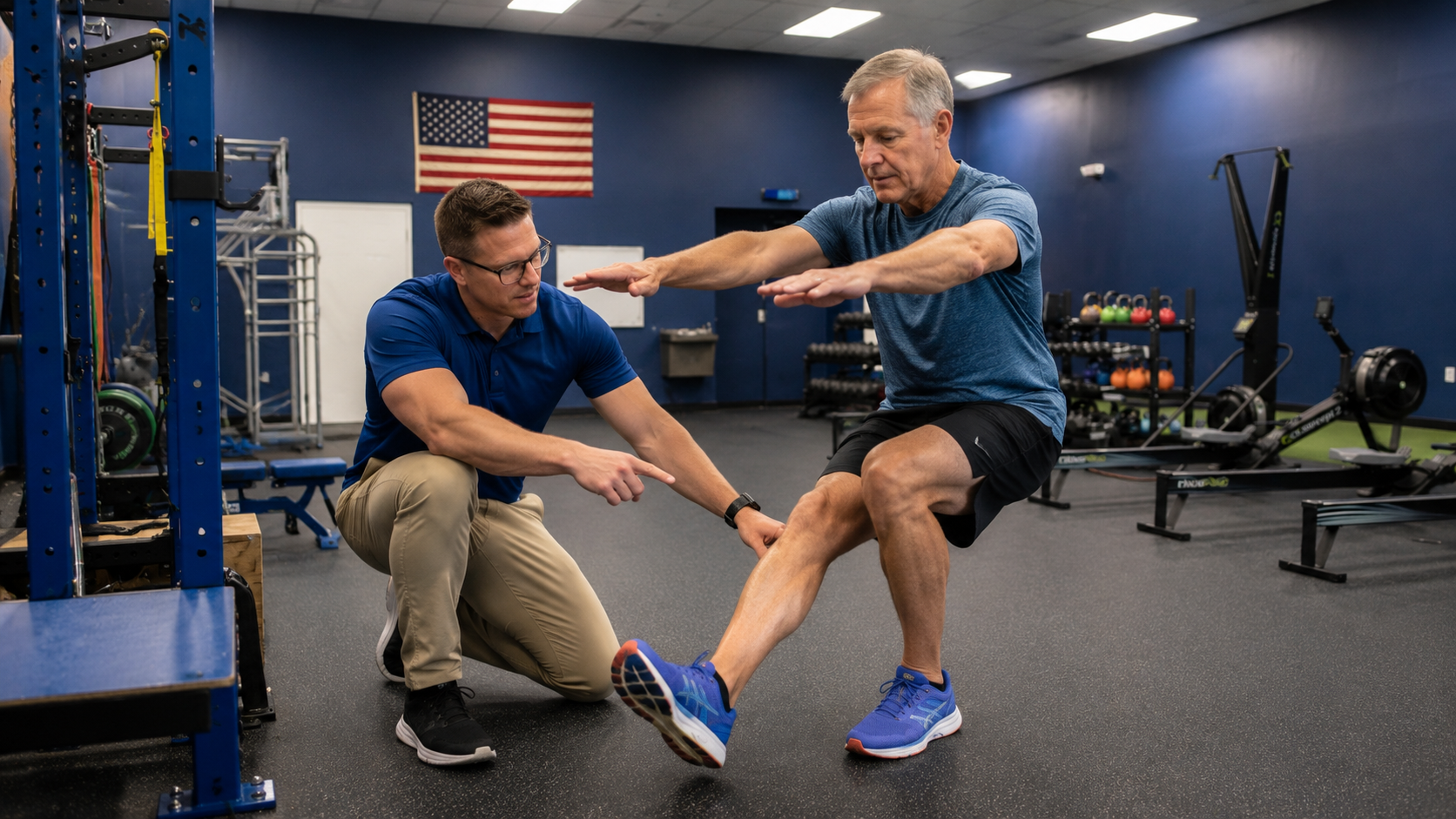
A lot of running injuries do not start with one bad step. They build over weeks of small warning signs – a calf that stays tight, a knee that aches after mile three, a foot that feels off but loosens up once you get moving. That is why learning how to prevent running injuries is less about luck and more about catching problems early, training with purpose, and making sure your body can handle the load you are asking it to absorb.
For runners in Southwest Florida, that matters even more. Flat terrain, heat, humidity, and year-round running can create the illusion that conditions are always ideal. But consistent mileage without enough strength, mobility, and recovery is still a fast path to overuse issues. If your goal is to run longer, faster, or simply without pain, prevention has to be part of the plan.
How to prevent running injuries starts with load management
Most runners think about injury prevention in terms of shoes, stretching, or form. Those things can matter, but training load is usually the bigger driver. Your tissues adapt when stress is high enough to create change but not so high that recovery cannot keep up. Problems show up when mileage, pace, hills, speed work, or race frequency increase faster than your body can tolerate.
That does not mean you need a perfect spreadsheet or rigid rules. It means your week should make sense. If you have added intervals, longer long runs, and extra days of running all at once, your risk goes up. If you are coming back from time off and trying to match your old pace immediately, your risk goes up. The body responds to what it has been prepared for, not what you want it to do.
A smart running plan has progression built in. Hard days should be balanced with easier sessions. Mileage should rise gradually. Deload weeks can help when training volume or intensity has been climbing. If you feel beat up for several runs in a row, that is not a sign to push harder. It is a sign to reassess the dose.
Strength training is not optional if you want durability
If you only run to get better at running, you may improve for a while. But eventually, capacity becomes the limiting factor. Strength work gives your muscles, tendons, and joints more ability to absorb force and maintain good mechanics when fatigue sets in.
This is where many runners leave performance on the table. They assume strength training will make them bulky, tired, or slow. In reality, the right program usually does the opposite. It improves force production, helps control impact, and reduces the compensation patterns that often lead to pain.
The most useful strength work for runners is not random. It should target the hips, calves, hamstrings, core, and single-leg control. Think split squats, deadlift variations, step-downs, calf raises, and rotational core work. The exact exercises depend on the runner. Someone with recurring Achilles pain may need far more calf capacity. Someone with knee pain may need better hip control and single-leg stability. Someone with repeated hamstring tightness may actually be dealing with poor pelvic control or limited hip extension.
That is the bigger point. Injury prevention works best when it is individualized. Generic workouts can help, but precise programming gets better results.
Mobility matters, but only when it matches your limitation
Mobility is often oversimplified. Runners are told to stretch everything, all the time, just in case. That approach wastes time and can miss the real problem.
Some runners are genuinely stiff and need more range of motion at the ankle, hip, or thoracic spine. Others have plenty of mobility and lack the strength or motor control to use it well. If your ankle does not move well, your body may shift stress to the foot, knee, or hip. If your hip extension is limited, you may overwork the low back or hamstrings. But if you keep stretching a joint that is already mobile enough, you are not solving the problem.
This is why good assessment matters. You do not just want more movement. You want the right movement, in the right place, with enough control to support your stride. For many runners, a short pre-run prep focused on ankle mobility, hip motion, and dynamic activation is more useful than a long static stretching routine.
Running form can help, but it is not the whole answer
Form matters, but it should not be treated like a magic fix. Telling every runner to land on the forefoot, increase cadence, or lean forward misses the fact that mechanics are influenced by strength, mobility, fatigue, injury history, and speed.
That said, there are times when a form adjustment helps reduce stress. A slightly higher cadence can reduce overstriding in some runners. Better trunk control can improve how force moves through the system. Arm swing and posture can affect rhythm and efficiency. But if you change mechanics without building the physical capacity to support that change, symptoms often return in a new area.
Good gait analysis is not about making everyone run the same way. It is about identifying whether your current pattern is efficient for your body and your goals. Sometimes the best fix is technical. Sometimes it is physical. Often it is both.
Recovery is part of training, not the reward after it
The runners who stay healthy are not always the ones doing the most. They are often the ones recovering well enough to keep adapting.
Sleep is one of the biggest factors here. If recovery is poor, tissue tolerance drops, soreness lingers longer, and performance becomes less predictable. Nutrition matters too, especially for runners training in Florida heat. Low energy availability, underfueling, and poor hydration can quietly increase injury risk even when the training plan itself looks reasonable.
Easy days should actually be easy. Rest days should not feel like failure. Cross-training can be useful, but only if it supports recovery instead of adding more stress. If your body is giving you signs that it is not bouncing back, the answer is not always more grit. Sometimes it is fewer inputs and better timing.
The pain you ignore today is often the injury you treat later
If you want to know how to prevent running injuries, pay attention to symptom behavior. Pain that warms up and disappears is still information. So is soreness that becomes more localized, stiffness that lasts longer in the morning, or discomfort that appears earlier in a run each week.
A useful rule is to watch trends, not isolated moments. One rough run after poor sleep or a hard week is not always a problem. But recurring symptoms in the same area usually mean something is being overloaded or compensated for. The earlier you address it, the simpler the fix tends to be.
This is where runners get stuck. They wait until pain becomes severe enough to stop them completely. By then, what started as a manageable workload issue may have become tendinopathy, joint irritation, or a movement pattern problem that now requires a longer rebuild.
How to prevent running injuries when you are returning from pain
Coming back from an injury is a different phase than trying to avoid one in the first place. Many runners make the mistake of measuring readiness by pain alone. If it does not hurt much, they assume they are ready for normal training. But symptom reduction is not the same as restored capacity.
A better return-to-run progression looks at more than pain. Can you tolerate single-leg loading? Do you have enough calf strength for repeated impact? Is your hip stable under fatigue? Can you recover from one run in time for the next? If those boxes are not checked, mileage can outpace your physical readiness.
At Back In Motion Physical Therapy & Performance, that rehab-to-performance gap is where a lot of runners either break down again or finally build lasting resilience. The difference is having a plan that progresses from pain relief to movement quality to strength and then back into real running demands.
Prevention is specific to the runner in front of you
There is no universal checklist that guarantees you will never get hurt. A new runner managing body adaptation needs something different than a marathoner chasing a PR. A runner with pelvic instability needs something different than someone dealing with repeated shin pain. Age, training history, prior injuries, goals, and life stress all change the equation.
That is why the best prevention strategy is not guesswork. It is assessment, targeted correction, and progression. You want to know where your mobility is limited, where your strength is lacking, how your mechanics hold up under load, and which parts of your training are outpacing your capacity.
If running keeps bringing you back to the same pain pattern, your body is telling you something specific. Listen early, train smarter, and build the kind of strength and movement quality that lets you keep doing what you love.
About the Author: Dr. Scott Gray




 Call (239) 223-0484
