
Why Your Neck Pain Keeps Coming Back
Why Your Neck Pain Keeps Coming Back
Introduction
Neck pain is one of the most common complaints adults deal with today. For some people, it feels like morning stiffness. For others, it shows up as headaches, tight shoulders, pain while driving, or discomfort after a long day at the computer.
The frustrating part is that many people get temporary relief—only for the pain to return days or weeks later.
If that keeps happening, the issue usually isn’t random. Neck pain often comes from deeper movement and lifestyle patterns that haven’t been fully addressed.
The good news is that once you understand why it keeps returning, you can finally solve it the right way.
1. Your Neck Is Often Compensating for Other Areas
One of the biggest misconceptions about neck pain is believing the neck itself is the only problem.
In reality, your neck works closely with your shoulders, upper back, rib cage, and core. When those areas lose mobility or strength, the neck often has to work harder than it should.
A common example is a stiff upper thoracic spine (mid-back). If your upper back doesn’t rotate or extend well, your neck frequently compensates during daily movements like:
- Turning while driving
- Looking up
- Reaching overhead
- Exercising
- Golf swings or rotational sports
Over time, this extra stress can create tension, irritation, and recurring pain.
That’s why stretching only the neck often gives temporary relief but doesn’t solve the actual issue.
2. Forward Head Posture and Daily Habits Add Up
Modern life encourages poor positioning.
Many adults spend hours each day:
- Looking down at phones
- Leaning toward laptops
- Sitting at desks
- Driving in rounded posture
- Watching TV with poor support
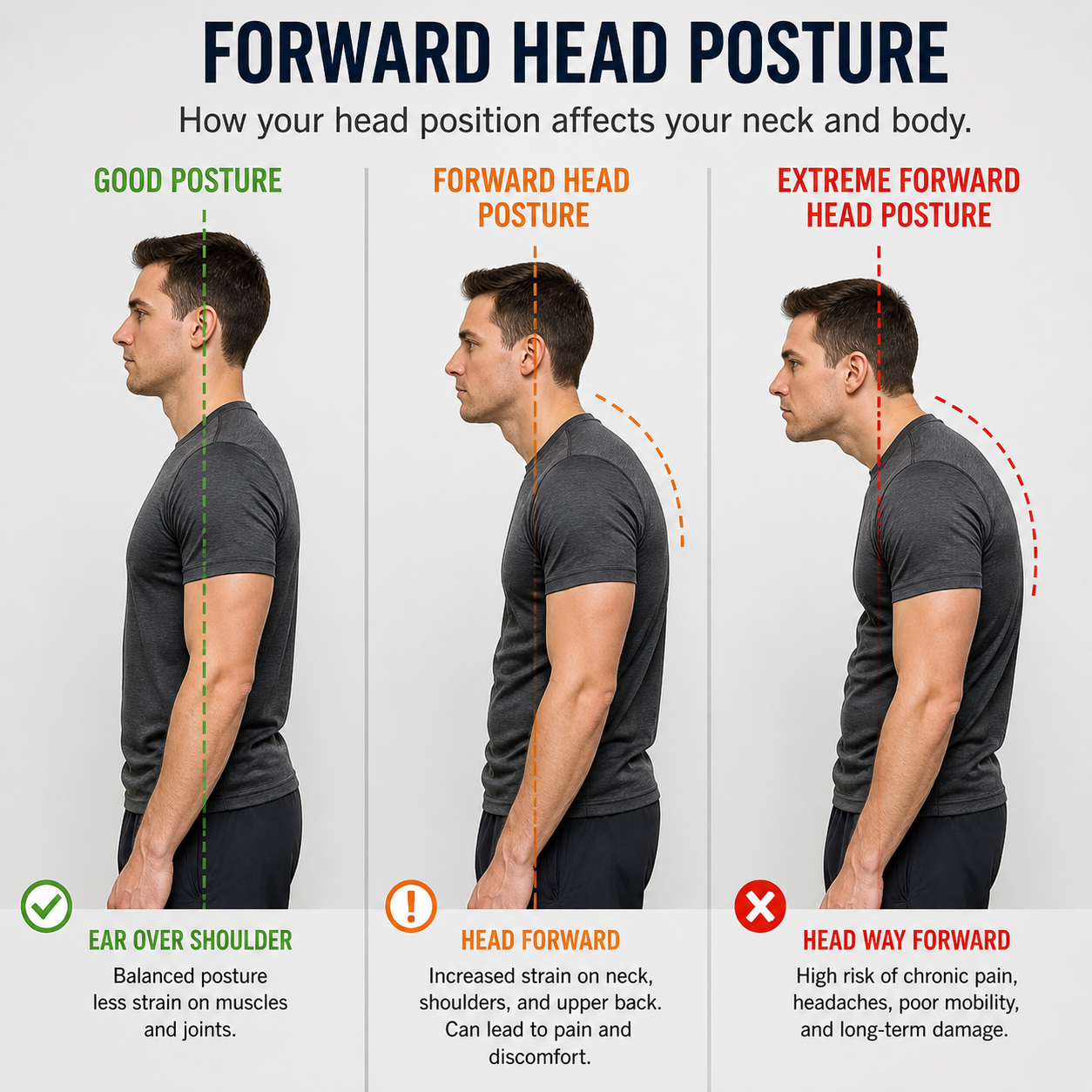
This often creates a forward head position, where the head drifts in front of the shoulders.
When that happens repeatedly, the muscles in the back of the neck and upper shoulders must work overtime to hold the head upright. The longer this continues, the more fatigue and tightness build.
Research shows neck pain is strongly associated with sedentary work and prolonged computer use.
It’s usually not one posture that causes pain—it’s staying in the same posture too long, too often, without enough strength or movement breaks.
3. You’re Treating Symptoms Instead of Building Resilience
Many people manage neck pain with:
- Massage
- Heat
- Stretching
- Rest
- Cracking
- Pain relievers
These tools can absolutely help reduce symptoms.
But if you never improve mobility, strength, posture habits, and movement capacity, the pain often returns during the next stressful event:
- Poor sleep
- Long drive
- Busy work week
- Yard work
- Vacation travel
- Golf or sports
Research consistently supports exercise and active treatment for persistent neck pain rather than passive treatment alone.
The goal should not be to repeatedly calm the pain.
The goal should be to create a body that no longer gets irritated so easily.
That means improving:
- Thoracic mobility
- Deep neck strength
- Shoulder stability
- Postural endurance
- Total-body fitness
Conclusion
If your neck pain keeps coming back, it usually means the root cause has not been fully addressed.
The neck is often reacting to stiffness elsewhere, poor daily mechanics, reduced strength, or repeated stress overload.
Temporary relief can help, but long-term progress comes from fixing the system behind the symptoms.
That means restoring movement, rebuilding strength, and increasing resilience.
As summer approaches, many people want to travel, golf, exercise, and enjoy life more actively. Don’t carry recurring neck pain into the season.
Address it now, solve the real problem, and move into summer feeling stronger and freer.
About the Author: Dr. Scott Gray





 Call (239) 223-0484
