Why Does My Knee Pain Last Longer Than It Should?
You’ve rested it, iced it and maybe taken a few weeks off the tennis court, yet your knee still aches on the stairs and when you get up from a chair. When knee pain lasts longer than it should, the real problem often isn’t the knee itself. It’s the muscles that are supposed to support it, and weak quadriceps are one of the most common culprits we see.
Here’s how the quadriceps protect your knee, how weakness keeps knee pain hanging around, the warning signs to get checked, and the exercises that help.
What the Quadriceps Do for Your Knee
The quadriceps are a group of four muscles on the front of your thigh. They play a big role in how your knee feels and works:
- Straightening the knee: every step you take relies on the quads to straighten your knee
- Stabilizing the joint: they help keep the knee aligned, even during higher-impact activities
- Absorbing shock: by spreading force across the knee joint, strong quads help reduce wear and tear
When these muscles are weak, the knee joint itself takes more of the load. Over time, that can lead to lingering pain and injury.
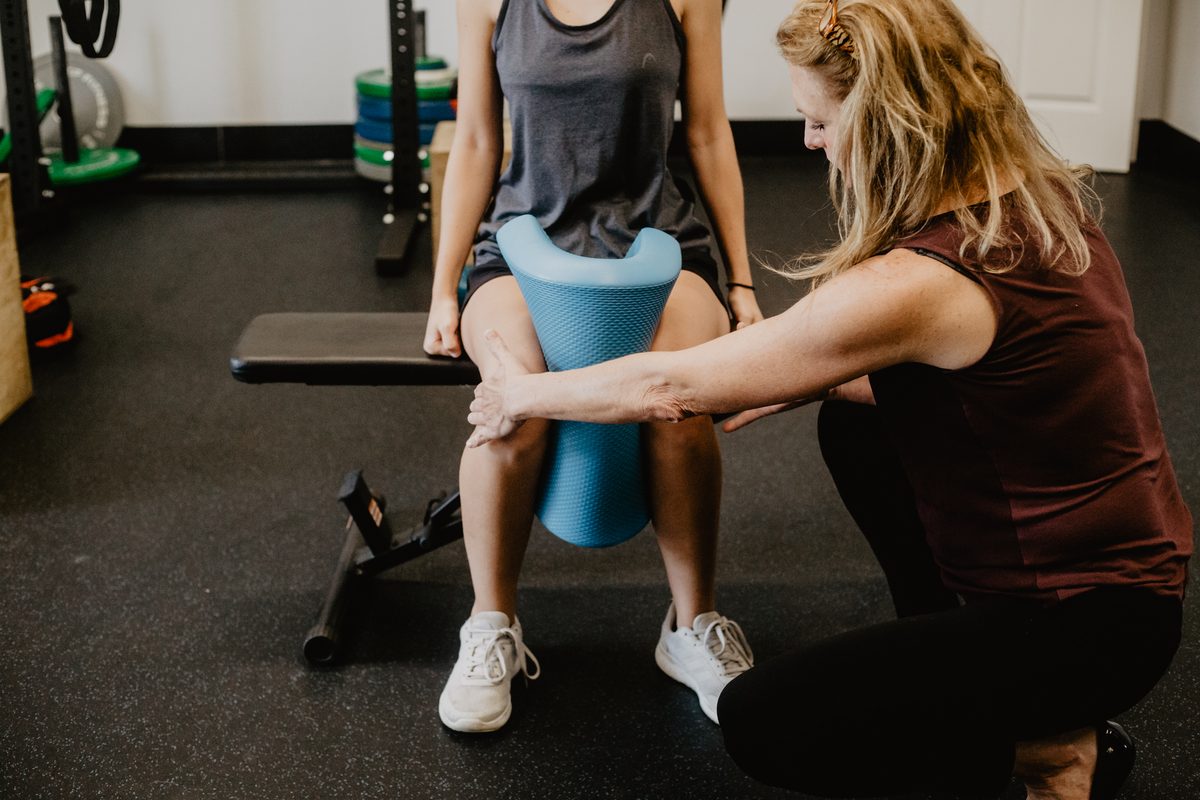
How Weak Quadriceps Keep Knee Pain Going
If your quadriceps aren’t pulling their weight, your knee usually pays for it. Here’s how.
Less Joint Support
Strong quadriceps act like scaffolding for the knee, giving it the stability it needs to stay out of trouble. When they’re weak, the knee can become unstable and the joint takes on more stress.
More Pressure on the Cartilage
Your knee cartilage works as a shock absorber between the bones. Weak quads lead to uneven weight distribution, which puts extra pressure on the cartilage. Over time, that can speed up wear and tear and contribute to osteoarthritis.
Changes in How You Move
When the quads lack strength, your body compensates with different movement patterns. Those workarounds can strain the knee further and lead to repetitive-use injuries and pain that won’t settle. We explain the most common patterns in the most common causes of knee pain.
Restricted Mobility
Without strong quadriceps, even basic movements like bending, squatting or climbing stairs get harder. That makes it tougher to stay active, and inactivity tends to weaken the muscles even more.
When to Get Your Knee Checked
- Swelling: a knee that swells after activity or for no clear reason
- Locking or giving way: the knee catches, locks or buckles
- After an injury: pain that started with a twist, pop or fall
- Night pain: pain that wakes you up or doesn’t ease with rest
- Numbness, redness or fever: any of these alongside knee pain needs prompt medical attention
Exercises to Strengthen Your Quadriceps
The good news is that you can take control of this kind of knee pain by strengthening your quads. Start easy and build gradually. If an exercise causes sharp pain, stop and get guidance.
- Squats: start with bodyweight squats, or squats to a chair, and add resistance gradually. They strengthen the quads along with the glutes and hamstrings. If squats bother your knees, read 3 reasons why squatting hurts your knees.
- Leg extensions: use a leg extension machine or a resistance band to target the quadriceps directly.
- Lunges: forward, reverse and side lunges build strength and balance at the same time.
- Step-ups: step up and down from a sturdy platform or step, focusing on control.
- Wall sits: hold a seated position against a wall to build quad endurance without equipment.
For a step-by-step progression from simple control drills to single-leg strength, see our knee strengthening exercises.
Get Expert Guidance
To make sure you’re doing these exercises correctly and at the right level, work with a physical therapist who can build a plan around your knee and your goals. Don’t overlook nutrition either: a balanced diet with enough protein, vitamins and minerals supports muscle recovery and growth.
Weak quads are a common reason knee pain lingers, but they’re rarely the only one. The hips, ankles and the way you move all play a part, which is why we assess the whole chain.
Stop Living With Lingering Knee Pain
Persistent knee pain doesn’t have to define your life. Our knee pain treatment in Fort Myers starts with The Gray Method™, one-on-one with a Doctor of Physical Therapy, at our clinics in Fort Myers, Cape Coral and Estero, to find why your knee still hurts and fix it.
Start with our Fixing the Cause & Not Just the Symptoms Assessment, or Inquire About an Appointment →
Call our office at (239) 223-0484 to schedule your appointment.
About the Author: Dr. Scott Gray


Get Dr. Gray's Best-Selling Book, Free
Why pain keeps coming back, and how The Gray Method™ helps you fix it for good.
Send Me the Free BookOur Most-Read Articles
- 1Three Conditions That Mimic Sciatica PainBack
- 2The Great Plantar Fasciitis Debate: Why Boots & Cortisone Rarely Fix ItFoot
- 3Common Causes of Lower Back Pain: Herniated DiscBack
- 4The 3 Most Common Symptoms of Knee Meniscal TearsKnee
- 5What Is Hip Bursitis?Hip
- 6Pelvic Pain Explained: When It's Not a UTI but Feels Like OnePelvic
What Do You Need Help With?
- 🩺Back, neck & joint pain→
- 💪Fitness for adults 50+→
- 💙Pelvic health→
- ⚡Sports performance→
- ⛳Golf performance→
Talk to a Doctor of Physical Therapy
One-on-one care that finds the cause of your pain. Fort Myers, Cape Coral & Estero.
Inquire About an Appointment Or call (239) 223-0484