
Meniscus Strengthening Exercises for Knee Control
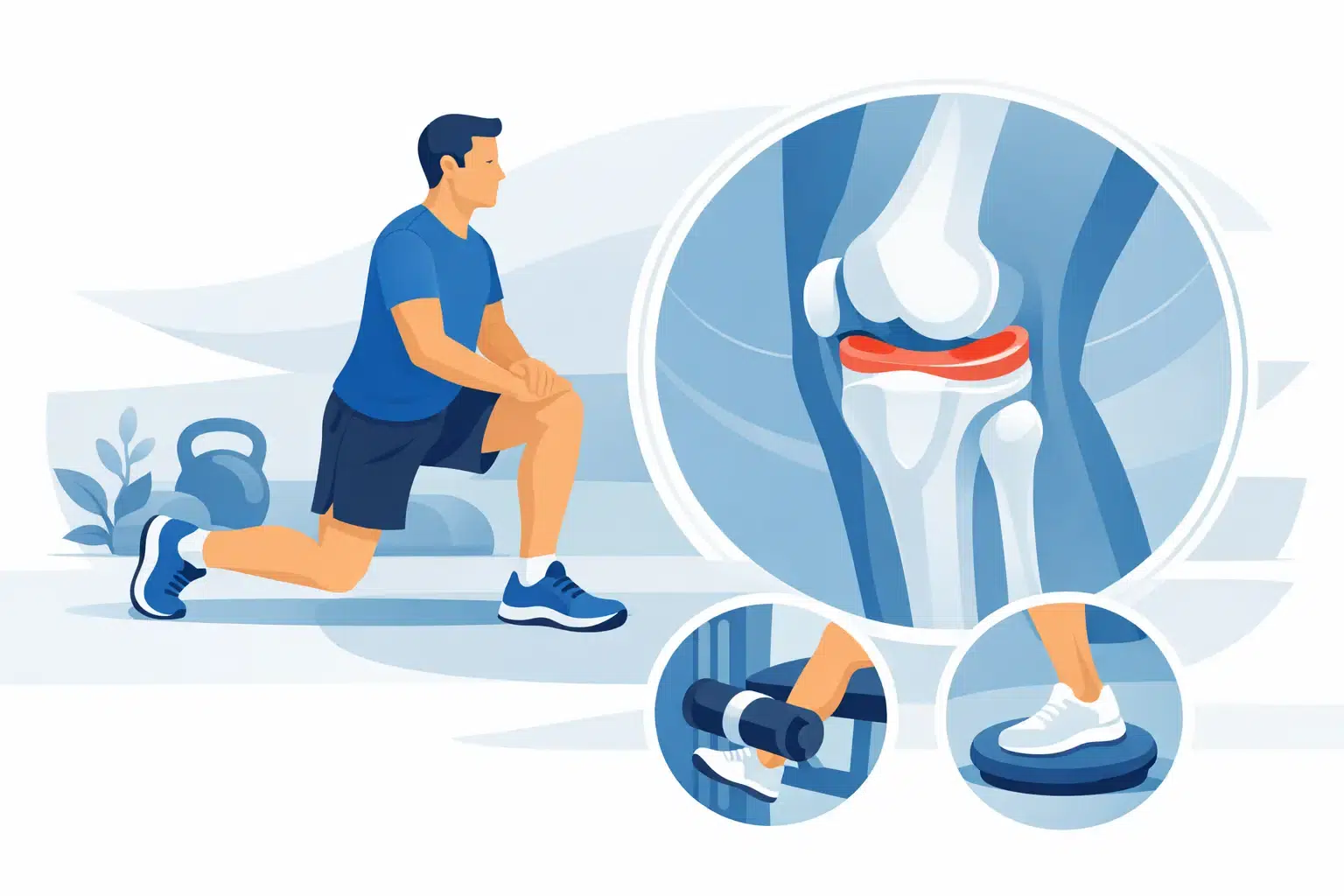
A meniscus injury can make ordinary movements feel unpredictable. A deep squat, a quick pivot on the tennis court, or stepping off a curb may trigger pain, catching, or a sense that the knee cannot be trusted. The right meniscus strengthening exercises do not directly strengthen the meniscus itself. They strengthen the muscles and movement patterns that help control the knee, reduce unnecessary joint stress, and prepare you to return to the activities you care about.
That distinction matters. The meniscus is a piece of cartilage that helps distribute force and improve knee stability. It needs the surrounding system – your quadriceps, hamstrings, glutes, calves, hips, and trunk – to do their jobs well. Trying to force a painful knee through generic exercises can prolong irritation. A structured progression builds capacity without repeatedly provoking symptoms.
First, Know When Exercise Is Appropriate
Strength training is often a major part of conservative meniscus rehabilitation, but it is not the answer for every knee symptom at every stage. If your knee is locked and physically will not straighten, gives way repeatedly, has significant swelling after a recent injury, or you cannot bear weight normally, get evaluated before beginning a program.
Mechanical symptoms also deserve attention. A brief painless click is common and does not automatically mean damage. But catching accompanied by sharp pain, a blocked range of motion, or swelling that continues to return after activity may indicate that the knee needs a more detailed assessment.
For many active adults and athletes, the best next step is not complete rest. It is finding the right entry point. That may mean starting with controlled isometrics and basic strength work, then progressing toward squatting, running, cutting, or sport-specific drills as the knee proves it can tolerate more load.
What Meniscus Strengthening Exercises Should Target
A strong knee is not just a strong quadriceps muscle. The knee has to control force in multiple directions while the foot, hip, and trunk influence how that force is distributed. If the hip drops during a single-leg task, the knee caves inward during a landing, or the ankle lacks the motion needed for a squat, the meniscus may be asked to handle more rotational stress than necessary.
A complete program should improve four things: knee extension strength, hip and hamstring strength, single-leg control, and gradual tolerance to the positions required by your life or sport. A runner needs repeated impact tolerance. A golfer needs rotational control. A tennis player needs the ability to decelerate, change direction, and push off confidently.
Pain is useful feedback, but it should not be the only metric. Watch for swelling later that day or the next morning, loss of knee motion, limping, and pain that escalates with each set. Mild discomfort during a controlled exercise can sometimes be acceptable, especially in a recovering knee. Sharp joint-line pain, catching, or increasing swelling means the exercise needs to be adjusted.
Start With Control Before Depth and Speed
Quad Set and Straight-Leg Raise
Early in recovery, the quadriceps often shut down after a knee injury. Start by lying with the leg straight, tightening the front of the thigh, and gently pressing the back of the knee toward the floor or a rolled towel. Hold for five to 10 seconds while keeping the kneecap facing upward.
If you can fully straighten the knee without a lag, progress to a straight-leg raise. Tighten the quad first, lift the leg slowly, then lower with control. These exercises are simple, but they establish the knee extension control needed for walking, stairs, and later strength work.
Heel-Elevated Bridge
Bridges train the hamstrings and glutes without demanding a deep knee bend. Lie on your back with your heels on the floor or a low bench, squeeze your glutes, and lift your hips without arching through your low back. Begin with both legs, then progress toward a single-leg version only when the pelvis stays level and the knee remains comfortable.
Hamstrings matter because they help control the shin beneath the femur. Better posterior-chain strength can improve how confidently you absorb load during walking, running, and deceleration.
Sit-to-Stand
A sit-to-stand is a practical way to reintroduce squatting. Use a chair or bench height that allows you to stand without sharp pain or a collapse inward at the knee. Keep your feet planted, shift your hips back, and stand by driving through the whole foot.
The goal is not to avoid bending the knee forever. The goal is to earn more bend by demonstrating control at the current depth. As strength improves, lower the seat height, add a light weight, or slow the lowering phase to increase demand.
Progress to Stronger Single-Leg Knee Control
Supported Split Squat
Split squats train each leg separately and reveal side-to-side differences that a two-leg squat can hide. Hold onto a stable support at first. Lower slowly into a short range, keeping the front knee aligned over the middle toes and the trunk steady.
Your front knee may travel forward over your toes if it remains controlled and comfortable. That position is not inherently harmful. What matters is whether the knee tolerates it without sharp pain, swelling, or a loss of control. Gradually increase depth as symptoms and movement quality allow.
Step-Down
Stand on a low step and slowly tap the opposite heel toward the floor. The working knee should track in line with the foot while the pelvis stays level. This exercise develops eccentric quadriceps strength – the ability to control lowering – which is critical for stairs, downhill walking, landing, and stopping quickly.
Start with a low height. A taller step is not automatically better if it causes the knee to cave inward, the foot to collapse, or pain to build. Precision comes before challenge.
Single-Leg Romanian Deadlift
The single-leg Romanian deadlift builds hip strength, balance, and trunk control with relatively little knee bend. Reach one leg behind you as you hinge at the hips, maintaining a soft bend in the standing knee. Keep the hips square and use a wall, dowel, or light fingertip support if balance is the limiting factor.
This is particularly valuable for runners and field-sport athletes because it teaches the leg to manage load while the pelvis stays organized. It also reinforces that knee resilience is built above and below the knee, not only at the joint itself.
Add Rotation, Impact, and Sport Demands Last
Many meniscus symptoms show up during twisting, cutting, and deep flexion. That does not mean rotation should be avoided permanently. It means rotation needs a progression.
Once you can squat, step down, and perform single-leg strength work without symptom flare-ups, begin with controlled lateral movements such as side steps, lateral step-downs, and low-speed lateral lunges. From there, athletes may progress to small hops, landing mechanics, deceleration drills, and direction changes.
The right sequence depends on your goal. Someone returning to recreational golf may need rotational strength and walking tolerance before they need jumping. A basketball player needs a much higher standard: repeated jumps, single-leg landings, hard stops, and reactive cutting without swelling or instability. Clearing the knee for daily activity is not the same as preparing it for competition.
Common Mistakes That Keep the Knee Irritated
The biggest mistake is treating pain-free rest as full recovery. If the knee feels better because you stopped loading it, but strength and control have not returned, symptoms often reappear the moment you resume training or sport.
Another common error is jumping directly to deep squats, twisting drills, or running because the knee feels mostly normal. Tissues adapt to progressive load, not sudden demand. A better approach is to change one variable at a time: increase range of motion, resistance, repetitions, speed, or complexity, then monitor the knee’s response for 24 hours.
Finally, do not ignore the rest of the movement system. Limited ankle motion, poor hip strength, a stiff trunk, or an old foot injury can change how force reaches the knee. At Back In Motion, this is where a root-cause assessment matters. The goal is not simply to make a knee less painful. It is to identify the movement limitations that make the knee work harder than it should.
A Simple Progression Rule
Choose exercises that leave the knee feeling the same or better by the next day. If mild symptoms settle quickly and there is no increase in swelling or stiffness, maintain that level and build gradually. If pain becomes sharp, the knee catches, swelling increases, or walking changes afterward, reduce the range, load, or complexity and reassess.
The most effective plan is the one that matches your knee’s current capacity and your real-world goal. Build control first, then strength, then speed and sport-specific demand. That progression gives your knee more than temporary relief – it gives you a clearer path back to moving with confidence.
About the Author: Dr. Scott Gray




 Call (239) 788-0838