
Ankle Mobility Exercises for Stronger Movement
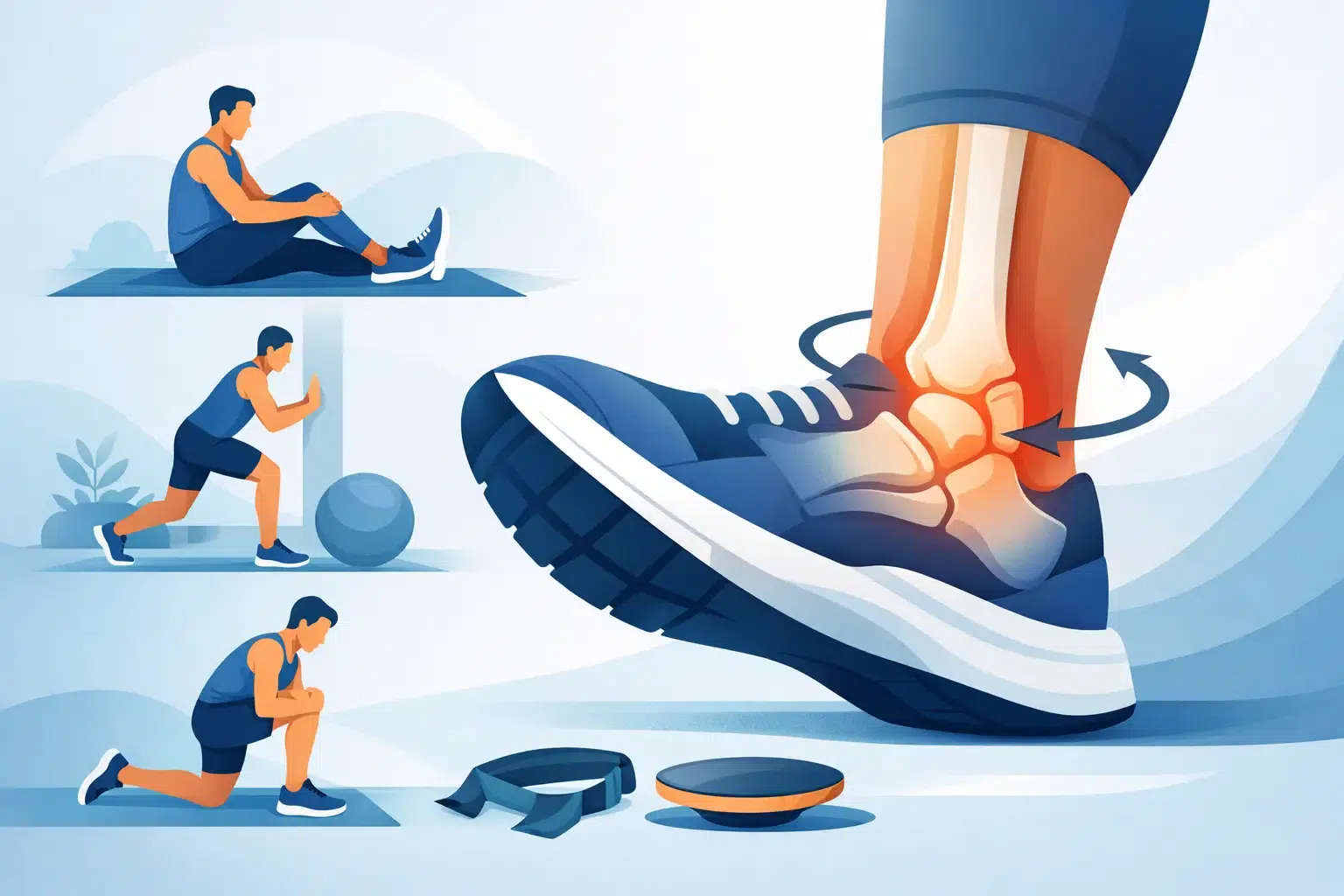
A stiff ankle can change far more than the way your foot moves. It can limit squat depth, alter your running stride, make stairs feel awkward, and shift stress into the knee, hip, or low back. The right ankle mobility exercises help restore usable motion, but only when they address the specific restriction standing between you and the activity you want to return to.
For active adults and athletes, ankle mobility is not about forcing your foot into an extreme position. It is about having enough controlled range to walk, lift, cut, jump, and land with confidence. That distinction matters. Stretching harder is not always the answer, especially after an ankle sprain, surgery, or a long period of training around pain.
Why ankle motion affects your whole movement pattern
The ankle needs to bend forward over the foot, a movement called dorsiflexion. You use it when your knee travels over your toes during a squat, when you descend stairs, and when you absorb force while running or landing. If that motion is restricted, your body will find range somewhere else.
A lifter may raise their heels or let their feet turn out dramatically in a squat. A runner may shorten their stride on one side or rotate through the hip to clear the foot. A golfer may lose pressure through the lead side. These are not always ankle problems, but limited ankle motion is a frequent contributor.
The source of stiffness also matters. It may involve calf muscle tightness, joint restriction after a sprain, swelling, poor foot control, protective guarding from pain, or a combination of factors. An exercise that helps a generally tight calf may not be enough for an athlete whose ankle joint has not recovered normal motion after an injury.
First, find out whether your ankle is actually limited
A simple knee-to-wall check gives you a useful starting point. Stand facing a wall with one foot flat on the floor. Keep the heel down and slowly drive the knee toward the wall, tracking it roughly over the second or third toe. Move the foot back until you can just touch the knee to the wall without the heel lifting or the arch collapsing.
Compare both sides. A meaningful side-to-side difference, pinching in the front of the ankle, sharp pain, or an inability to control the knee position tells you more than the distance alone. For many people, a practical goal is to reach the wall from roughly four to five inches away, but your sport, body structure, and injury history all affect what is appropriate.
Do not chase a number if the movement feels unstable or painful. Quality range is more valuable than borrowed range created by a collapsing foot or a heel that lifts off the floor.
Ankle mobility exercises that build usable range
The following movements work well for many active adults because they combine range with control. Use them as part of a warm-up or a short mobility block three to five days per week. Slow, consistent practice generally produces more lasting change than one aggressive stretching session.
Knee-to-wall ankle rocks
Start in the same position as the assessment, with the toes a few inches from the wall. Keep the heel heavy, maintain a stable arch, and guide the knee forward over the middle toes. Lightly touch the wall, then return to the start without twisting the foot outward.
Perform two to three sets of eight to 12 controlled repetitions per side. This drill is especially useful before squatting, lunging, running, or field sport practice because it rehearses the position your ankle must handle under load.
If you feel a stretch in the calf, that can be normal. A sharp pinch at the front of the ankle, catching, or pain that worsens with each repetition is not something to push through.
Bent-knee calf stretch
Straight-knee calf stretching emphasizes the gastrocnemius, the larger calf muscle that crosses the knee. But ankle dorsiflexion during squatting and stairs also depends heavily on the soleus, a deeper calf muscle that is better targeted with the knee bent.
Stand in a split stance near a wall or counter for balance. Keep the back heel down, bend both knees slightly, and shift your body forward until you feel a stretch low in the calf and above the Achilles. Hold for 30 to 45 seconds, then repeat two or three times.
This is a good option when the restriction feels muscular. If your ankle feels blocked deep in the joint rather than tight in the calf, stretching alone may have limited value.
Half-kneeling ankle mobilization
Place one foot in front of you in a half-kneeling position. Keep the front heel grounded and gently drive the front knee forward over the toes. Pause for two seconds near the end of your comfortable range, then return.
The half-kneeling setup reduces the balance demands and makes it easier to notice whether the foot stays stable. Complete two sets of 10 repetitions. You can use a light band pulling backward around the front of the ankle only if a qualified clinician has shown you the setup and it improves your motion without pain. Band mobilizations are not a universal fix, and poor placement can create more irritation than benefit.
Loaded split squat progression
Mobility has to transfer into strength. A split squat is one of the best ways to teach the ankle to use its available range while the leg supports load. Start with body weight, using a support if needed. Let the front knee travel forward in line with the toes while the heel remains firmly planted.
Move slowly through a range you can control. Begin with two or three sets of six to eight repetitions per side. As control improves, add dumbbells or increase the depth. This progression is often more valuable than adding another stretch because it teaches your calf, foot, knee, and hip to work together.
Calf raises with a pause
An ankle that moves well but cannot control force is still vulnerable. Stand with both feet on the floor or on the edge of a step if that is comfortable. Rise onto the balls of the feet, pause for one to two seconds, then lower slowly for three seconds.
Aim for two to three sets of eight to 15 repetitions. Keep pressure distributed through the big toe, little toe, and heel when you return to the floor. If one ankle has been injured, single-leg calf raises are a useful later benchmark, but do not rush to them if you cannot yet control a double-leg raise without pain or compensation.
Match the drill to your training goal
Before a lower-body strength session, use ankle rocks and a few bodyweight split squats to prepare the range you need. Before a run, tennis match, or pickup basketball game, add calf raises and low-level hopping only if walking and calf work are pain-free.
Longer holds may be useful after training or on recovery days when calf tightness is the main limitation. Before high-speed activity, prioritize controlled movement rather than long, passive stretching. Your body needs to recognize and use the range, not simply tolerate being pulled into it.
For athletes returning from an ankle sprain, mobility is only one part of the plan. Balance, calf strength, lateral control, deceleration, and sport-specific change of direction all need to progress. Feeling less stiff does not automatically mean the ankle is ready for a hard trail run or a return to cutting drills.
When stiffness needs a professional assessment
Get evaluated if ankle motion is limited after a sprain, fracture, surgery, or repeated episodes of giving way. Persistent swelling, bruising, numbness, pain at rest, sharp joint pinching, or inability to bear weight deserve timely medical attention.
It is also worth getting a movement assessment when you have done mobility work consistently but your squat, run, or lunge still feels uneven. The apparent ankle restriction may be influenced by foot mechanics, hip control, prior injury, or how you load the movement. At Back In Motion Physical Therapy & Performance, the goal is not to hand you a generic stretch sheet. It is to identify what is limiting your movement, restore the right capacity, and build a progression that holds up outside the clinic.
Your ankle does not need unlimited flexibility. It needs enough motion, strength, and control for the demands you place on it. Start with clean repetitions, pay attention to symptoms, and let better movement become the foundation for the activities that matter to you.
About the Author: Dr. Scott Gray




 Call (239) 223-0484
