
Physical Therapy Versus Personal Training Explained
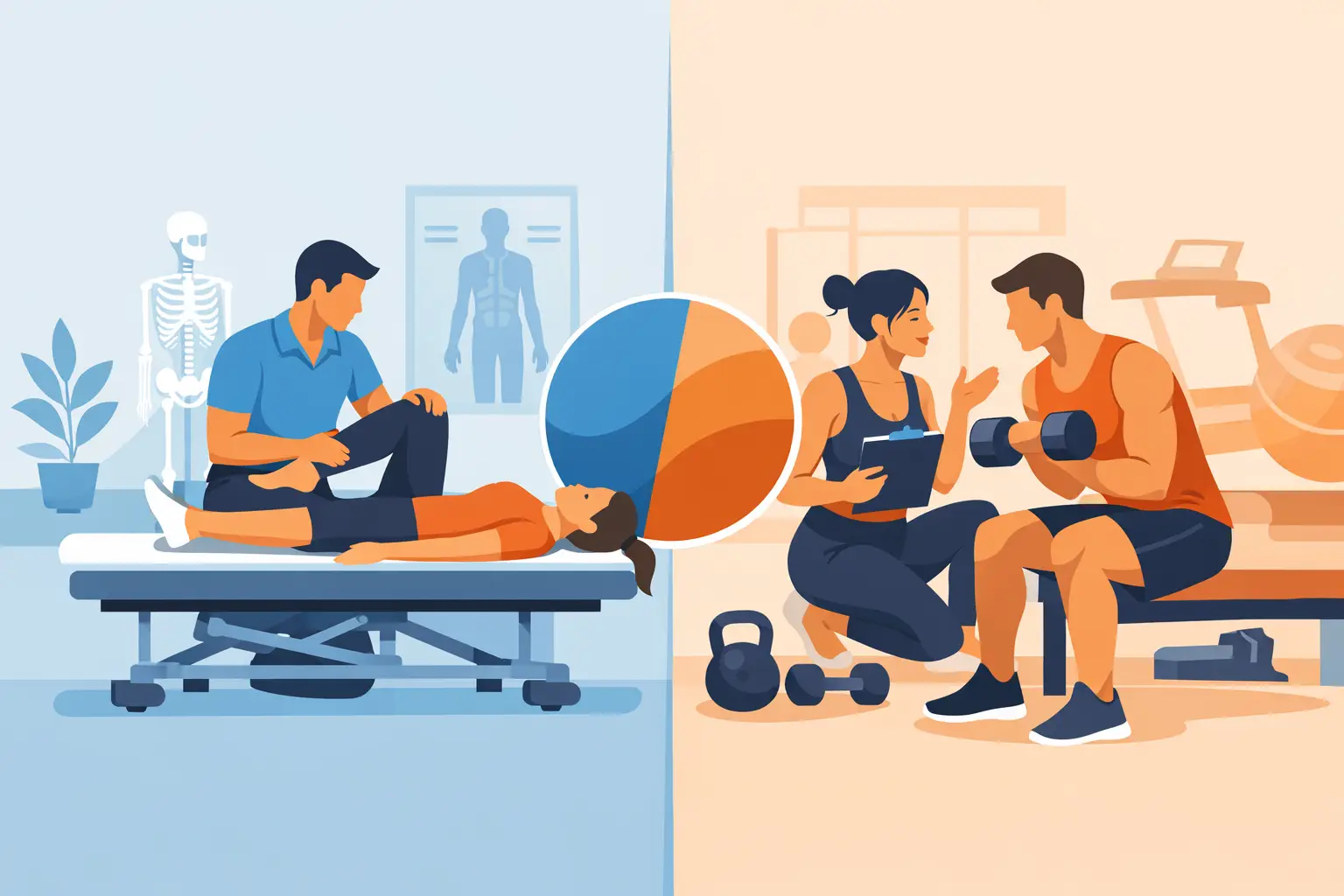
A sharp pain during your golf swing, a knee that swells after a run, or a back that tightens every time you squat is not a problem to push through with more effort. It is also not always a reason to stop moving altogether. Physical therapy versus personal training is not a debate about which service is better. It is a question of what your body needs right now and what will move you safely toward your goal.
For active adults and athletes, the right answer often changes over time. You may need clinical care to understand pain and restore movement first, then structured training to build the capacity that keeps the problem from returning. The mistake is treating these as competing paths when a well-designed plan can connect them.
Physical Therapy Versus Personal Training: The Core Difference
Physical therapy is healthcare focused on evaluating and treating pain, injury, movement limitations, and loss of function. A physical therapist assesses how you move, how your symptoms behave, what tissues may be involved, and which limitations are preventing you from doing what you need or want to do. Treatment may include hands-on care, targeted exercise, education, load modification, and a progressive return-to-activity plan.
Personal training is fitness coaching. A trainer helps clients improve strength, conditioning, body composition, exercise skill, and general physical capacity. A skilled trainer can teach a deadlift, organize an effective program, improve consistency, and help an otherwise healthy client get stronger. That work matters. But personal training is not a substitute for an injury evaluation when pain, instability, numbness, or a meaningful loss of function is present.
The distinction is practical, not just professional. If your shoulder hurts when you reach overhead, the first question is not, “What exercise should I add?” The first question is why that movement is painful and what needs to change. Once that is clear, strength training becomes part of the solution rather than a gamble.
When Physical Therapy Is the Better Starting Point
Start with physical therapy when pain is limiting your daily life, workouts, sport, sleep, or confidence. This includes a new injury, a flare-up of an old problem, persistent tightness that never truly resolves, or a recurring issue that returns each time you increase activity.
Physical therapy is also appropriate when you do not know what you can safely train. A runner with Achilles pain may need a plan that manages tendon loading rather than complete rest. A tennis player with elbow pain may need changes to grip, shoulder mechanics, training volume, and strength. A new mother returning to exercise may need pelvic health physical therapy to address leakage, pressure, pain, or core control before jumping into high-impact workouts.
A thorough evaluation should look beyond the painful spot. Knee pain may be influenced by ankle mobility, hip control, training volume, recovery, or squat mechanics. Low back pain may relate to how you hinge, brace, rotate, sit, sleep, and respond to load. The goal is not to chase symptoms with passive care. It is to identify the meaningful movement and capacity deficits, correct what can be corrected, and build a plan around your actual life.
Seek prompt medical evaluation for severe or worsening symptoms, major trauma, unexplained swelling, fever, progressive weakness, numbness, bowel or bladder changes, chest pain, or shortness of breath. Those signs require more than a workout adjustment.
When Personal Training Makes Sense
Personal training is an excellent fit when you are not dealing with an unresolved injury and your main goal is to become stronger, more conditioned, or more consistent. Maybe you want to improve your golf drive, prepare for a race, build muscle, learn to use the gym with confidence, or stop piecing together random workouts from social media.
The right trainer provides structure and accountability. They can progress exercise selection, volume, intensity, and recovery based on your goals. They can also help you learn movement patterns that matter outside the gym: squatting to pick up a child, hinging to lift a cooler, pressing overhead, carrying equipment, sprinting, changing direction, or building endurance for a long day on the court.
Still, good training requires honest communication. Muscle fatigue after a challenging session is normal. Sharp pain, joint swelling, catching, giving way, numbness, or symptoms that increase from workout to workout are not signals to ignore. A capable trainer recognizes when training should be modified and when a physical therapy assessment is the smarter next step.
The Gray Area: Can You Do Both?
Often, yes. In fact, the transition from rehabilitation to training is where many people either regain confidence or get stuck. Traditional rehab can end when pain improves, even though the person has not rebuilt the strength, speed, coordination, or endurance needed for their sport or lifestyle. On the other side, a training plan can be too aggressive when it overlooks a movement limitation or unresolved pain pattern.
An integrated approach closes that gap. Early in recovery, the focus may be on reducing irritability, restoring range of motion, improving control, and finding exercises you can tolerate. As symptoms improve, the program should shift toward heavier strength work, single-leg control, rotational power, impact tolerance, sprinting, or sport-specific demands when appropriate.
That progression is not identical for everyone. A recreational runner with mild knee discomfort may continue running with modified mileage while building leg strength. An athlete returning after an ACL injury needs objective benchmarks and more deliberate exposure to cutting, jumping, deceleration, and confidence-building. Someone with chronic low back pain may need less fear around movement and a carefully progressive strength plan, not endless stretching.
At Back In Motion Physical Therapy & Performance, this rehab-to-performance progression is central to The Gray Method™. The process begins with a precise assessment, addresses the movement restrictions and loading issues that matter, and progresses toward the demands of real life, training, and sport.
How to Choose the Right Professional
Credentials matter, but the quality of the process matters too. Whether you are seeking physical therapy or training, look for someone who asks clear questions about your goals, training history, symptoms, and daily demands. You should understand what they are seeing, why the plan makes sense, and how progress will be measured.
For physical therapy, expect more than a quick treatment focused only on where it hurts. A strong plan includes assessment, active treatment, education about activity modification, and milestones for returning to the things you enjoy. Manual therapy can be useful when it helps you move or train better, but it should support active progress rather than become the entire plan.
For personal training, look for coaching that is individualized rather than copied from a template. Your program should account for your experience, schedule, recovery, equipment access, and goals. It should also have a progression strategy. Doing hard workouts is not the same as building capacity intelligently.
If you are unsure which service you need, use this simple filter: pain, injury, or uncertainty about movement calls for evaluation first. A clear body with clear goals is ready for training. If you are somewhere in between, the best option is a provider who can coordinate both stages instead of making you start over once your pain settles.
Don’t Wait for Pain to Become Your Training Plan
Many active people wait until a minor issue becomes a forced break. They keep running on the irritated knee, work around the painful shoulder, or avoid the movements they once enjoyed. That approach can shrink your world quickly.
A better move is to get clarity while the problem is still manageable. Find out what is driving the limitation, learn what you can keep doing, and build back with purpose. Your goal should not be simply to feel less pain this week. It should be to trust your body when the next workout, match, round of golf, or busy weekend asks more of it.
About the Author: Dr. Scott Gray


 Call (239) 223-0484
