
How to Recover From Tendonitis Faster
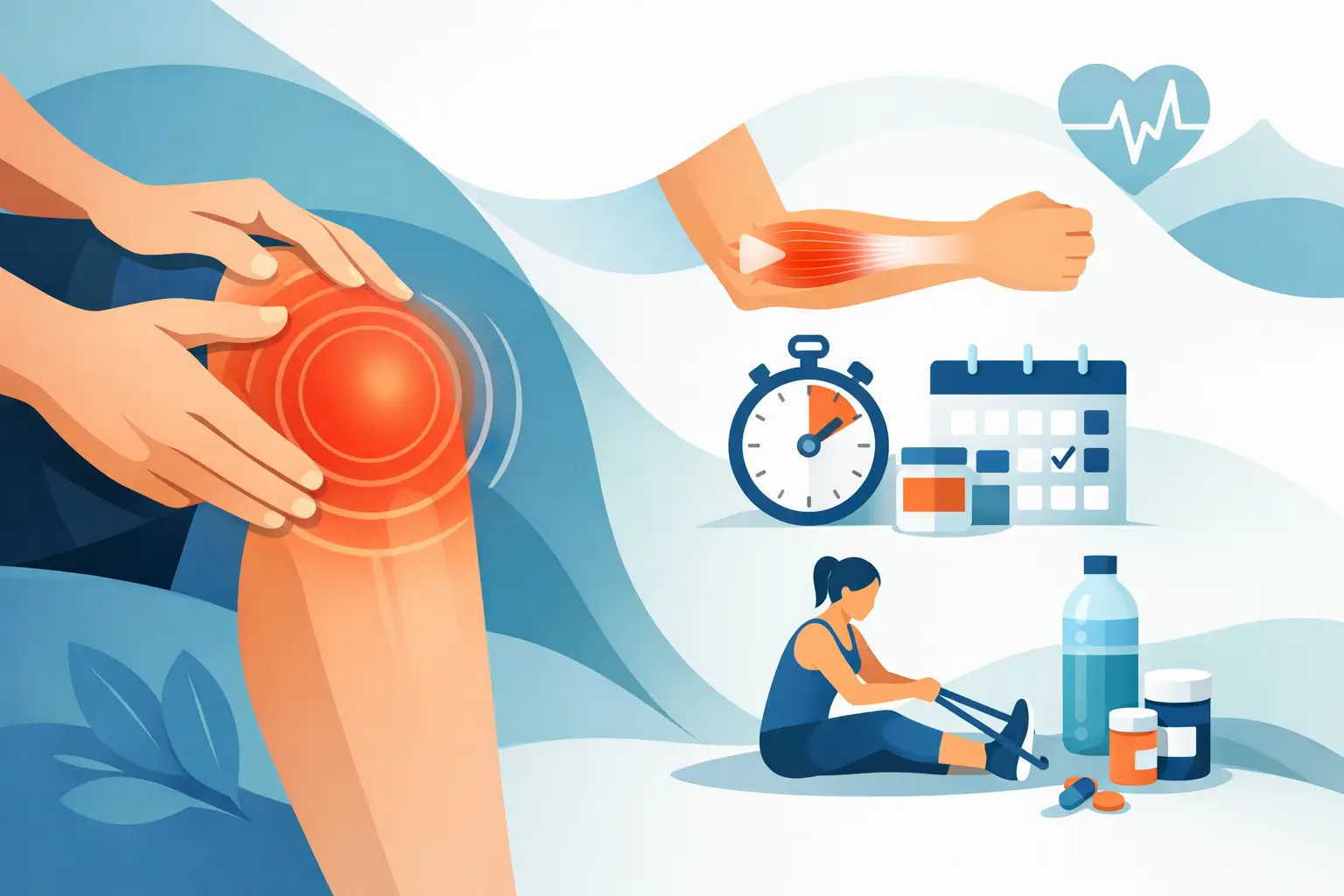
Tendon pain rarely starts with one dramatic moment. More often, it shows up as that nagging ache in your elbow after tennis, stiffness in your Achilles when you get out of bed, or a shoulder that suddenly hates pressing overhead. If you are searching for how to recover from tendonitis, the biggest mistake is treating it like a problem that only needs rest. Tendons do need relief from overload, but they also need the right kind of loading to heal, adapt, and tolerate life again.
That is where many people get stuck. They shut everything down for a week or two, feel a little better, then go right back to the same activity at the same intensity. The pain returns because the tendon was calmed down, not rebuilt.
How to recover from tendonitis without making it worse
The first goal is not to do nothing. The first goal is to reduce irritation enough that the tissue can start responding to treatment. Tendonitis, or more accurately tendon pain that often involves tendon degeneration rather than pure inflammation, tends to react badly to sudden spikes in workload. That means your recovery starts with load management.
Load management is simple in theory and harder in practice. You need to temporarily reduce the movements, speeds, or volumes that trigger pain, without dropping all activity. If running flares your patellar tendon, that does not automatically mean you stop all leg training. It may mean reducing hill sprints, deep plyometrics, or total running mileage while keeping pain-tolerable strength work in place.
This matters because complete rest can reduce your capacity. When your capacity drops, even normal activity starts to feel like overload. That is why the right plan usually keeps you moving while removing the biggest aggravators.
Start by calming the tendon down
In the early stage, your job is to lower irritability. That often means modifying training, daily movement, and even work setup if repetitive tasks are part of the problem. If your pain is a 7 out of 10 every time you load the area, you are probably asking too much of it too soon.
Pain-free is not always required, but pain-guided progression matters. A mild increase in discomfort during rehab can be acceptable if it settles quickly and does not lead to worse pain the next day. If the tendon is angrier for 24 hours after exercise, the dose was too high.
Ice can help with short-term pain relief. So can temporary changes in activity. But passive strategies alone do not restore tendon capacity. They buy you a window. What you do with that window determines whether recovery actually sticks.
Why tendons need strength, not just rest
Tendons are built to transmit force. They get healthier when they are exposed to the right amount of force at the right time. That is why progressive strengthening is usually the center of a good recovery plan.
Early on, isometric exercises can be helpful. These are holds where the muscle contracts without much joint movement, such as a wall sit for patellar tendon pain or a calf raise hold for Achilles pain. Isometrics can reduce pain for some people and provide a starting point when dynamic exercise feels too sharp.
As symptoms settle, the focus typically shifts to slower heavy loading. This is where tendons often make meaningful progress. Slow resistance training helps improve the tendon’s tolerance to force, and it also builds the surrounding muscle that supports the joint. If you only chase pain relief and skip the strength phase, you are much more likely to flare up again.
There is a trade-off here. Progressing too slowly can drag recovery out. Progressing too aggressively can keep the tendon irritated. The answer is not guessing. It is using a structured progression based on symptoms, tissue response, and movement quality.
The right exercise depends on the tendon involved
There is no one-size-fits-all tendonitis program. Achilles tendon pain responds differently than lateral elbow pain. Rotator cuff tendon issues require a different strategy than gluteal or patellar tendon pain. The movement demands of your sport matter too.
A runner with Achilles pain may need calf loading, ankle mobility work, and a smarter return-to-run plan. A tennis player with elbow pain may need grip and forearm loading, but also shoulder and trunk mechanics addressed so the elbow is not doing more than it should. A lifter with shoulder tendon pain may need to rebuild scapular control and pressing tolerance rather than just avoid upper body training.
That is the difference between generic rehab and root-cause-driven rehab. The tendon is the painful tissue, but not always the only problem.
Mobility, technique, and movement quality still matter
Strength is essential, but it is not the whole picture. Some tendons stay irritated because the body keeps forcing load through a poor movement pattern. Limited ankle mobility can increase stress on the Achilles or patellar tendon. Shoulder stiffness or poor thoracic motion can change how force is distributed during pressing, throwing, or serving.
This does not mean everyone needs endless stretching. It means you need the specific mobility and control work that improves how you move under load. If a joint cannot access the range it needs, or if you cannot control that range, the tendon often pays the price.
Technique also matters. Runners may need cadence or training-volume adjustments. Golfers and tennis players may need swing mechanics reviewed. Lifters may need squat, hinge, or pressing modifications while tissue tolerance improves. These changes are not about making movement look pretty. They are about reducing unnecessary stress and giving the tendon a better environment to recover.
Recovery timelines are real, and they are often longer than people expect
One reason tendon pain becomes chronic is that people underestimate how long tendon remodeling can take. You may feel better in a few weeks, but that does not always mean the tissue is ready for full-speed sport, maximal lifting, or repeated high-volume activity.
Mild cases can improve in several weeks with the right plan. More persistent tendon pain can take a few months. If symptoms have been present for a long time, recovery usually takes longer. That is not a sign you are broken. It is a sign that tendons respond best to consistent loading over time, not quick fixes.
This is also why random exercise hopping tends to fail. A few calf raises one week, some stretching the next, then total rest after a flare-up is not a progression. It is just activity without strategy.
When to get help
If pain is lingering beyond a few weeks, getting worse, or repeatedly returning when you resume activity, it is worth being assessed. The same is true if you are changing your training, limping, losing strength, or avoiding movements you normally trust.
A strong rehab plan should tell you three things clearly. What tissue is involved. Why it is being overloaded. What progression will get you back to full function. At Back In Motion, that is where a detailed movement assessment changes the conversation. Instead of chasing symptoms, the goal is to identify the restrictions, loading errors, and strength deficits keeping the tendon irritated.
How to recover from tendonitis and return to sport safely
The final phase is where many active adults and athletes make their biggest mistake. They go from rehab exercises straight back into full competition, long runs, or heavy training blocks. Tendons do not love that jump.
A smart return-to-sport plan rebuilds speed, impact, elasticity, and sport-specific tolerance gradually. If your Achilles tendon is improving, you may progress from heavy calf raises to pogo hops, then controlled running intervals, then faster efforts. If your shoulder is recovering, you may move from isolated cuff loading to pressing, then higher-speed work, then full-volume sport demands.
Your rehab should eventually look more like the activity you want to return to. If it never progresses beyond basic exercises on a table or band work in a corner, you may not be preparing the tendon for the real world.
The goal is not just to get pain down. The goal is to build a body that can handle what you ask of it.
What usually slows recovery down
A few patterns show up again and again. The first is doing too much too soon because pain eased for a couple of days. The second is doing too little for too long and never rebuilding tendon capacity. The third is focusing only on the sore spot while ignoring the surrounding mechanics and strength deficits that caused the overload.
Sleep, nutrition, and recovery habits matter too. They will not replace good rehab, but poor recovery habits can absolutely slow it down. If you are training hard, under-eating, sleeping five hours a night, and expecting irritated tissue to calm down, you are making the process harder than it needs to be.
If you want to know how to recover from tendonitis, think bigger than symptom control. Reduce overload. Keep the tendon moving. Progress strength with intention. Clean up the movement patterns that keep reloading the issue. Then earn your way back to full activity instead of rushing there.
That approach takes more discipline than simply resting until the pain fades, but it is also what gives you the best chance of coming back stronger, more durable, and more confident in your body.
About the Author: Dr. Scott Gray


 Call (239) 223-0484
