
Best Rehab Approach for Athletes That Works
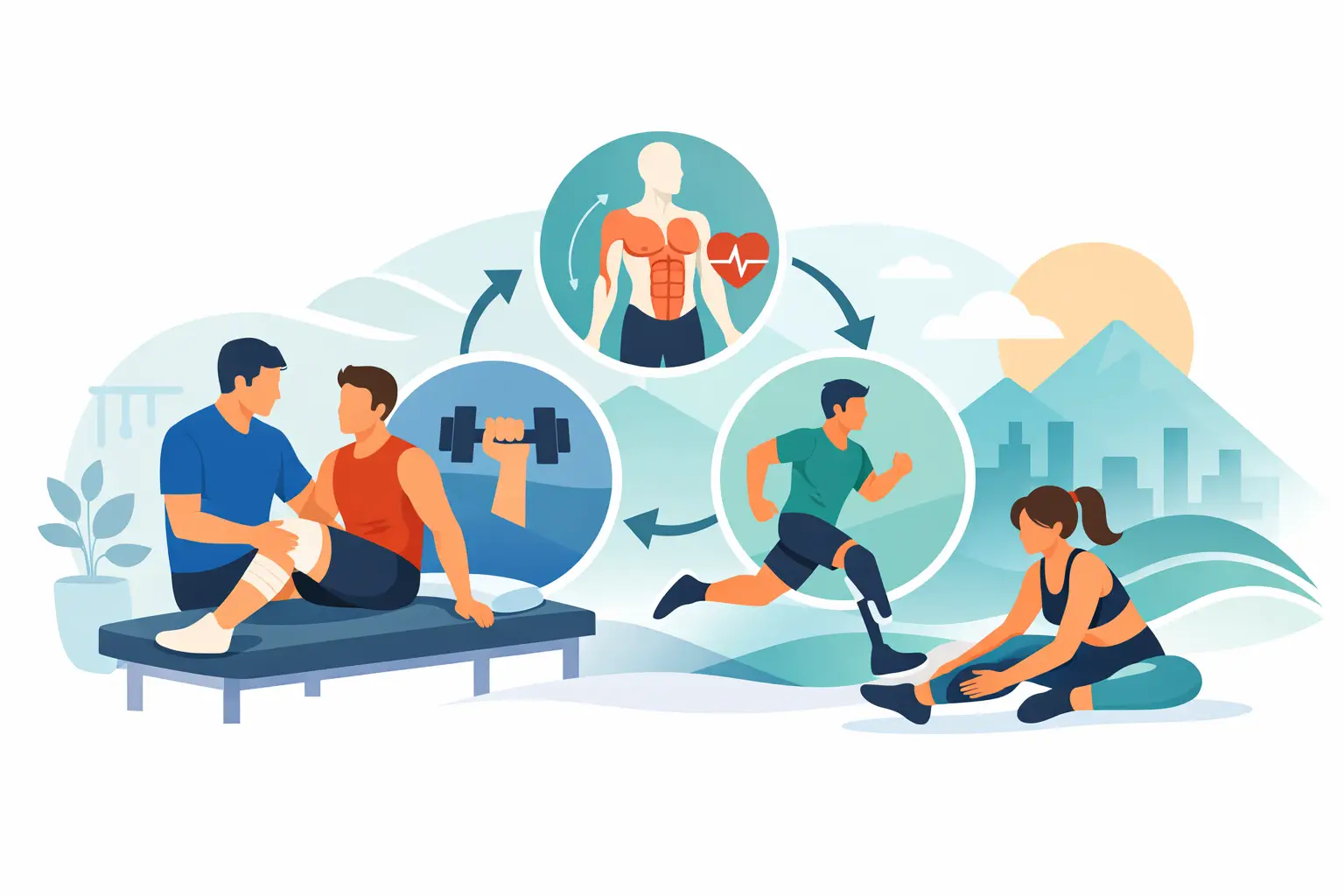
A sore knee after a long run is one thing. A sore knee that keeps showing up every time you increase mileage, cut hard on the court, or squat heavy is something else. If you are trying to find the best rehab approach for athletes, the real question is not how fast you can calm symptoms down. It is how accurately you can identify the problem, fix what is driving it, and build your body back to the demands of your sport.
That distinction matters. Too many athletes get stuck in a cycle of rest, basic exercises, temporary relief, and repeat injury. Pain decreases, training resumes, and the same issue returns because the plan never addressed movement quality, strength deficits, workload tolerance, or the way the athlete actually performs.
What is the best rehab approach for athletes?
The best rehab approach for athletes is not passive care, generic protocols, or a one-size-fits-all exercise sheet. It is a structured process that starts with a precise assessment, identifies the root cause of the issue, restores mobility and control where needed, rebuilds strength progressively, and then transitions into sport-specific loading.
In other words, good rehab should not end when pain drops. It should end when the athlete can handle the physical demands of training and competition with confidence.
That sounds simple, but it changes everything. If a baseball player has shoulder pain, the answer is rarely just the shoulder. If a runner has recurring Achilles pain, the tendon matters, but so do calf strength, ankle mobility, stride mechanics, and training volume. If a golfer has low back pain, rotation, hip mobility, core control, and power transfer may all be part of the picture.
A strong rehab plan respects symptoms, but it does not stop there.
Why symptom-based rehab often falls short
Many athletes have already tried the standard route. Ice, rest, stim, massage, a few stretches, maybe some band work, then a quick return to activity. Sometimes that works for a mild flare-up. Often, it does not hold up.
The problem is not that those tools are useless. The problem is when they become the whole plan. Manual therapy can help reduce pain and improve motion. Soft tissue work can make movement feel better. Rest can calm an irritated area. But none of those, by themselves, prepare an athlete to sprint, jump, rotate, lift, or absorb force repeatedly.
Athletes do not just need pain relief. They need capacity. They need a body that can manage load. That is where rehab has to become more than treatment.
The best rehab approach for athletes starts with the right assessment
A real assessment should answer more than one question. Yes, it should identify the painful structure or tissue involved. But it should also uncover why that tissue became overloaded in the first place.
That means looking at joint mobility, movement patterns, strength asymmetries, balance, coordination, and training history. It means asking what changed before the pain started. Did running volume jump too quickly? Did lifting intensity increase? Did sleep, recovery, or stress shift? Did old movement restrictions force other areas to compensate?
This is where many athletes finally get clarity. The painful area is often the site of symptoms, not the source of dysfunction. A knee may hurt because the hip is weak, the ankle is stiff, and the athlete cannot decelerate well. An elbow may hurt because the shoulder and trunk are not doing their share.
When the assessment is precise, the treatment plan becomes precise too.
Rehab should move in phases, not random exercises
One of the clearest signs of a strong rehab process is progression. Early-stage rehab and return-to-sport training should not look the same, but they should connect.
Phase 1: Settle irritation and restore basic movement
At the beginning, the goal is to calm the area enough to move well again. That may include hands-on treatment, temporary activity modification, and exercises that improve joint motion, tissue tolerance, and muscular control. The point is not to shut training down forever. The point is to create a starting point the body can build from.
This phase should still feel active. Athletes usually do better when they understand what they can do, not just what they need to avoid.
Phase 2: Rebuild strength and control
Once symptoms are more manageable, rehab has to progress into strength. This is where many plans either become too cautious or too generic. Band exercises and bodyweight drills have value, but they are rarely enough on their own for an athlete returning to high demand activity.
Strength work should match the athlete’s deficits and goals. That may mean isolated work for weak muscle groups, but it also needs to include integrated patterns such as squatting, hinging, pushing, pulling, carrying, rotating, landing, and changing direction when appropriate.
Control matters here too. An athlete who is strong in one plane but unstable in another is still at risk when speed and fatigue enter the picture.
Phase 3: Build load tolerance and sport-specific capacity
This is the phase that often gets skipped, and it is one of the biggest reasons injuries return. Feeling better is not the same as being ready.
A runner needs graded exposure to mileage, pace, and terrain. A tennis player needs rotational power, deceleration, and repeated overhead demand. A lifter needs to tolerate volume and intensity under the bar. A field sport athlete needs acceleration, braking, cutting, and reactive control.
Rehab should prepare the athlete for those exact demands. If the program never gets close to sport speed, sport force, or sport fatigue, the athlete is guessing on game day.
Why individualized rehab beats protocol-driven care
There is no single exercise that qualifies as the best rehab approach for athletes because athletes are not all dealing with the same problem, even when the diagnosis sounds similar.
Two runners can both have patellar tendon pain and need very different plans. One may need heavy slow strength and landing mechanics work. The other may need hip control, ankle mobility, and a smarter return to speed sessions. Two baseball players with shoulder pain may present with completely different limitations in thoracic rotation, scapular control, and throwing workload.
This is why protocol-only rehab often misses the mark. Protocols can offer a useful starting framework, but athletes need decisions based on their presentation, their sport, and their stage of recovery.
A personalized model also improves buy-in. When athletes understand why they are doing each phase, progress becomes measurable instead of frustrating.
Rehab and performance should not live in separate worlds
For active adults and athletes, the best outcomes usually happen when rehab flows naturally into performance training. That is especially true for people who do not just want to be pain-free. They want to run, compete, lift, golf, train, and keep doing it without feeling fragile.
This is where a rehab-to-performance system stands out. Instead of discharging the athlete the moment pain is reduced, the process continues into resilience building. Mobility is reinforced under load. Strength is carried into power. Basic balance becomes real-world control. Exercises start to resemble the demands of the athlete’s environment.
That bridge matters. It is one thing to pass a clinic test. It is another to trust your body during a hard sprint, a heavy deadlift, or the back nine of a tournament.
At Back In Motion Physical Therapy & Performance, that transition is a core part of the process because athletes do not need disconnected care. They need a plan that moves from pain relief to movement restoration to strength and performance with purpose.
What athletes should look for in a rehab plan
If you are deciding whether a rehab program is actually built for athletes, ask a few practical questions. Was the evaluation detailed, or rushed? Are you getting a diagnosis plus an explanation of what is driving it? Is the program progressing based on your response, or are you repeating the same low-level drills for weeks? Is there a return-to-sport strategy, or are you expected to figure that out on your own?
You should also pay attention to whether your provider understands training. Athletes need clinicians who can think beyond the treatment table. If your rehab never discusses lifting, running, workload, mechanics, or performance demands, the plan may be too narrow.
The best rehab plans are clear, progressive, and demanding in the right way. They respect healing timelines, but they do not hide behind them. They challenge the body as it gets stronger and adjust when needed.
The real goal is not just recovery
For athletes, recovery is only the midpoint. The real goal is returning with better movement quality, better strength, and more confidence than before the injury. Sometimes that means moving slower at first so you can progress faster later. Sometimes it means addressing a limitation that has been there for years, not just the pain that showed up last month.
That is why the best rehab approach for athletes is the one that treats the full problem. Not just the symptoms. Not just the injured tissue. The whole chain of movement, load, strength, and sport demand.
When rehab is done right, you do not just get back on the field, in the gym, or onto the course. You come back with a body that is better prepared to stay there.
About the Author: Dr. Scott Gray


Get Dr. Gray's Best-Selling Book, Free
Why pain keeps coming back, and how The Gray Method™ helps you fix it for good.
Send Me the Free BookOur Most-Read Articles
- 1Three Conditions That Mimic Sciatica PainBack
- 2The Great Plantar Fasciitis Debate: Why Boots & Cortisone Rarely Fix ItFoot
- 3Common Causes of Lower Back Pain: Herniated DiscBack
- 4The 3 Most Common Symptoms of Knee Meniscal TearsKnee
- 5What Is Hip Bursitis?Hip
- 6Pelvic Pain Explained: When It's Not a UTI but Feels Like OnePelvic
What Do You Need Help With?
- 🩺Back, neck & joint pain→
- 💪Fitness for adults 50+→
- 💙Pelvic health→
- ⚡Sports performance→
- ⛳Golf performance→
Talk to a Doctor of Physical Therapy
One-on-one care that finds the cause of your pain. Fort Myers, Cape Coral & Estero.
Inquire About an Appointment Or call (239) 223-0484
