
Why Knee Pain Today Doesn’t Mean Knee Replacement Tomorrow
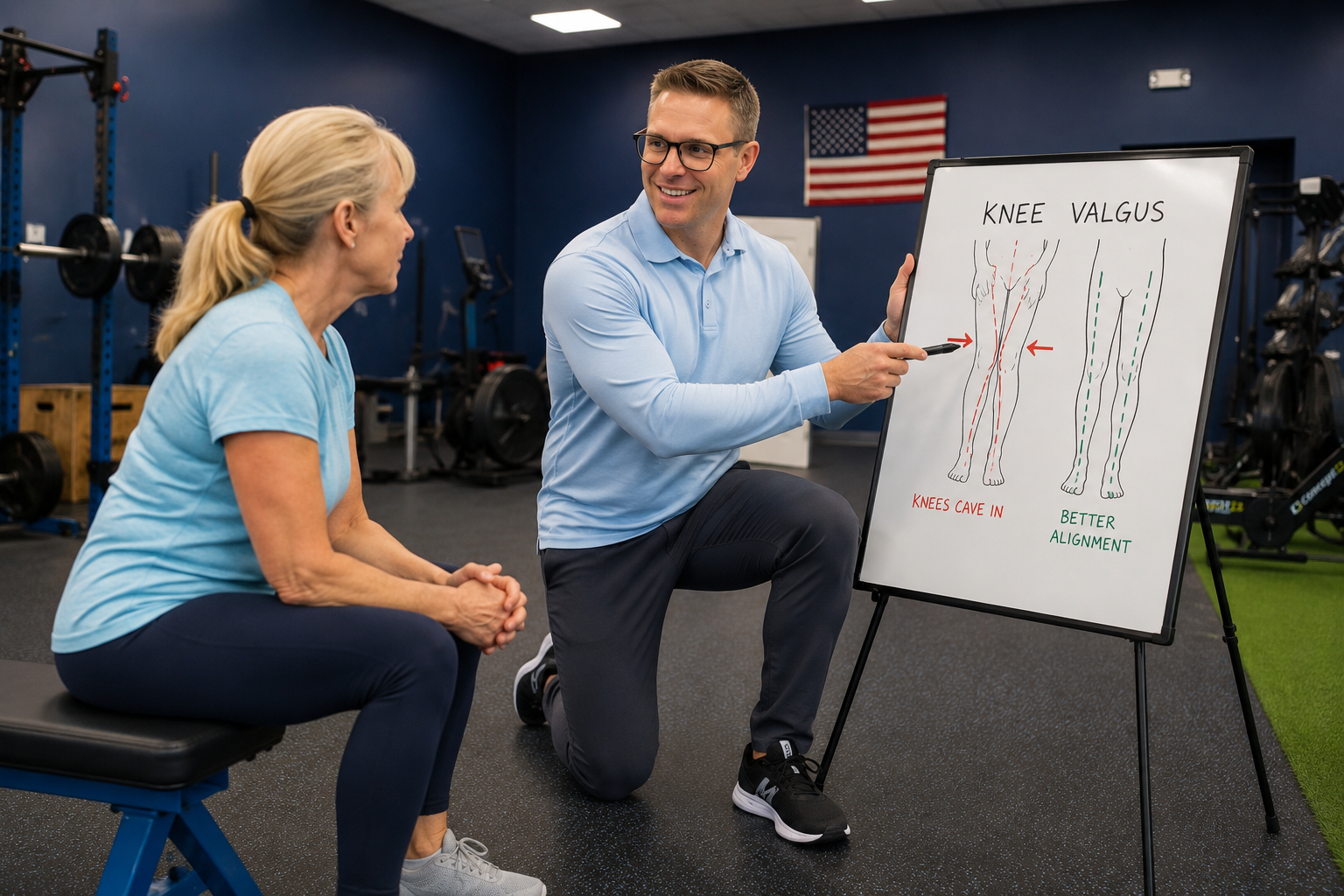
One of the biggest fears people have when knee pain starts is that they’re on a one-way path toward knee replacement surgery.
They notice discomfort during walks, stiffness getting out of a chair, or pain during exercise and immediately wonder:
“Is my knee wearing out?”
The truth is that not all knee pain is arthritis, and not all arthritis leads to knee replacement.
In fact, many of the people we evaluate at our clinic have knee pain that has little to do with joint degeneration and everything to do with how they’re moving.
Is It Arthritis or Something Else?
While only a thorough evaluation can determine the true source of your symptoms, there are several classic signs that knee arthritis may be contributing to your pain.
Common signs of knee arthritis include:
- Grinding, crunching, or creaking sensations in the knee
- Pain with prolonged weight-bearing activities such as walking or standing
- Pain directly along the inside or outside joint line of the knee
- Progressive stiffness, especially in the morning
- Loss of knee motion
- Gradual development of a bow-legged appearance
These symptoms can indicate changes within the joint itself.
However, many people experiencing knee pain don’t have these classic arthritis symptoms.
Instead, they experience pain:
- During squats
- Going up or down stairs
- During workouts
- While running, golfing, or playing pickleball
- After sitting for prolonged periods
When this happens, the problem is often biomechanical rather than degenerative.
The Most Common Cause of Biomechanical Knee Pain: Knee Valgus
One of the most common movement faults we see is called genu valgus, often referred to as “knee valgus” or “knees caving inward.”
This occurs when the knee collapses toward the midline during walking, squatting, lunging, stair climbing, or athletic movements.
Over time, this creates abnormal stress on the knee joint, tendons, ligaments, and surrounding tissues.
The result?
Pain.
The good news is that knee valgus is often highly trainable and correctable.
What Causes Knee Valgus?
While every person is different, we commonly find three underlying contributors.
1. Weak Glutes and Hip Stabilizers
Your glute muscles help control the position of your femur (thigh bone).
When these muscles aren’t doing their job, the femur rotates inward and the knee follows.
This is one of the most common findings we see during movement assessments.
Signs include:
- Knees collapsing inward during squats
- Difficulty balancing on one leg
- Hip weakness during exercise
2. Limited Ankle Mobility
The knee sits between the hip and ankle.
If the ankle lacks mobility, particularly dorsiflexion (the ability to bring the knee over the foot), the body often compensates by allowing the knee to collapse inward.
Many patients are surprised to discover that improving ankle mobility can dramatically improve knee mechanics.
3. Poor Movement Patterns and Motor Control
Sometimes the issue isn’t strength or mobility.
It’s coordination.
The body has simply developed a movement strategy that places excessive stress on the knee.
These patterns often develop gradually over years and become automatic.
The good news is that movement patterns can be retrained.
How The Gray Method™ Addresses Knee Pain
At Fort Myers Physical Therapy & Fitness, we don’t simply chase symptoms.
The Gray Method™ is designed to identify the root cause of movement dysfunction and build a long-term solution.
Rather than focusing solely on where the pain is located, we evaluate:
- Movement quality
- Strength deficits
- Mobility restrictions
- Balance and stability
- Functional capacity
For someone experiencing knee valgus, this often means:
Step 1: Restore Mobility
We identify restrictions in the ankle, hip, and surrounding tissues that may be contributing to poor mechanics.
Step 2: Build Stability
We strengthen the muscles responsible for controlling alignment and absorbing force.
Particular emphasis is placed on the glutes, hips, and core.
Step 3: Retrain Movement
We teach the body how to squat, lunge, step, and move efficiently without excessive stress on the knee.
Step 4: Build Resilience
Once pain improves, we progress patients into strength and fitness training so they can maintain their results and continue doing the activities they love.
This is where true long-term success occurs.
The Bottom Line
Knee pain can be concerning, but it doesn’t automatically mean your knee is deteriorating or that surgery is inevitable.
If you’re experiencing grinding, joint line pain, increasing stiffness, or progressive bow-legged alignment, arthritis may be part of the picture.
But if your pain occurs primarily during exercise, stairs, squats, or activity—and especially if you’ve been told your imaging looks “normal”—there’s a good chance biomechanics are playing a major role.
The most common biomechanical issue we see is knee valgus, and in many cases, it can be improved through the right combination of mobility, strength, and movement retraining.
The goal isn’t simply to reduce pain.
The goal is to restore confidence, improve performance, and help you continue doing the things you love for years to come.
About the Author: Dr. Scott Gray




 Call (239) 223-0484
