
Scoliosis: How to Move Stronger and With Confidence
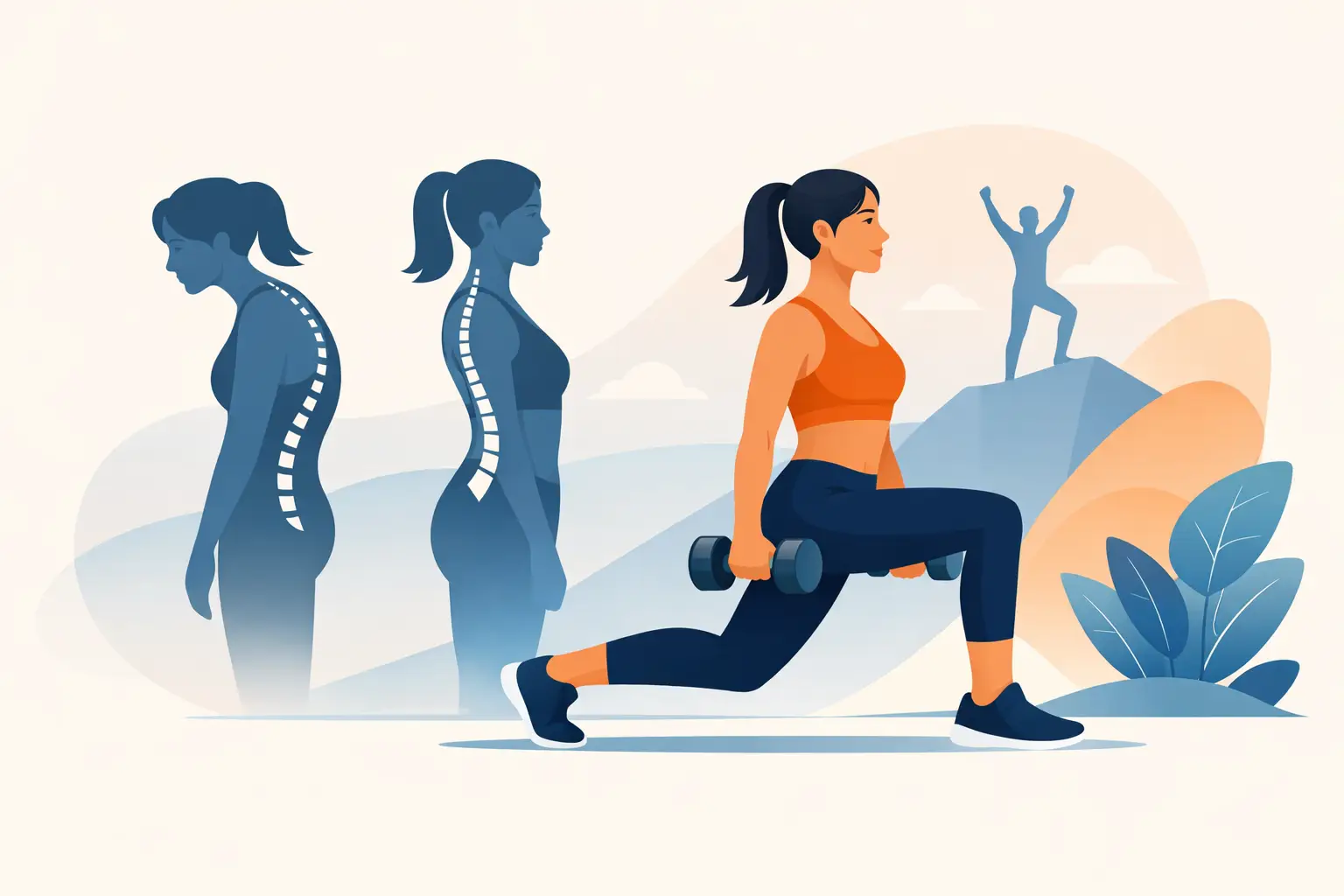
A scoliosis diagnosis can create a lot of uncertainty, especially when back discomfort starts affecting workouts, golf, running, lifting, or simply getting through a full day without feeling stiff. But a spinal curve does not automatically mean pain, surgery, or giving up the activities you enjoy. The right next step is understanding how your body moves, where it is compensating, and what you can do to build strength with confidence.
What Scoliosis Actually Means
Scoliosis is a sideways curvature of the spine that is typically measured on an X-ray. Rather than appearing straight from behind, the spine may curve to the right or left and may also rotate. Curves can occur in the thoracic spine, the lumbar spine, or both.
Many cases are idiopathic, meaning there is no single known cause. Adolescent idiopathic scoliosis is commonly identified during growth, while adults may have a curve that has been present since adolescence or develop degenerative scoliosis as spinal discs and joints change over time. Less commonly, scoliosis can be related to congenital spinal differences, neuromuscular conditions, or other medical causes.
The number on an X-ray matters, but it is not the entire story. Two people can have similar curve measurements and completely different experiences. One may have no symptoms and train regularly. Another may feel limited by stiffness, uneven loading, fatigue, recurring flare-ups, or anxiety about movement. That is why care should address both the structure of the spine and the way the entire body functions.
When a Spinal Curve Needs Attention
Not every curve requires treatment. Mild, stable scoliosis without pain or functional limitations may only need periodic monitoring by the appropriate medical provider. On the other hand, a new change in symptoms, a rapidly progressing curve, or a decline in function deserves a closer look.
For active adults and athletes, the concern is often less about the curve itself and more about what happens around it. The rib cage, pelvis, hips, shoulders, and trunk all adapt to keep you upright and moving. Those adaptations can be effective for years, but they can also create areas that work too hard. A runner may repeatedly load one hip more than the other. A golfer may lose comfortable rotation in one direction. A lifter may feel like one side of the back always tightens first during squats or deadlifts.
Pain should never be dismissed as “just scoliosis.” Back pain can come from many sources, including joint irritation, muscular overload, disc-related symptoms, hip restrictions, poor recovery, or training errors. A thorough evaluation helps separate the curve from the actual driver of symptoms.
Seek medical attention promptly for severe or worsening pain, pain after significant trauma, unexplained weight loss, fever, numbness, progressive weakness, changes in bowel or bladder control, or symptoms that disrupt sleep. These signs require medical screening rather than a wait-and-see approach.
Why Generic Exercise Programs Often Fall Short
Being told to strengthen your core is common advice for scoliosis. It is also incomplete. The trunk needs strength, but strength without an individualized plan can reinforce the same compensations that are already causing trouble.
For example, one person may need more control through the pelvis before loading a split squat. Another may need to restore thoracic rotation so the low back is not forced to create all the motion during a tennis serve. Someone else may need breathing strategies that improve rib cage expansion and trunk control before progressing to heavier lifting.
The best exercise plan depends on several factors: curve location and severity, age, current symptoms, mobility, training history, goals, and how the body responds to load. There is no single “scoliosis exercise” that fits everyone. Stretching can feel helpful for one person and provide only temporary relief for another. Heavy strength training can be appropriate, but only when technique, dosage, recovery, and progression match the person in front of you.
This is where an assessment-driven approach changes the process. Instead of asking only, “Where does it hurt?” the better questions are: What positions provoke symptoms? Which movements feel limited? Where is the body borrowing motion? What strength or control is missing? And what activity does the person need to return to?
Physical Therapy for Scoliosis Should Build Capacity
Effective physical therapy is not passive care followed by a sheet of generic exercises. It should give you a clear path from assessment to improved movement, then from improved movement to real-world strength and performance.
At Back In Motion Physical Therapy & Performance, that process starts by evaluating movement beyond the spine. A clinician may assess breathing mechanics, spinal mobility, trunk endurance, shoulder and hip motion, balance, gait, squat mechanics, and sport-specific demands. This broader view matters because the body does not move in isolated parts.
Treatment may include hands-on techniques when appropriate, but the lasting work happens through active training. The goal is to improve your ability to control movement, tolerate load, and return to the activities that matter to you. For some clients, that means being able to stand, travel, or pick up a child without fear of a flare-up. For others, it means returning to barbell training, a 10K training plan, golf, or competitive sport.
A well-designed progression often moves through three stages. First, reduce irritation and improve awareness of the positions that create symptoms. Next, restore mobility and control where the body needs it. Finally, build strength, power, and endurance that carry over to daily life or sport. Skipping the last stage is a common reason symptoms return when people resume normal training.
Can You Lift Weights or Play Sports With Scoliosis?
In many cases, yes. Having scoliosis does not automatically disqualify someone from lifting, running, playing tennis, swimming, or participating in other sports. The decision should be based on symptoms, movement quality, medical guidance when needed, and the ability to progress without repeated setbacks.
The key is not avoiding every asymmetry. No human body is perfectly symmetrical, and trying to force perfect alignment during every exercise can create unnecessary tension. The goal is to find positions that feel stable, train with good control, and gradually expose the body to the demands of the activity.
A smart return to training may begin with modified ranges of motion, lighter loads, slower tempo, or supported variations. As control improves, the program can progress to more challenging unilateral work, carries, rotation, impact, and sport-specific drills. This creates evidence that your body can handle more, rather than relying on reassurance alone.
It also helps to watch the 24-hour response to exercise. Mild muscular fatigue after a new session is expected. Sharp pain, radiating symptoms, or a significant increase in symptoms that lingers into the next day suggests the dose was too high or the movement needs adjustment. Training should challenge you, not repeatedly knock you backward.
What Progress Should Look Like
Progress with scoliosis is not always measured by changing the curve on an X-ray. For many adults, the more meaningful measures are practical: less pain during a workday, easier rotation while driving, greater confidence under a barbell, improved running tolerance, or fewer flare-ups after a round of golf.
Objective markers can make that progress visible. These may include improved range of motion, better trunk and hip strength, increased endurance, more balanced loading, higher training volume, or faster recovery after activity. A structured plan gives you a way to measure these changes and adjust before a small problem becomes another prolonged setback.
Living with scoliosis does not require you to move cautiously forever. With the right assessment, a plan built around your specific movement needs, and consistent progression, you can train your body to be more capable of the life and sport you want to keep doing.
About the Author: Dr. Scott Gray




 Call (239) 223-0484
