Can I Exercise With Sciatica? A Smarter Return
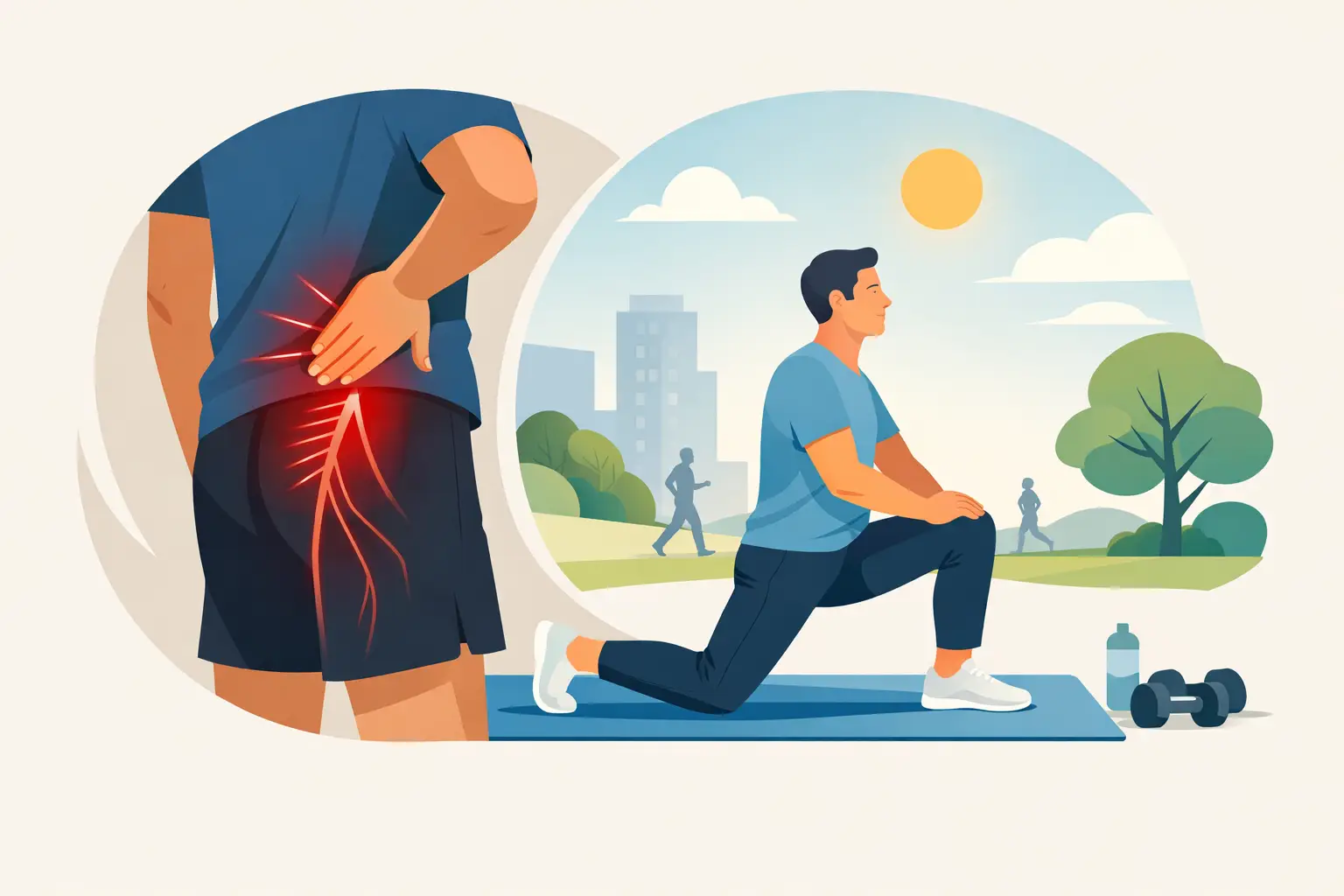
A sharp pull from your lower back into your glute, hamstring, calf or foot can make a normal workout feel like a risky decision. Can you exercise with sciatica? The short answer is often yes, but the exercise, the amount and the timing matter. The goal isn’t to push through nerve symptoms or shut down all activity. It’s to find movement your body tolerates, then build capacity with a clear progression.
Here is how to tell when exercise is the right call, the symptom rules that keep training productive, which exercises usually help, and what to change at the gym.
Can I Exercise With Sciatica? Start With the Right Question
Sciatica describes symptoms from irritation along the sciatic nerve. It isn’t a diagnosis by itself. The pain may start in the lower back, a disc problem, joint irritation, muscle guarding or other sources. That’s why the same online program can help one person and flare up another.
Before choosing exercises, ask three questions:
- What makes it travel? Which movements send symptoms further down the leg?
- What calms it? Which positions ease it?
- What can you do now? What can you do today without a big flare-up afterward?
One active adult may feel worse after long sitting and bending forward but better with walking and gentle backward bending. Another may be aggravated by standing, walking uphill or arching the lower back. Those patterns need different starting points.
When Exercise Is Not the First Step
Most sciatica doesn’t call for bed rest. Long inactivity can increase stiffness, lower your confidence and make getting back to normal harder. But some situations need urgent medical care instead of testing exercises on your own:
- Bladder or bowel changes: new problems controlling either, or numbness around the groin or inner thighs
- Weakness: leg weakness that’s getting worse quickly
- Trauma: symptoms after a significant fall or accident
- Feeling ill: severe, unrelenting pain with fever, unexplained weight loss, a history of cancer, or feeling generally unwell
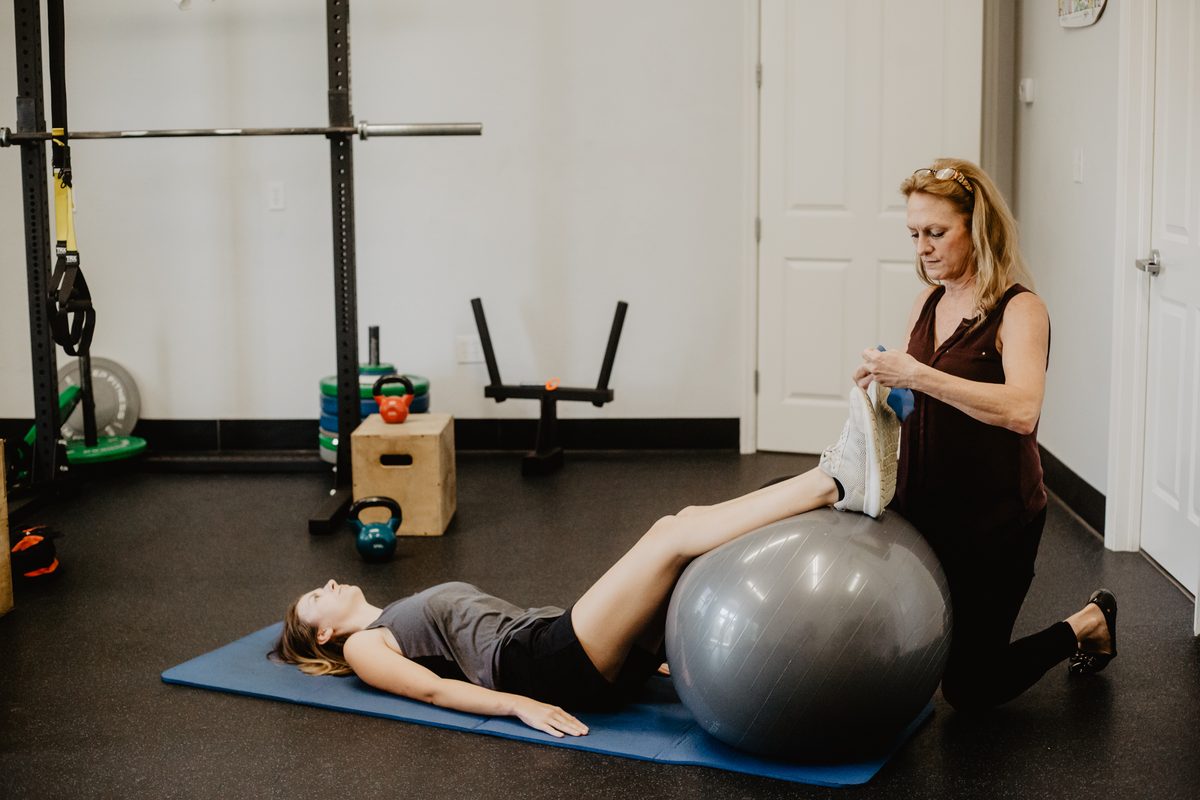
Outside of those warning signs, a personalized physical therapy assessment can show whether your pain is likely to respond to movement, what to modify and how to train without guessing.
The Symptom Rules That Keep Training Productive
Pain-free movement is ideal, but it isn’t the only sign of a good session. Mild discomfort can be acceptable when it’s predictable, temporary and doesn’t intensify nerve symptoms.
- Good sign: symptoms stay closer to the lower back or glute and get less intense.
- Warning sign: pain, tingling or numbness spreads further down the leg, gets sharper, or is clearly worse later that day or the next morning. That doesn’t mean you caused damage, but the dose was probably too high or the movement wasn’t right for now.
Start with a level of activity that doesn’t cause a meaningful next-day flare-up. Then change one thing at a time: duration, load, range of motion, speed or frequency. That stops the common cycle of doing too much on a good day, then needing several days to recover.
Exercises That Often Help With Sciatica
- Walking: often the best place to start, because it gets blood flowing and moves your hips and trunk. Five minutes several times a day may work better than one long walk. If walking increases leg symptoms, try shorter bouts, flatter ground or a slower pace.
- Gentle hip and lower back movement: some people respond well to repeated movements in one direction. Others need to reduce compressed positions first. There’s no universal “best stretch” for sciatica.
- Foundational strength: as symptoms settle, add controlled hip hinges, bridges, squats to a comfortable depth, step-ups, carries and trunk-control drills. Clean technique and steady progression matter more than the specific exercise.
- Nerve glides: gentle mobility for the nerve, not an aggressive stretch. Forcing a hamstring stretch into tingling or burning can make an irritated nerve more sensitive.
Strength is what finishes the job. Recovery isn’t complete just because the pain is quieter. You need the capacity to lift groceries, rotate for tennis, sit at your desk, run, squat or get back to the gym without fearing the next flare-up. For ways to lower your risk going forward, see our tips to prevent sciatica.
What to Modify at the Gym
You don’t necessarily have to stop training because of sciatica. You may just need to adjust it for a while. Heavy deadlifts from the floor, deep loaded squats, high-impact intervals and repeated twisting can be poor choices during a flare if they reproduce or spread symptoms. That doesn’t make them harmful exercises. It means they’re beyond your current tolerance.
- Lifters: elevated pulls or split squats while you rebuild confidence in the hinge.
- Runners: walk-run intervals before full runs.
- Golfers: hip and trunk control work before full-volume swings.
- Everyone: reduce the range, lower the load, slow the tempo or use a supported version of the same movement.
Athletes who want a sport-specific plan can learn about our sports physical therapy services. You keep what you can do while steadily improving what limits you.
Why Stretching Alone Usually Falls Short
Tightness is a common feeling with sciatica, especially in the hamstring or calf. But feeling tight doesn’t always mean the tissue needs more stretching. It can be a protective response from a sensitive nervous system, reduced strength, poor movement control or long periods in one position.
Aggressive stretching can feel productive in the moment and leave you worse afterward. A better approach combines symptom-guided mobility with strength, movement retraining and gradual return to the activities you want back.
Get Back to the Activities That Matter
The end point of sciatica rehab should be more than getting through the day. It should be returning to the gym, the course, the court or a busy day without guarding every step. Our sciatica treatment in Fort Myers uses The Gray Method™ to find the movement problem, fix it, strengthen it and prepare you for real life, one-on-one with a Doctor of Physical Therapy at our clinics in Fort Myers, Cape Coral and Estero.
Start with our Fixing the Cause & Not Just the Symptoms Assessment, or Inquire About an Appointment →
Call our office at (239) 223-0484 to schedule your appointment.
About the Author: Dr. Scott Gray


Get Dr. Gray's Best-Selling Book, Free
Why pain keeps coming back, and how The Gray Method™ helps you fix it for good.
Send Me the Free BookOur Most-Read Articles
- 1Three Conditions That Mimic Sciatica PainBack
- 2The Great Plantar Fasciitis Debate: Why Boots & Cortisone Rarely Fix ItFoot
- 3Common Causes of Lower Back Pain: Herniated DiscBack
- 4The 3 Most Common Symptoms of Knee Meniscal TearsKnee
- 5What Is Hip Bursitis?Hip
- 6Pelvic Pain Explained: When It's Not a UTI but Feels Like OnePelvic
What Do You Need Help With?
- 🩺Back, neck & joint pain→
- 💪Fitness for adults 50+→
- 💙Pelvic health→
- ⚡Sports performance→
- ⛳Golf performance→
Talk to a Doctor of Physical Therapy
One-on-one care that finds the cause of your pain. Fort Myers, Cape Coral & Estero.
Inquire About an Appointment Or call (239) 223-0484