
Rehab to Performance Training That Holds Up
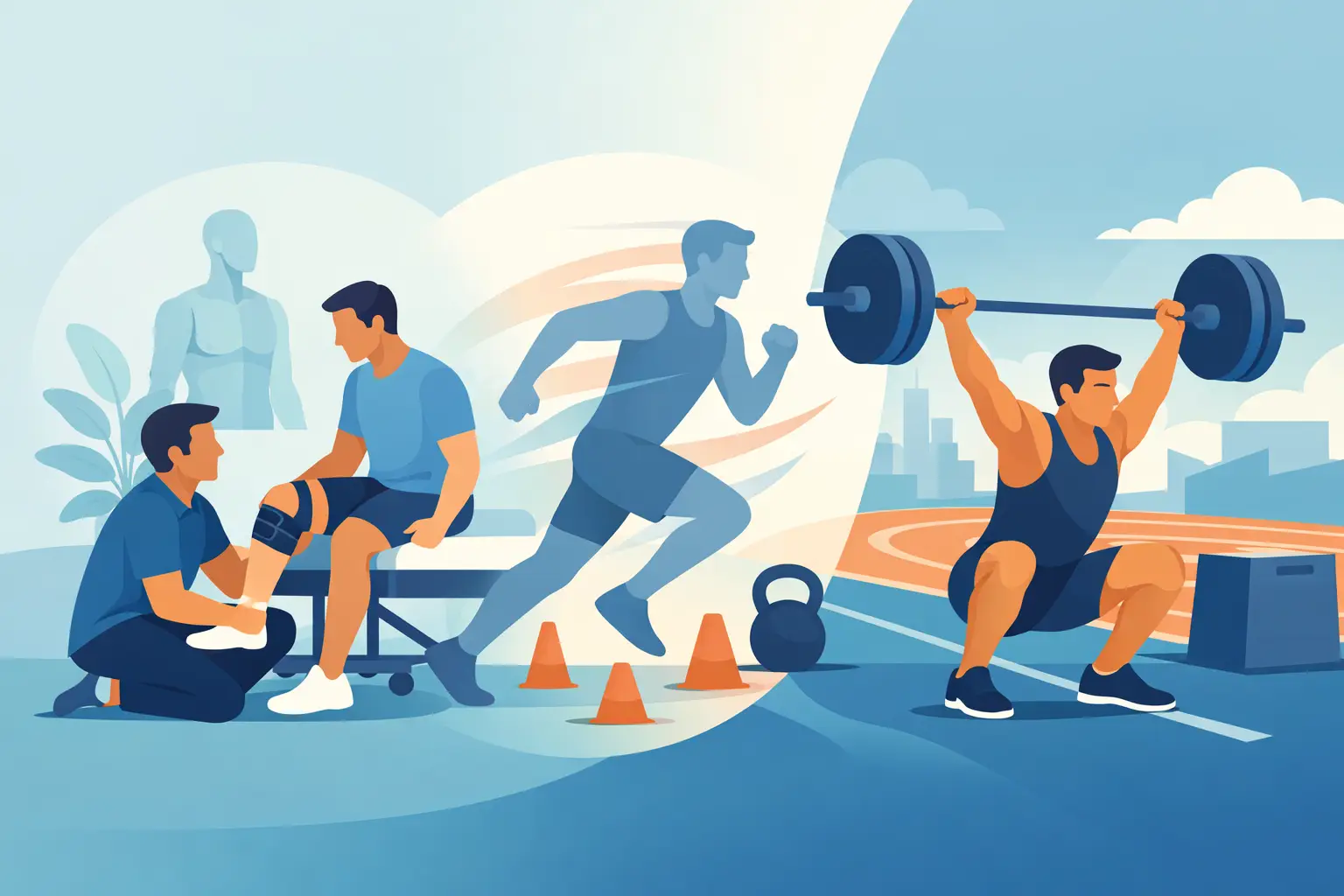
Pain-free is not the same as prepared. If your knee no longer hurts on the stairs but buckles when you cut on a tennis court, or your back feels better until a heavy deadlift, the job is not finished. Rehab to performance training closes the gap between feeling better in the clinic and trusting your body when life, work, or sport demands more.
For active adults and athletes, that gap is where recurring injuries often begin. Traditional rehabilitation may reduce symptoms, restore basic range of motion, and discharge you once daily tasks are tolerable. Those are meaningful milestones. But they do not automatically prepare you to run, golf, lift, carry a child, play pickleball, or compete at full speed.
A better plan treats pain relief as the starting point for rebuilding capacity, not the finish line.
Why Pain Relief Alone Does Not Equal Readiness
Pain is a useful signal, but it is not a complete measure of movement quality or physical capacity. Your pain may settle before your strength returns. You may regain motion without restoring balance, coordination, tissue tolerance, or confidence under load. This is especially common after injuries involving the shoulder, hip, knee, low back, ankle, or pelvic floor.
Consider a runner recovering from Achilles pain. Walking comfortably and performing a few calf raises are early wins. Running requires more: repeated force through the foot and ankle, single-leg control, hip stability, conditioning, and the ability to absorb load thousands of times. Skipping that progression can turn a promising recovery into another frustrating flare-up.
The same principle applies to someone with back pain returning to strength training. Manual therapy, mobility work, and core exercises can calm symptoms and improve movement. Yet if that person returns immediately to their old lifting volume, poor bracing habits, or rushed technique, the underlying problem may reappear.
The goal is not to protect your body from every challenge. It is to build a body that can handle the challenges you care about.
What Rehab to Performance Training Should Include
Effective rehab to performance training is not a generic workout attached to a physical therapy plan. It is a structured progression based on where you are now, what your body needs, and what you need it to do next.
At Back In Motion, the process is guided by The Gray Method™: identify the true source of dysfunction, restore the movement options that are limited, build strength around those improvements, and progressively expose the body to real-world or sport-specific demands. Each stage should inform the next.
Start With a Clear Movement Assessment
A diagnosis matters, but it rarely tells the whole story. Two people with the same MRI finding may move differently, have different training histories, and need completely different progressions. One may lack hip mobility. Another may have sufficient mobility but poor single-leg control. A third may be strong but unable to tolerate volume after time away from training.
A quality assessment looks beyond the painful area. For example, knee pain can be influenced by ankle stiffness, hip weakness, poor landing mechanics, training errors, or a sudden change in workload. Shoulder pain may be connected to thoracic mobility, shoulder blade control, grip strength, or how frequently you press and throw.
This is why a root-cause approach matters. Treating only the place that hurts may provide short-term relief. Identifying why that area became overloaded creates a path toward lasting change.
Restore Mobility Without Chasing Flexibility
Mobility is the ability to control a movement through an available range, not simply stretch farther. Someone who can touch their toes may still lack the hip control needed for a deadlift. An athlete with loose shoulders may need stability and strength, not more aggressive stretching.
Early rehabilitation may include hands-on treatment, targeted mobility drills, breathing strategies, and low-load exercises that help the nervous system tolerate movement again. For pelvic health clients, this can also mean improving coordination of the pelvic floor with the diaphragm, hips, trunk, and breathing mechanics rather than assuming the answer is always more tightening.
The right intervention depends on the limitation. Mobility work is valuable when it improves a movement you need. It is not productive when it becomes an endless routine that never transitions into strength.
Build Strength in the Positions That Matter
Strength is the bridge between restored movement and confident activity. It gives joints and tissues the capacity to handle force, repetition, and unexpected demands.
Early strength work may be highly specific: controlled split squats after knee pain, tempo rowing for a shoulder issue, hip hinges for a back that has avoided loading, or single-leg calf work after an ankle injury. As control improves, exercises should become more challenging through load, range of motion, speed, complexity, or volume.
This is where individualized programming separates real progression from random exercise selection. A golfer may need rotational control and the ability to create force from the ground. A tennis player may need deceleration, lateral movement, and overhead endurance. A parent may need the confidence to lift, carry, and move through a busy day without guarding every motion.
The exercise itself is only part of the plan. Technique, dosage, recovery, and progression determine whether it helps.
Progress From Controlled Strength to Real Demands
The final phase is often where people need the most guidance. They may be strong in a controlled setting but uncertain about running, jumping, changing direction, returning to a barbell, or playing a full match. Performance training introduces those demands in a logical sequence.
For an athlete, that may mean moving from basic landing drills to hops, acceleration work, cutting patterns, and eventually sport-specific conditioning. For a recreational lifter, it may mean progressing from a goblet squat to a barbell squat while gradually rebuilding volume. For an active adult, it may mean carrying heavier loads, navigating uneven ground, or returning to group fitness with a plan that respects current capacity.
Progression should be measurable. Useful markers can include strength symmetry, range of motion, movement quality, balance, work capacity, and how your symptoms respond 24 to 48 hours after training. Metrics create clarity. They help you know whether you are ready to advance rather than relying on hope or fear.
There is no universal timeline. A mild irritation in a well-trained person may progress quickly. A post-surgical recovery, long-standing pain pattern, or athlete returning to a high-demand season may require more patience. The right pace is the fastest one your body can adapt to consistently.
The Mistakes That Keep People Stuck
The most common mistake is stopping rehab when pain decreases. A close second is jumping from low-level exercises directly back to full activity because motivation is high. Both can leave a large capacity gap.
Another mistake is treating every flare-up as proof that something is damaged. Temporary soreness or mild symptoms can occur as your body adapts to new demands. The key is context: intensity, duration, location, and response over the next day or two. A skilled clinician or performance coach can help distinguish a manageable training response from a signal that the plan needs adjustment.
Finally, avoid relying on passive care alone. Hands-on treatment can be useful for reducing pain and improving movement options. It does not replace the progressive loading required to make your body more capable. Lasting results require participation, not just appointments.
Who Benefits From This Approach?
Rehab-to-performance care is not reserved for elite athletes. It is for the runner who is tired of stopping every few months because the same pain returns. It is for the golfer whose back tightens after 12 holes, the busy professional who wants to return to the gym safely, and the youth athlete rebuilding confidence after an injury.
It is also valuable for people who have never considered themselves athletic but want to remain independent and active. Strength, balance, mobility, and confidence are performance qualities when your goal is to keep up with your life.
The process works best when your provider understands both sides of the equation: how to manage pain and injury, and how to coach the movement and loading that come next. You should not have to choose between rehabilitation and training when your goal requires both.
Your body does not need a cautious return to the sidelines. It needs a clear, individualized path back to the activities that make you feel like yourself – stronger, more capable, and ready for the next demand.
About the Author: Dr. Scott Gray




 Call (239) 223-0484
