Why Neck Pain Keeps Coming Back (Even After Massage, Pills, or Resting)

By Dr. Scott Gray, PT, DPT, MTC, FAAOMPT
If You’ve Been Living With Neck Pain, You’re Not Alone
If you’ve been struggling with neck stiffness or neck pain that keeps coming back, even after massages, pain pills or adjustments, I want you to know something right from the start: you’re not alone.
I see it every week. People who’ve done all the “right things,” stretching, changing pillows, getting massages, yet the pain always finds its way back. You start to wonder if you’ll ever be pain-free again, if something’s permanently wrong, or if it’s just “part of getting older.”
I can tell you with confidence: that’s usually not the case. You’re not broken, and your pain isn’t random. Most people simply haven’t been given the right explanation, or the right plan, for what’s really going on. Let’s change that.
Why Quick Fixes Don’t Last
If you’ve been chasing neck pain for months (or years), you’ve probably noticed the same frustrating cycle:
- Massage: it feels great, for a day or two.
- Painkillers or muscle relaxers: the tension eases, until it comes right back.
- Adjustments: you move freely for a short time, then the stiffness returns.
None of these are wrong. They can all help temporarily. But the pain keeps coming back because none of them fix the cause. They only calm the symptoms.
Massage relaxes muscles, but it doesn’t retrain how they work. Painkillers reduce inflammation, but they don’t stop what’s causing it. Adjustments increase motion, but they don’t restore stability or strength. It’s like patching a leak without finding out where the water’s coming from.
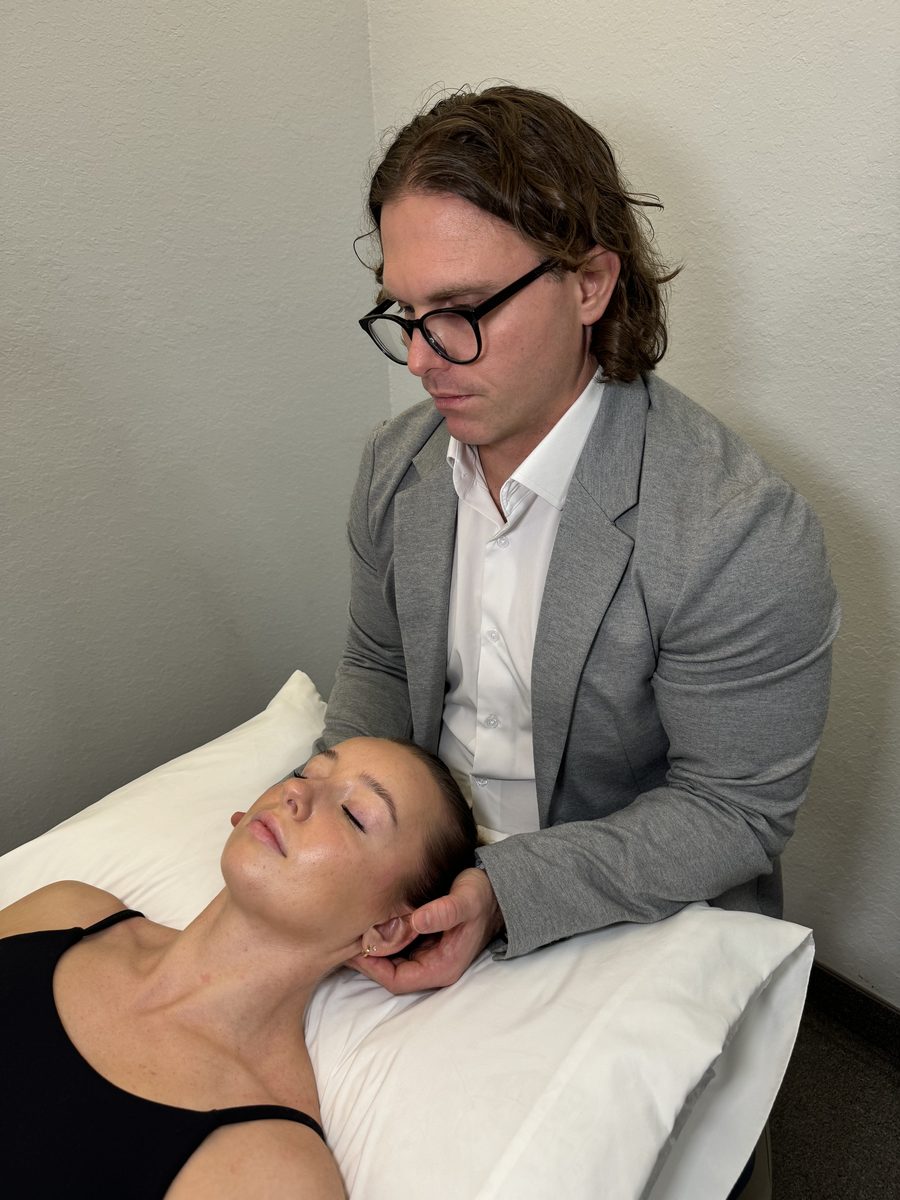
A Story I’ll Never Forget
A woman named Susan (name changed for privacy) came to see me after almost two years of nagging neck pain. She’d tried everything: chiropractic adjustments, massages, stretching, even changing pillows multiple times. She felt better for short bursts, but the stiffness always came back.
When she came to Back In Motion, she looked exhausted, not just from pain but from frustration. She told me, “I feel like I’ve tried it all, but nothing sticks.”
After a thorough evaluation, the surprising truth came out: her neck wasn’t the real problem. Her upper back and shoulders were stiff as concrete. Every time she turned her head, her neck had to overcompensate, doing the work those other areas weren’t.
Once we restored her upper-back mobility, improved her shoulder function and strengthened her deep neck stabilizers, her pain was gone within a few weeks. No drugs. No endless stretching. No guessing. Just understanding and fixing the cause.
Your Neck Isn’t the Problem. It’s the Messenger.
One of the biggest truths I wish more people knew is this: your neck pain is rarely only about your neck.
The human body is a chain, with every link connected to the next. When one area becomes stiff, like your mid-back or shoulders, another area has to work harder. In this case, it’s your neck. Your neck tightens up not because it’s broken, but because it’s protecting you.
Stiff here, too mobile there
Here is what that often looks like inside the neck. With a forward head posture, the joints at the very top of the neck, just below the skull, get stiff. That stiffness often brings headaches and tightness at the base of the skull. The segments in the middle of the neck then pick up the slack and start moving too much, which strains the joints and muscles there.
Stiffness in the upper back and upper ribs adds to it. When your upper back can’t rotate or extend, your neck moves extra to make up for it when you turn to check traffic, look up, reach overhead or swing a golf club. Stiff upper ribs also push you toward shallow chest breathing, which keeps the neck muscles working even harder. This short video explains how the upper back affects the neck:
That’s why treating only the neck, with pills, stretches or adjustments, rarely leads to long-term change. The real solution comes from looking beyond the neck at how your whole body moves.
3 Common Myths That Keep You Stuck
Myth #1: “I just need to stretch more.”
If stretching were the answer, you’d be pain-free by now. Many necks are actually too mobile, not too tight. What they’re missing is stability and strength. When your deeper stabilizing muscles aren’t doing their job, the bigger surface muscles take over, and that’s what makes you feel tight. Stretching those muscles can actually make the problem worse over time. What you need is controlled, guided movement that strengthens the right areas.
Myth #2: “It’s my pillow or how I sleep.”
Pillows can play a small role, but they’re rarely the main cause. If your spine moves well and your muscles are balanced, you could sleep on a hotel pillow and wake up fine. If they’re not, even the best ergonomic pillow won’t help.
Myth #3: “I just need an adjustment.”
There’s nothing wrong with adjustments. They can restore motion and relieve pressure. But unless you build strength and control afterward, the same restriction returns again and again. The missing piece isn’t more motion. It’s better movement.
Why Modern Life Makes It Worse
Modern life isn’t doing your neck any favors. We spend hours hunched over screens, driving or scrolling. Our heads creep forward, our shoulders round and our upper backs stiffen. That position keeps your neck muscles “on” all day, weakens your deep stabilizers and tightens your upper traps, a perfect recipe for pain and fatigue. Read the signs of poor posture to see if this sounds like you.
It’s usually not one posture that causes pain. It’s staying in the same posture too long, too often, without enough strength or movement breaks. It’s not an age problem. It’s a habit problem, and habits can be changed.
How to Finally Fix It (and Keep It From Coming Back)
At Back In Motion, we use what I developed called The Gray Method™, built on one simple belief: to get lasting relief, you have to fix the cause, not just the symptom. It’s a three-step process that has helped thousands of people move and feel better again.
- Detect the real cause: we don’t guess, we assess. Movement analysis, posture assessment and mobility testing show where the problem actually starts. In many cases it’s not your neck at all, but your thoracic spine, shoulders or even hips.
- Fix the cause: once we know the “why,” we target it with the right mix of hands-on therapy and corrective movement, freeing up what’s stiff, stabilizing what’s weak, and retraining your muscles to move the way they were designed to.
- Get back to being you: once the pain is under control, we rebuild your strength and confidence so you can get back to working out, golfing, or simply waking up without that stiff, heavy feeling in your neck. Because it’s not just about fixing pain. It’s about helping you get back to being you.
Simple ways to start at home
- Ears over shoulders: sit so your ears line up over your shoulders, and raise screens to eye level.
- Deep neck flexor work: gentle chin tucks or “head nods” build the small muscles that stabilize your neck. The video below shows a simple test.
- Upper back mobility: extensions over a foam roller, cat-cow and open-book stretches.
- Breathing: slow belly breathing helps overactive neck muscles relax.
When to get checked right away
- Arm symptoms: numbness, tingling or weakness in your arms or hands
- After trauma: neck pain after a fall or car accident
- Other warning signs: a severe or sudden headache, dizziness, trouble walking, or fever with a stiff neck
A Story of Hope and Healing
Another client, Tom (name changed), came to see me after years of neck pain that affected his golf swing and sleep. He was close to giving up and considering injections.
When we evaluated him, we found, just like with Susan, that his thoracic spine was stiff and his shoulder blades weren’t moving properly. After a few weeks of focused treatment and specific exercises, he not only regained full motion but also returned to golf pain-free. Today, he still checks in occasionally, not because of pain, but because he’s committed to staying healthy.
His words stuck with me: “I thought this was just something I’d have to live with. Now I feel like myself again.”
For a detailed patient case, read how Ed overcame his pinched nerve, and if headaches come with your neck pain, see how we treat tension headaches.
You Deserve to Move Without Fear
If you’ve been living with neck pain for months, or even years, please hear me on this: you don’t have to settle, you don’t have to “just deal with it,” and you’re not too old or too far gone to get better. Your body is resilient. The key is getting the right guidance and finally understanding why it’s happening.
Ready to Finally Fix Your Neck Pain?
If you’re ready to break the cycle of neck pain and stiffness, I’d love to help. Our neck pain treatment in Fort Myers has one purpose: to fix the cause. You’ll work one-on-one with a Doctor of Physical Therapy at our clinics in Fort Myers, Cape Coral and Estero, and leave with a clear plan to get back to feeling like yourself again.
Start with our Fixing the Cause & Not Just the Symptoms Assessment, or Inquire About an Appointment →
Call our office at (239) 223-0484 to schedule your appointment.
About the Author: Dr. Scott Gray


Get Dr. Gray's Best-Selling Book, Free
Why pain keeps coming back, and how The Gray Method™ helps you fix it for good.
Send Me the Free BookOur Most-Read Articles
- 1Three Conditions That Mimic Sciatica PainBack
- 2The Great Plantar Fasciitis Debate: Why Boots & Cortisone Rarely Fix ItFoot
- 3Common Causes of Lower Back Pain: Herniated DiscBack
- 4The 3 Most Common Symptoms of Knee Meniscal TearsKnee
- 5What Is Hip Bursitis?Hip
- 6Pelvic Pain Explained: When It's Not a UTI but Feels Like OnePelvic
What Do You Need Help With?
- 🩺Back, neck & joint pain→
- 💪Fitness for adults 50+→
- 💙Pelvic health→
- ⚡Sports performance→
- ⛳Golf performance→
Talk to a Doctor of Physical Therapy
One-on-one care that finds the cause of your pain. Fort Myers, Cape Coral & Estero.
Inquire About an Appointment Or call (239) 223-0484