
Severe Ankle Sprain: Grades, Recovery Time & Rehab

Ankle sprains are one of the most common sports injuries, and they can happen to anyone: on the court, on a trail, or stepping off a curb. Most people tape it, rest it, and move on. A severe ankle sprain is different. It can take months to regain full strength, and if it isn’t rehabbed properly, the ankle often keeps rolling for years.
What Happens When You Sprain Your Ankle?
In a sprain, the bone isn’t broken. The ligaments that hold the ankle bones together are stretched or torn when the ankle twists further than it can handle, often from a sudden loss of balance on uneven ground, a bad landing, or a quick change of direction.
The 3 Types of Ankle Sprain
- Inversion sprain (most common). The foot rolls inward and stretches the ligaments on the outside of the ankle. Pain is mostly on the outside.
- Eversion sprain. The foot twists outward and stretches the ligament on the inside of the ankle. Pain is mostly on the inside.
- High ankle sprain (syndesmosis). Forceful rotation, often with the foot bent upward, injures the ligaments connecting the two lower leg bones (tibia and fibula). High ankle sprains are serious and are common in sports like soccer, basketball, volleyball, football, and roller derby. They usually take longer to heal than a typical sprain.
Knowing which ligaments are involved lets your physical therapist aim treatment at the right structures.
Ankle Sprain Grades: Mild vs. Severe
- Grade 1 (mild): ligaments stretched but not torn. Pain and stiffness, little swelling.
- Grade 2 (moderate): ligaments partially torn. The joint is a little less stable, with pain and swelling.
- Grade 3 (severe): a ligament is completely torn. The ankle is unstable, with significant pain, swelling, and bruising, and walking may be very difficult.
How Do I Know If My Ankle Sprain Is Severe?
Signs that point to a grade 3 sprain or something more serious:
- A pop at the moment of the twist
- Heavy swelling and bruising
- You can’t put weight on the foot
- The ankle feels loose or gives way
- Pain directly on the bone, or pain high above the ankle (a possible high ankle sprain)
With these signs, get it evaluated. X-rays or an MRI may be needed to rule out a fracture or see the extent of the tear. “Playing it tough” and skipping care raises the risk of re-injuring the ankle.
What to Do in the First 48 Hours
Follow the P.R.I.C.E. principles: Protect the ankle, Rest it from aggravating activity, Ice it, use Compression, and Elevate it above heart level. P.R.I.C.E. helps with pain and swelling, but for a severe sprain it isn’t enough on its own. The ligament still needs rehab to heal strong.
What an Ankle Physical Therapy Evaluation Looks Like
Before any treatment, a good evaluation should include:
- Your medical history, including anything that affects healing, such as arthritis or diabetes
- How you walk and, when it’s safe, how you run
- Ankle range of motion and strength
- Circulation and sensation in the foot
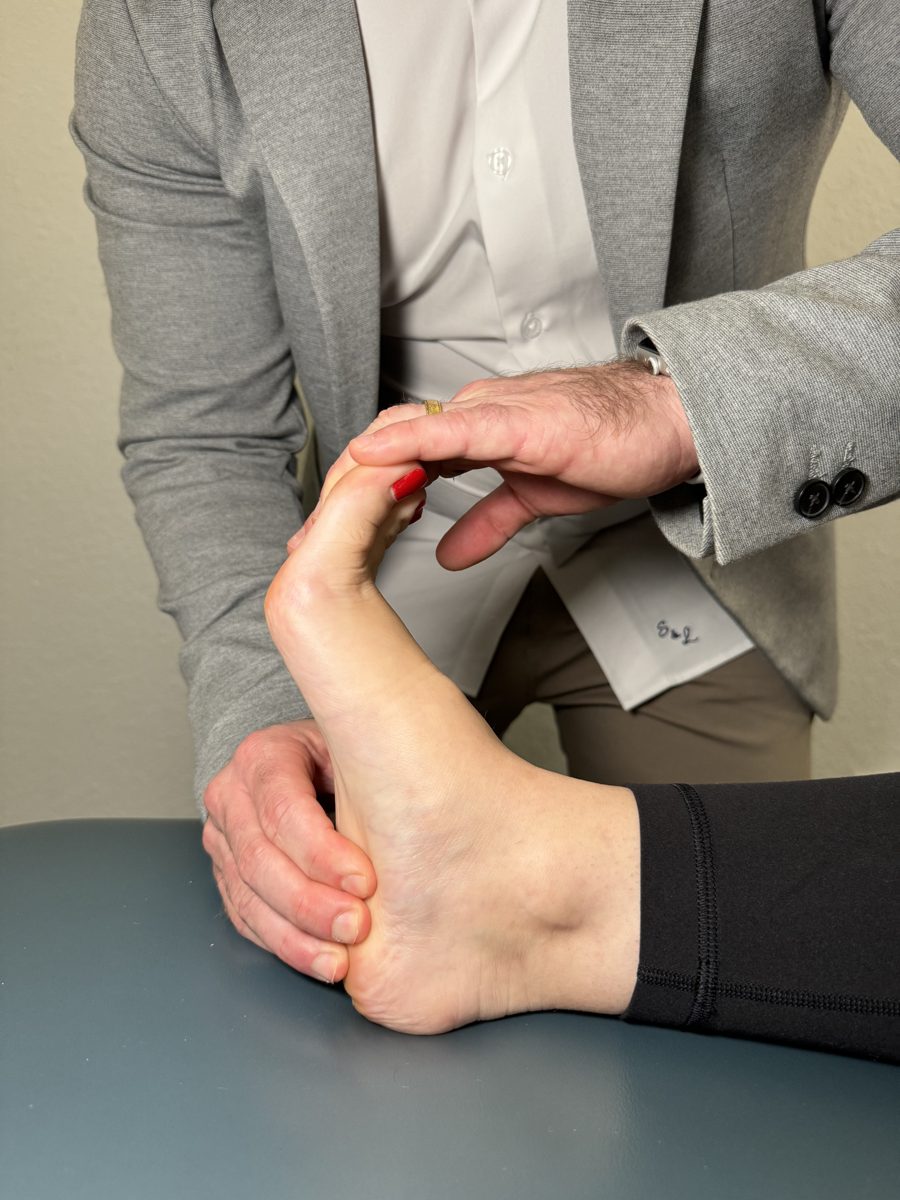
- Alignment and ligament testing to see which structures are injured
Severe Ankle Sprain Rehab
Rehab moves through stages, each one building on the last:
- Restore motion. Gentle passive motion first, then active range-of-motion exercises and stretches you can do yourself.
- Rebuild strength. Progressive strengthening of the ankle, calf, and foot, moving to resistance and weights.
- Retrain balance. Single-leg balance and control drills that teach the ankle to react again. This is the step most people skip, and it’s a big reason sprains come back.
- Return to sport. Hopping, cutting, and sport-specific drills before full practice.
Hands-on care helps along the way. Joint mobilization restores ankle motion, and soft tissue and friction techniques help the healing ligament and reduce stiff scar tissue. Kinesio taping can support the ankle as you return to activity, and custom orthotics may help if foot mechanics are part of the problem. Learning how to prevent the next sprain is as important as recovering from this one.
How Long Does a Severe Ankle Sprain Take to Heal?
A grade 3 sprain usually takes months to regain full functional strength, with rehab often running three to five months. High ankle sprains also tend to take longer than typical sprains. In some cases, a surgeon may recommend arthroscopy or ligament reconstruction, especially when the ankle stays unstable despite good rehab. Many people with severe sprains recover without surgery when they follow a complete rehab plan.
Stop the Cycle of Re-Sprains
If your ankle keeps rolling, read our practical guide to chronic ankle instability and try these exercises for ankle stability. For other common injuries, see our guide to the most common sports injuries.
Get Your Ankle Back to Full Strength
At Back In Motion Physical Therapy & Performance, every visit is one-on-one with a Doctor of Physical Therapy. We find what led to the sprain, rebuild your ankle’s strength and balance, and test it before you return. Learn more about our foot and ankle pain treatment and our sports physical therapy for ankle injuries.
Start with our Fixing the Cause & Not Just the Symptoms Assessment, or Inquire About an Appointment →
Call our office at 239-223-0484 and schedule your appointment today!
About the Author: Dr. Scott Gray


Get Dr. Gray's Best-Selling Book, Free
Why pain keeps coming back, and how The Gray Method™ helps you fix it for good.
Send Me the Free BookOur Most-Read Articles
- 1Three Conditions That Mimic Sciatica PainBack
- 2The Great Plantar Fasciitis Debate: Why Boots & Cortisone Rarely Fix ItFoot
- 3Common Causes of Lower Back Pain: Herniated DiscBack
- 4The 3 Most Common Symptoms of Knee Meniscal TearsKnee
- 5What Is Hip Bursitis?Hip
- 6Pelvic Pain Explained: When It's Not a UTI but Feels Like OnePelvic
What Do You Need Help With?
- 🩺Back, neck & joint pain→
- 💪Fitness for adults 50+→
- 💙Pelvic health→
- ⚡Sports performance→
- ⛳Golf performance→
Talk to a Doctor of Physical Therapy
One-on-one care that finds the cause of your pain. Fort Myers, Cape Coral & Estero.
Inquire About an Appointment Or call (239) 223-0484
