Shin Splints That Keep Coming Back? A Sports PT Checklist for Athletes and Runners
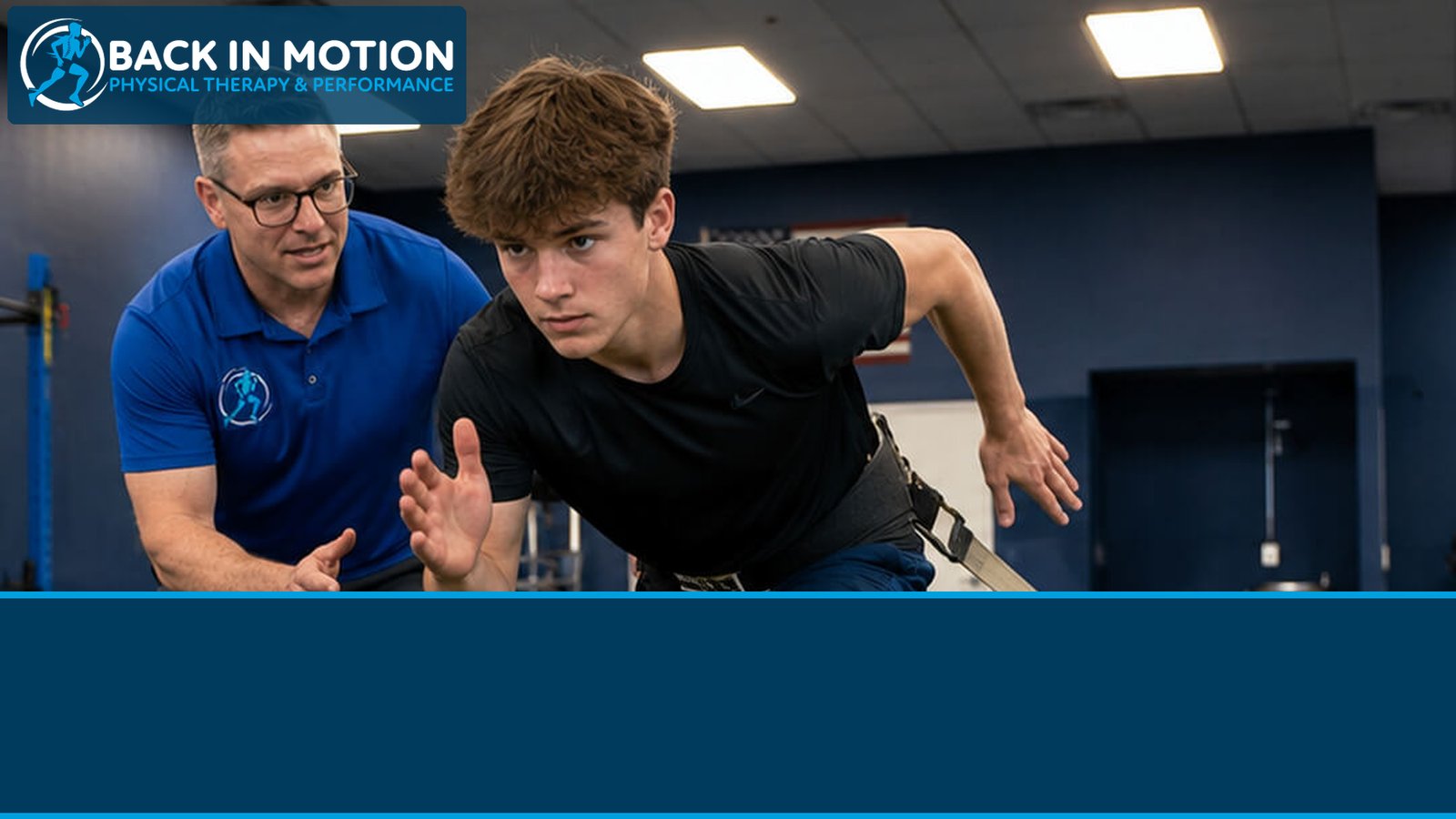
You took two weeks off. You iced. You bought new shoes. The pain along your shin finally calmed down, so you laced up and got back to practice.
And a few runs later, it’s back.
If you’re an athlete, a runner, or the parent of one, recurring shin splints are one of the most frustrating injuries out there. They aren’t usually dramatic. They just keep you from training the way you want to, over and over again.
Here’s the truth: rest calms shin pain down, but rest doesn’t change why it started. If nothing about your body, your training, or your movement changes, the same stress lands on the same spot when you return. Use the checklist below to find the gaps.
First, What Are Shin Splints?
“Shin splints” is the everyday name for pain along the inside edge of the shinbone, usually brought on by running, jumping, or a jump in training. It’s an overuse problem: the tissues around the shin are being asked to handle more load than they’re currently ready for.
That last part matters. The goal isn’t to avoid load forever. The goal is to build a body that can handle the load your sport demands.
Before the Checklist: When to Get Checked Right Away
Don’t self-manage if you notice any of these. Get evaluated:
- Pain in one small, specific spot on the bone that’s tender to press
- Pain at rest or at night
- Pain that’s getting worse even with less running
- Swelling, or pain that makes you limp
These can point to something more serious than shin splints and need a professional look.
The Recurring Shin Splints Checklist
Go through each item honestly. Every “no” or “not sure” is a clue.
☐ 1. Did your training change before the pain started?
New season, new coach, new sport, more mileage, more hills, harder surfaces, or two-a-days? Shin pain often shows up after a jump in volume or intensity, not because running is bad, but because the body didn’t have time to adapt. A smarter plan builds back gradually.
☐ 2. Are your calves strong enough for your sport?
Your calf muscles absorb a lot of force every time your foot hits the ground. If they tire out early, more stress goes to the shin. Many athletes stretch their calves but never truly strengthen them.
☐ 3. Are your hips doing their job?
Weak hip muscles can let the knee drift inward and change how force travels down the leg. Hip strength is a “shin” issue more often than people expect. For ideas, see Runner Strength Exercises That Build Durable Miles.
☐ 4. How does your foot and ankle move?
Stiff ankles, or feet that collapse or stay rigid, change how your lower leg handles impact. Shoes can help, but they can’t replace ankle mobility and foot strength.
☐ 5. How do you land?
Loud, heavy landings, overstriding (reaching your foot far out in front of you), or landing with a stiff knee all increase stress on the lower leg. A few simple form changes can make a difference.
☐ 6. Are you recovering between sessions?
Sleep, fueling, and rest days are part of training, not extras. Under-recovered tissue is less ready for the next workout.
☐ 7. Did you return to full training all at once?
This is the big one. Going from zero back to full practice is one of the most common reasons shin pain returns. Return should be a progression, with clear steps, not a guess.
☐ 8. Has anyone actually tested you?
Not just looked at where it hurts, but tested your strength, single-leg control, hopping, landing, and running mechanics? If not, you’re guessing at the cause.
Want to know what good sports injury care should include? Our free report, 9 Questions You Must Ask Before Anyone Treats Your Sports Injury, covers what separates real sports rehab from cookie-cutter care and what a safe return-to-sport plan should include.
For a broader look at overuse injuries, read The 7 Best Ways to Avoid Overuse Injuries.
Why “Rest, Ice, and New Shoes” Isn’t a Plan
Rest, ice, and supportive shoes can help you feel better short-term. But they don’t:
- Build calf and hip strength
- Change how you land or run
- Fix a training schedule that ramped up too fast
- Give you a safe, step-by-step path back to full speed
That’s why so many athletes get stuck in the same cycle: rest, feel better, return, flare up, repeat.
What Sports Physical Therapy Does Differently
Sports physical therapy is built around getting you back to your sport, not just getting the pain to calm down. At Back In Motion, we use The Gray Method™ to:
- Find the root cause with a hands-on look at how you move, land, and run.
- Calm things down with the right mix of hands-on care and load management, without shutting down all activity unless you need to.
- Rebuild strength in the calves, hips, feet, and core.
- Retrain movement, including landing and running mechanics.
- Plan the return, with clear checkpoints before you go back to full practice and games.
New to sports PT? Read What Is Sports Physical Therapy? or visit our Sports Physical Therapy page.
Your Next Step
Before anyone treats your (or your athlete’s) injury, make sure they can answer the right questions.
👉 Download your free report, “9 Questions You Must Ask Before Anyone Treats Your Sports Injury”
Use it as your guide so you (or your athlete) know what real sports rehab looks like and how to tell if the cause is actually being fixed, not just the pain.
This article is for education only and isn’t a substitute for a personal medical evaluation.
About the Author: grok bot


Get Dr. Gray's Best-Selling Book, Free
Why pain keeps coming back, and how The Gray Method™ helps you fix it for good.
Send Me the Free BookOur Most-Read Articles
- 1Three Conditions That Mimic Sciatica PainBack
- 2The Great Plantar Fasciitis Debate: Why Boots & Cortisone Rarely Fix ItFoot
- 3Common Causes of Lower Back Pain: Herniated DiscBack
- 4The 3 Most Common Symptoms of Knee Meniscal TearsKnee
- 5What Is Hip Bursitis?Hip
- 6Pelvic Pain Explained: When It's Not a UTI but Feels Like OnePelvic
What Do You Need Help With?
- 🩺Back, neck & joint pain→
- 💪Fitness for adults 50+→
- 💙Pelvic health→
- ⚡Sports performance→
- ⛳Golf performance→
Talk to a Doctor of Physical Therapy
One-on-one care that finds the cause of your pain. Fort Myers, Cape Coral & Estero.
Inquire About an Appointment Or call (239) 223-0484