
Physical Therapy Versus Massage Therapy Compared
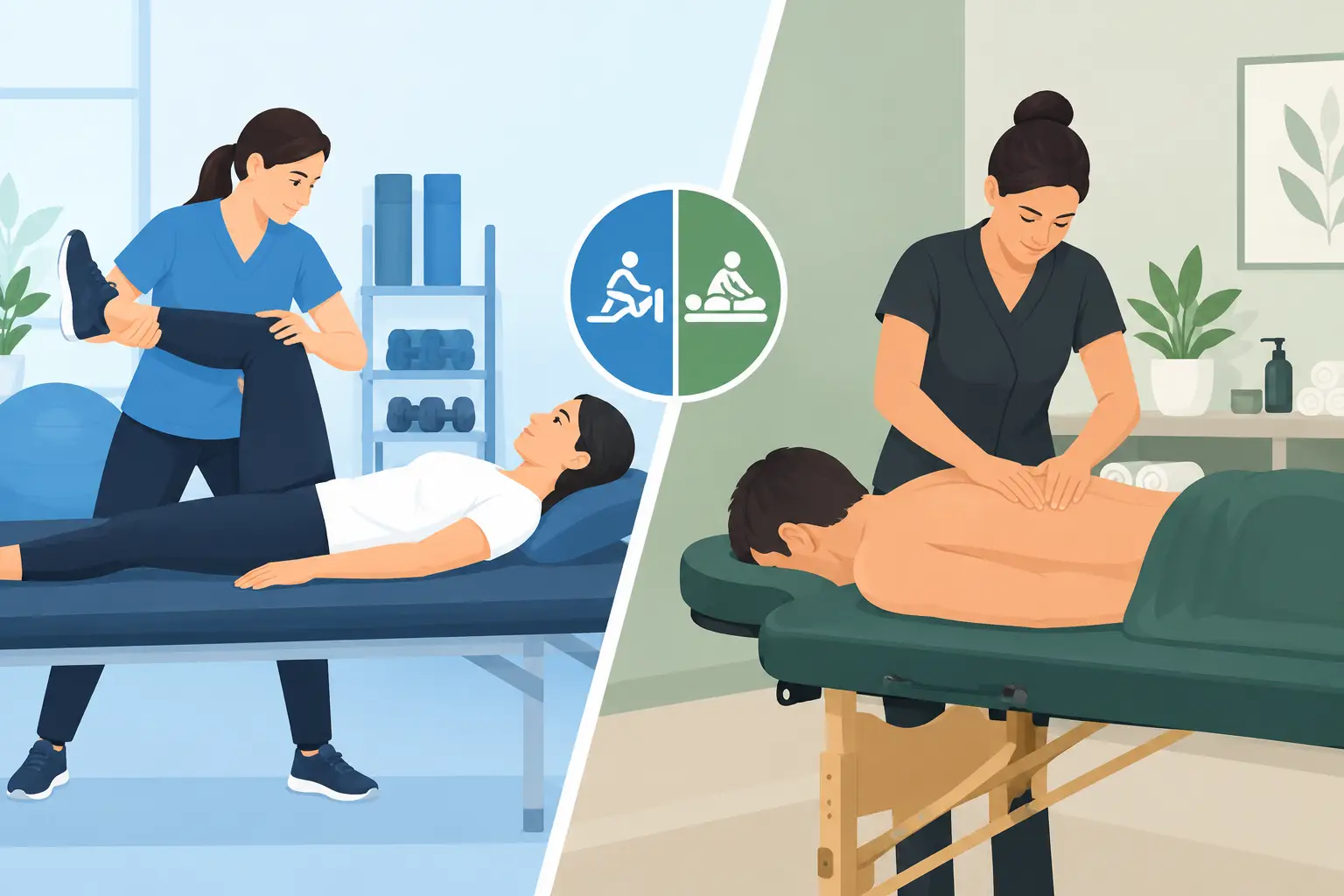
A tight hip after a long drive, a shoulder that pinches during tennis, or low back pain that returns every time you increase your gym training can all make one question feel urgent: physical therapy versus massage therapy – which one will actually help?
Both can have a place in your recovery. But they do different jobs. Massage therapy is primarily hands-on soft-tissue work that may reduce muscle tension and help you feel looser. Physical therapy is a clinical process that identifies movement limitations, builds a plan around your goals, and helps you restore the strength and control needed to keep moving with confidence.
If your goal is more than temporary relief – if you want to return to running, golf, lifting, work, or sport without wondering when the problem will flare up again – the distinction matters.
Physical Therapy Versus Massage Therapy: The Core Difference
The simplest difference is purpose. Massage therapy generally focuses on changing how your muscles and nervous system feel in the moment. A skilled massage therapist may use techniques such as pressure, kneading, stretching, and myofascial work to address areas of tension or soreness. Many people leave feeling relaxed, less stiff, and more comfortable.
Physical therapy focuses on why a movement hurts, feels restricted, or has become difficult. A physical therapist assesses symptoms in the context of your mobility, strength, joint control, training habits, prior injuries, and daily demands. Treatment may include hands-on care, but it also includes targeted exercise, movement retraining, education, and a progressive plan for returning to activity.
That does not make one option universally better. It means the right choice depends on the problem you are trying to solve. Relief after a demanding week is different from recovering from an ankle sprain, persistent sciatica, post-surgical restrictions, pelvic pain, or a shoulder issue that keeps you from serving overhead.
What Massage Therapy Can Do Well
Massage can be a useful tool when your body feels generally overworked, stiff, or sore. It may be particularly helpful after unusually high training volume, extended travel, a stressful work period, or a competition. The experience of reduced tension can make it easier to relax and move more freely in the short term.
For active adults, massage may also complement a broader recovery routine that includes sleep, nutrition, sensible training volume, and regular strength work. If you already move well and simply need occasional recovery support, massage may be exactly what you need.
The trade-off is that massage alone usually does not resolve the underlying capacity issue that contributed to recurring pain. If your knee hurts every time you run farther, for example, relaxing the surrounding muscles may feel good, but it does not automatically improve hip strength, running mechanics, ankle mobility, or your ability to tolerate more mileage.
Massage also should not be used to push through warning signs. Numbness, tingling, unexplained weakness, significant swelling, severe pain, or symptoms after a traumatic injury call for a proper clinical evaluation.
What Physical Therapy Is Designed to Address
Physical therapy is built for situations where pain, limitation, injury, or uncertainty is interfering with what you need or want to do. It begins with assessment rather than assumptions. The painful area matters, but it is not always the whole story.
A runner with Achilles pain may need more than calf treatment. Their evaluation may reveal limited ankle motion, poor single-leg control, a recent jump in mileage, or a strength gap that makes each stride more demanding than it should be. A golfer with back pain may need to improve hip rotation and trunk control. Someone with pelvic health concerns may need individualized guidance that accounts for breathing, pressure management, strength, and daily function.
Physical therapy turns those findings into a progression. Early sessions may prioritize symptom reduction and restoring comfortable movement. As pain settles, the focus should shift toward mobility, strength, balance, coordination, and task-specific loading. The end goal is not simply to feel better on the treatment table. It is to tolerate the movements that matter outside the clinic.
That progression is especially valuable for athletes and recreational exercisers. You do not return to soccer, pickleball, deadlifts, or a 10K by resting forever. You return by rebuilding capacity in a measured way.
When to Choose Massage Therapy
Massage therapy may be a reasonable first choice when discomfort is mild, diffuse, and clearly connected to normal muscle soreness or stress. Think of the person whose legs feel heavy after a race weekend but who has no sharp pain, swelling, weakness, or change in function. It can also be a good choice when relaxation and recovery are the primary goals.
It may help to ask one practical question: can you still do the activity that matters to you with normal confidence and control? If the answer is yes, and you are dealing with general tension rather than a specific limitation, massage may be a useful fit.
Even then, pay attention to the pattern. If the same tightness returns every week despite repeated massage, your body may be compensating for a mobility restriction, strength deficit, training error, or movement strategy that needs more than soft-tissue work.
When Physical Therapy Is the Better Starting Point
Start with physical therapy when symptoms are persistent, specific, or changing the way you move. This includes pain that keeps returning, pain that affects sleep or work, an injury that limits sport, a loss of range of motion, instability, or uncertainty about how to train safely.
Physical therapy is also the stronger choice when you are trying to return from an injury rather than simply recover from a hard workout. A massage may make a strained hamstring feel less guarded, but a return-to-sport plan needs to address progressive loading, sprint mechanics, single-leg strength, and the demands of your sport.
The same principle applies to common issues such as shoulder pain, low back pain, knee pain, plantar heel pain, and post-operative recovery. A focused assessment helps separate what is irritable today from what needs to change for lasting progress.
For clients who want a clear bridge from rehab back into training, an integrated model matters. At Back In Motion Physical Therapy & Performance, The Gray Method™ connects assessment, corrective treatment, strength development, and performance progression so care does not stop when symptoms improve.
The Best Answer Is Often Both – In the Right Order
Physical therapy and massage therapy do not need to compete. In many cases, they work well together when each has a defined role. Massage can help reduce muscle guarding or soreness, while physical therapy provides the assessment and training plan that creates durable change.
The order matters. If pain is recurring or limiting activity, begin with an evaluation that clarifies what is driving the problem. Once you have a plan, massage can be used as a recovery tool when it supports your movement and training goals. It should not become the only strategy holding your body together between workouts.
Think of hands-on care as one input, not the entire solution. The most reliable results come from matching treatment to the problem, then following it with the right amount of movement and loading. A therapist may use manual techniques to help you access a range of motion, but the exercise that follows teaches your body how to control and use that range.
Look for a Plan You Can Measure
Whether you choose physical therapy, massage, or both, you should understand what success looks like. “Feeling looser” can be valuable, but it is not enough if your real goal is to carry your child without back pain, finish 18 holes comfortably, or return to lifting without shoulder irritation.
A strong physical therapy plan creates measurable markers: less pain during a specific task, improved range of motion, stronger single-leg control, greater lifting tolerance, or a gradual return to running distance. These markers reduce guesswork. They also help you know when it is appropriate to progress rather than staying stuck in a cycle of caution and temporary relief.
Your body does not need a generic solution. It needs the right level of assessment, the right intervention, and a progression that prepares you for the life and activities you intend to keep doing.
About the Author: Dr. Scott Gray




 Call (239) 223-0484
