
How to Choose a Sports Physical Therapist
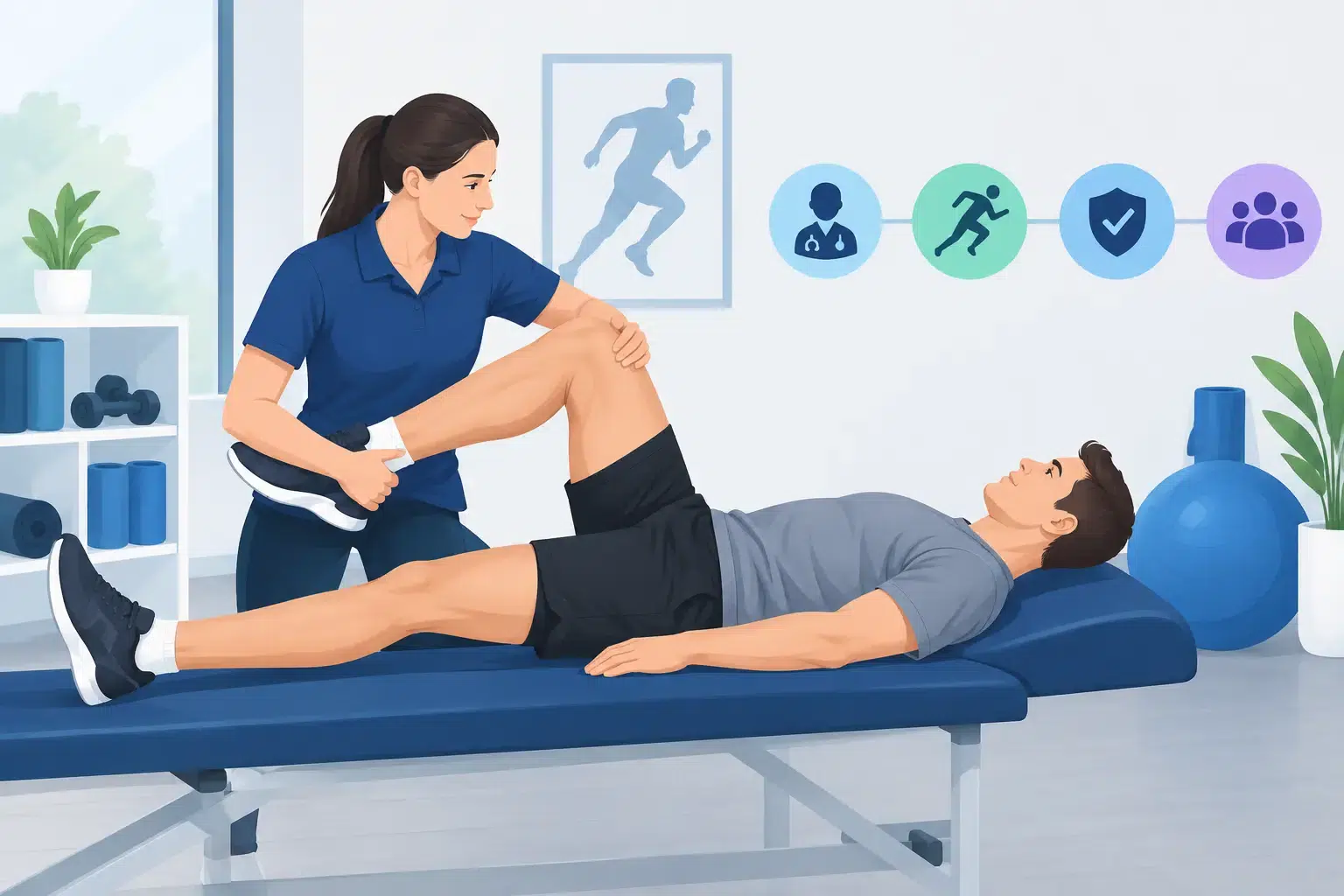
A runner can have knee pain without a knee problem. A golfer’s back pain may be tied to hip mobility. A tennis player’s shoulder issue can start with poor trunk control or a training load that outpaced recovery. That is why learning how to choose a sports physical therapist matters. The right provider does more than calm symptoms. They identify what is driving the problem, create a plan that matches your goals, and help you return to activity with more confidence than you had before the injury.
For active adults and athletes, physical therapy should not end when pain becomes tolerable. It should prepare you for the demands of running, lifting, playing, working, parenting, and competing without constantly wondering what will flare up next.
Start With Their Definition of “Sports Physical Therapy”
Not every physical therapist who treats an athlete practices sports physical therapy the same way. Some clinics focus primarily on reducing pain, improving range of motion, and discharging patients once they can manage daily life. Those are valuable early milestones, but they may not be enough if your goal is to return to a heavy deadlift, a 10K, a golf tournament, or a full soccer season.
A sports-focused physical therapist should understand the specific demands of your activity. That includes the positions, forces, speed, endurance, and decision-making your body must handle. A recreational pickleball player does not need the same progression as a high school pitcher. A new mom returning to strength training may need a different plan than a marathoner with calf pain, even if both report hip weakness.
Ask how the therapist defines a successful outcome. If the answer is only “less pain,” keep looking. A stronger answer includes restored movement, improved capacity, a gradual return to training, and clear benchmarks for your next level of activity.
Look for an Evaluation That Finds the Driver
The first visit tells you a great deal about the quality of care you are likely to receive. A thorough evaluation should not feel rushed or generic. Your therapist should ask when symptoms began, what aggravates them, what training has changed, what you have already tried, and what you need to get back to doing.
They should also watch you move. Depending on your concern, that may mean assessing how you squat, walk, run, rotate, step down, press overhead, balance, breathe, or perform a sport-specific pattern. The painful area needs attention, but it is rarely the only area worth examining.
This does not mean every injury has one hidden, dramatic root cause. Pain is complex, and sometimes the clearest explanation is a recent increase in volume, intensity, or recovery demands. Still, a skilled therapist looks beyond the symptom location and tests the factors they can change. That is how treatment becomes specific instead of a rotation of heat, massage, bands, and the same exercises given to everyone else.
At Back In Motion, this assessment-to-performance progression is central to The Gray Method™: identify movement limitations, correct what is limiting you, then build the strength and control required to keep moving forward.
Choose a Therapist Who Explains the Plan Clearly
You should leave an evaluation with more than a diagnosis label. You should understand what the therapist believes is contributing to your symptoms, what the first phase of care will address, and how progress will be measured.
Good communication is not about making an injury sound more complicated than it is. It is about replacing uncertainty with a useful plan. Your therapist should be able to explain why a certain exercise matters, why an activity may need to be modified temporarily, and what signs show that your body is ready to progress.
Pay attention to whether they invite questions. If you are a runner, you should be able to ask whether you can keep running, how much is reasonable, and what changes would reduce risk while you recover. If you lift weights, you should be able to discuss which movements can stay in your program and which need a temporary adjustment. “Stop everything until you feel better” is sometimes necessary for a short period, but it should not be the default answer for every active person.
Make Sure Care Progresses Beyond the Treatment Table
Hands-on treatment can be helpful. It may reduce symptoms, improve short-term mobility, or make it easier to begin exercise. Dry needling, soft tissue work, joint mobilization, and other techniques can have a place when used with intention.
But passive treatment alone does not prepare a shoulder to throw, a knee to cut, or a back to tolerate repeated lifting. Your body needs progressive exposure to the work you want it to do. That usually means strength training, mobility work where it is needed, balance and coordination, conditioning, and gradually more specific drills.
A strong sports physical therapy plan should evolve as you improve. Early sessions may focus on calming an irritated tissue and restoring comfortable movement. Later sessions should challenge your capacity. You may move from controlled strength exercises to single-leg work, loaded carries, jumping, running drills, rotational training, or practice-like movements. The exact path depends on your injury and sport, but the progression should be visible.
Evaluate Experience, But Do Not Rely on Credentials Alone
Credentials, continuing education, and experience with athletes are meaningful. They can indicate that a therapist has invested in advanced training and understands common sports injuries. If you are returning from ACL reconstruction, shoulder surgery, pelvic floor symptoms, or a complex overuse injury, specialized experience can be especially valuable.
Still, letters after a name do not guarantee an individualized plan. Ask practical questions about cases like yours. Have they worked with runners returning after Achilles pain? Do they understand the mechanics and loading demands of golf? Do they help athletes transition from rehab back to lifting, practice, and competition?
The best answer will not be a promise that every case follows the same timeline. Recovery depends on the injury, your health history, training background, consistency, and response to load. Look for confidence paired with honesty. A therapist should set expectations without selling certainty they cannot deliver.
Consider the Clinic’s Access to Strength and Performance Tools
If your goal is only to move more comfortably at work or at home, a traditional treatment setting may meet your needs. If you want to return to sport or high-level training, the environment matters more.
A clinic that can bridge rehab and performance has an advantage. Access to resistance training equipment, open space for movement, and coaching expertise allows your therapist to test and train the real demands of your goal. It is one thing to say your knee feels better on a treatment table. It is another to demonstrate that you can squat, decelerate, change direction, and build tolerance for a full practice.
This does not require turning every rehab visit into an intense workout. The right dose matters. However, your plan should eventually reflect the physical reality of your sport rather than stopping at low-level exercises that no longer challenge you.
Ask These Questions Before You Commit
A brief conversation with a clinic can reveal whether its approach matches what you need. Consider asking:
- How long is the initial evaluation, and will I have one-on-one time with the physical therapist?
- How do you determine when someone is ready to return to running, lifting, or their sport?
- Do you assess movement and training load beyond the painful body part?
- What does progression look like after pain starts to improve?
- How do you coordinate rehabilitation with strength training or performance goals?
Their answers should be specific, understandable, and centered on your outcome. Be cautious if the clinic cannot explain what happens after the first few visits or if every patient appears to receive the same routine.
Choose a Partner, Not Just an Appointment
The right sports physical therapist does not simply tell you what is wrong. They help you understand what your body can do now, what it needs next, and how to rebuild trust in movement. You should feel challenged at the right times, supported when progress is slower than expected, and clear about what you can control between visits.
If you are in Fort Myers and recurring pain has made you hold back from the activities you enjoy, choose care that treats your goal as part of the plan. The best therapist will not make you dependent on treatment. They will give you the tools, strength, and confidence to keep moving long after the appointment ends.
About the Author: Dr. Scott Gray





 Call (239) 788-0838