
Can Exercise Help Urinary Leakage? Yes, If Targeted
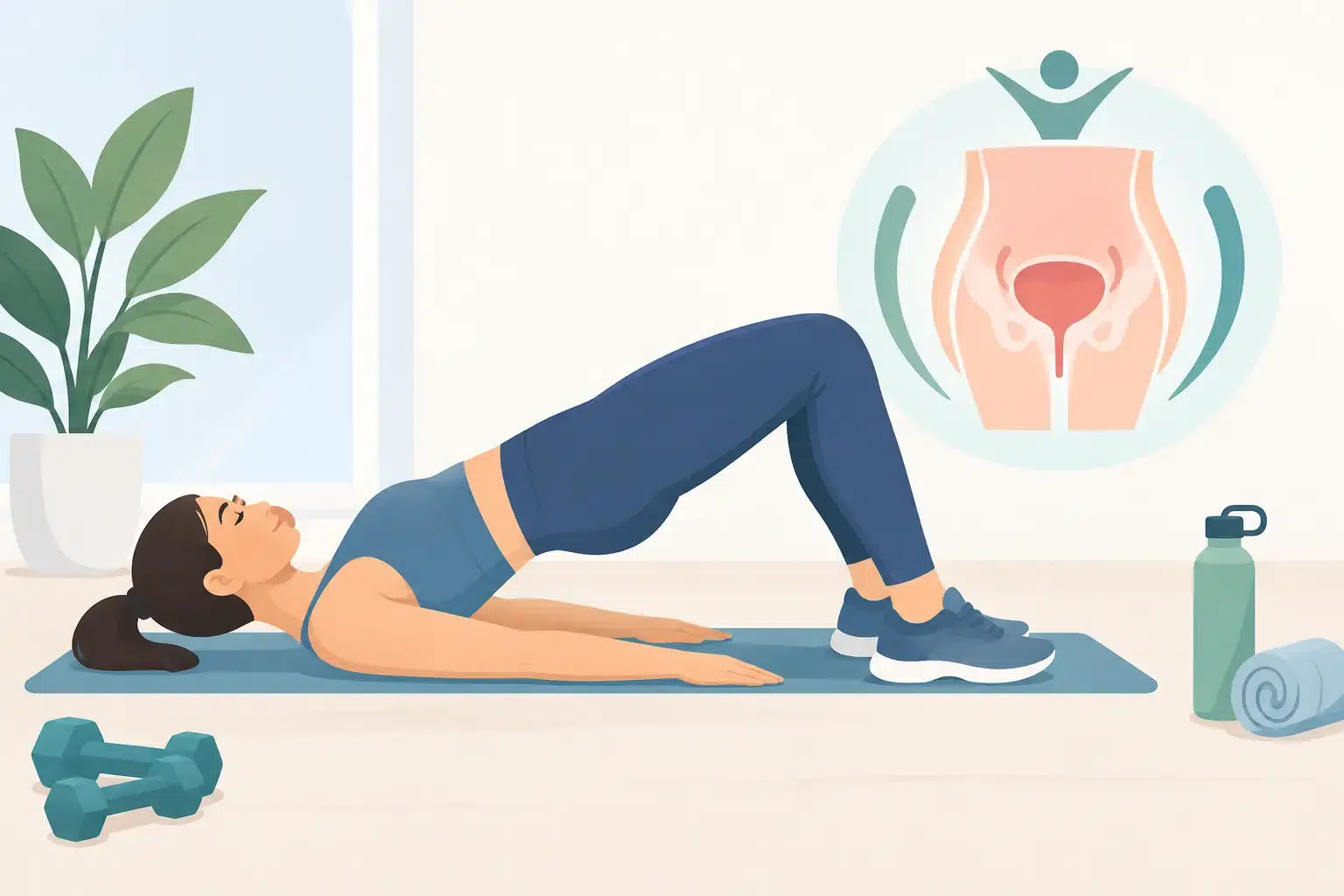
A leak during a run, a heavy deadlift, or a hard laugh can make active adults feel as if they need to stop training. They do not. The better question is: can exercise help urinary leakage without making symptoms worse? In many cases, yes – but only when the exercise matches the reason leakage is happening.
Urinary leakage is not simply a sign of weakness, and it is not something you need to accept as the price of motherhood, aging, or an active lifestyle. It is a movement and pressure-management problem that deserves a clear assessment and a specific plan. The goal is not just fewer leaks. It is confidence to lift, run, play tennis, golf, and move through daily life without constantly planning around the nearest bathroom.
Can Exercise Help Urinary Leakage?
Targeted exercise can improve urinary leakage by helping the pelvic floor coordinate with the diaphragm, abdominal wall, hips, and trunk. For some people, this means building strength. For others, it means improving relaxation, timing, mobility, breathing mechanics, or control during impact and load.
That distinction matters. Generic advice to do more Kegels can be helpful for one person and frustrating for another. If the pelvic floor is already overactive, painful, or unable to relax fully, repeated squeezing may reinforce the problem. A strong pelvic floor is not one that stays clenched all day. It is one that can contract, relax, and respond quickly to the demands placed on it.
Exercise is especially useful for stress urinary incontinence, which is leakage with coughing, sneezing, jumping, running, lifting, or laughing. Urge urinary incontinence – leakage that follows a sudden, powerful need to urinate – may also improve with pelvic floor training and bladder retraining, though triggers, fluid habits, constipation, medications, and other health factors may need attention as well.
Why Leakage Happens During Exercise
When you lift a weight, land from a jump, or accelerate into a sprint, pressure rises inside your abdomen. Your pelvic floor needs to create enough support and closure at the right moment to manage that pressure. Leakage can happen when the demand exceeds current capacity or when the system is not coordinating well.
That does not mean the exercise itself is harmful. It often means the exercise dosage, technique, breathing strategy, or progression needs to change. A runner who leaks only in the final mile may need better single-leg strength, impact tolerance, and fatigue management. A lifter who leaks at the bottom of a squat may need help coordinating breath and pelvic floor response under load. Someone who leaks before reaching the bathroom may need a different plan entirely.
Pregnancy and postpartum recovery, menopause, prostate surgery, chronic constipation, high-impact sport, persistent coughing, and changes in body weight can all affect pelvic floor function. But the common thread is not a lack of effort. It is that the body needs a more precise strategy than “push through” or “stop everything.”
Start With Assessment, Not Random Exercises
The most effective plan begins by identifying your leakage pattern. Does it happen with impact, heavy lifting, urgency, or a combination? Is there pelvic pain, pressure, constipation, painful intercourse, back or hip symptoms, or a sense of heaviness in the pelvis? These details guide treatment.
A pelvic health physical therapist can assess breathing mechanics, abdominal pressure strategies, hip and trunk strength, mobility, movement patterns, and pelvic floor function. When appropriate, this includes an internal pelvic floor examination, but it is never assumed or forced. The purpose is to understand what is actually limiting control so your plan addresses the cause rather than chasing symptoms.
At Back In Motion Physical Therapy & Performance, that assessment-to-performance mindset matters. You should know what you are working on, why it matters, and how progress will carry over to the activities you care about.
Exercises That May Help – and How to Use Them
Pelvic floor contractions can be part of the answer, particularly for stress leakage. The key is quality. A proper contraction may feel like a gentle lift and closing around the pelvic openings, without clenching the glutes, holding your breath, or bearing down. Just as important, you should be able to fully release afterward.
However, pelvic floor training works best when it is connected to real movement. Early exercises may include controlled breathing, pelvic floor awareness, and low-load core coordination. From there, the program should progress toward bridges, squats, hinges, step-ups, carries, and eventually the sport-specific tasks that expose the problem.
For example, a recreational tennis player may start by coordinating an exhale and pelvic floor response during a bodyweight squat. As control improves, they may add resistance, lateral movement, split steps, and repeated quick changes of direction. A runner may build calf, hip, and single-leg strength before gradually reintroducing hopping and running volume. The exercise choice is less important than whether it creates an appropriate challenge without repeatedly overwhelming the system.
Breathing Is Part of the Training
Many active adults brace hard, hold their breath, and push pressure downward during difficult reps. That may feel powerful, but it can make leakage more likely if the pelvic floor cannot match the pressure demand.
Learning to exhale through exertion can improve coordination for many people. Think of gently breathing out as you stand from a squat, press a weight overhead, or pull through a deadlift. This is not a rule that every athlete must follow on every heavy rep. Higher-level lifting strategies are individualized. But if you leak during training, breathing and pressure management are logical places to assess before simply avoiding load.
Strength Training Is Usually Still a Good Idea
Strength training can improve the hip, trunk, and leg capacity that supports efficient movement. It can also build confidence after a period of avoiding exercise. The mistake is treating all load as either safe or unsafe.
Instead, find your current threshold. If symptoms occur with a 100-pound deadlift but not at 70 pounds, that is useful information. Adjust the load, range of motion, tempo, breathing, or volume, then progress systematically. One leaked rep is not a personal failure. It is feedback that the task is beyond current control at that moment.
What to Avoid While You Build Capacity
Avoiding all activity can lead to deconditioning and more fear around movement. Still, it is reasonable to temporarily modify exercises that produce frequent or worsening symptoms. This may include high-volume jumping, running intervals, heavy straining, or repetitive impact before your body is ready.
Do not rely on “just in case” bathroom trips every few minutes. Frequent voiding can train the bladder to signal urgency at lower volumes. Likewise, do not aggressively restrict fluids, especially in Florida heat. Concentrated urine can irritate the bladder, and dehydration can work against performance and recovery.
If an exercise causes pelvic pain, heaviness, bulging, or symptoms that persist well after training, scale it back and seek an evaluation. Leakage is common, but it should not be dismissed without considering other pelvic health conditions.
When to Get Professional Help
Schedule an evaluation if leakage limits your training, changes how you socialize, or fails to improve with basic exercise modifications. Professional guidance is particularly valuable after childbirth, prostate surgery, during menopause, or when you want to return to running, heavy lifting, or sport without guessing.
Seek prompt medical care for blood in the urine, pain or burning with urination, fever, new numbness or leg weakness, inability to urinate, or sudden major changes in bladder control. Those symptoms may point to issues that require medical evaluation beyond exercise.
The right program should make training feel more possible, not more restrictive. Start at the level your body can control, build strength and coordination with purpose, and let each progression earn the next. Your goal is not to move cautiously forever. It is to trust your body again when life gets heavy, fast, and demanding.
About the Author: Dr. Scott Gray




 Call (239) 788-0838