Why Hasn’t Medication Helped My Urinary Incontinence?
You started a bladder medication hoping the leaks would finally stop. Maybe it helped a little at first. Maybe it never did. Either way, you’re still planning your day around the nearest restroom and wondering, “Why hasn’t medication for urinary incontinence worked for me?”
You’re not alone, and you haven’t failed. Medication has a real role for some people, but it can only do so much. Here’s why pills often fall short, what’s usually going on underneath, and how pelvic floor therapy treats the cause.
Urinary Incontinence Isn’t One Problem
Urinary incontinence means leaking urine when you don’t mean to. It comes in different forms, and each one has different drivers:
- Stress incontinence: leaking when you cough, sneeze, laugh, lift, run or jump
- Urge incontinence: a sudden, strong urge to go, and you can’t always make it in time
- Mixed incontinence: a combination of stress and urge symptoms
- Overflow incontinence: the bladder doesn’t empty fully, so it dribbles or leaks
- Functional incontinence: pain, stiffness or a mobility problem keeps you from reaching the bathroom in time
Because the causes are so different, a one-size-fits-all approach rarely solves the whole problem. Our guide to the questions to ask about urinary incontinence treatment explains why knowing your type matters.
Why Medication Often Isn’t Enough
Most bladder medications target symptoms. Some calm an overactive bladder so the urge is less intense. Others aim to change how the muscles around the bladder and urethra respond.
That can bring some relief, but medication can’t do a few important things:
- It can’t strengthen weak muscles: if your pelvic floor can’t close off the urethra when pressure rises, a pill won’t build that strength
- It can’t relax a tense pelvic floor: muscles that are too tight or poorly coordinated need retraining, not just a calmer bladder
- It can’t change your habits: fluid timing, caffeine, constipation and “just in case” bathroom trips all affect bladder control
- It can’t fix how you move: breathing, posture, hip strength and how you brace when you lift all change the pressure on your bladder
If one of those is driving your leaks, medication may take the edge off, but the cause is still there.
The Pelvic Floor Is Often the Missing Piece
Your pelvic floor is a group of muscles at the base of your pelvis. It supports your bladder, helps control when urine starts and stops, and works with your diaphragm, deep abdominal muscles and hips every time you breathe, lift or move.
When those muscles are weak, too tight or not firing at the right moment, leaks happen. That’s why our urinary incontinence treatment focuses on how the whole system works, not just the bladder.
How Pelvic Floor Therapy Treats the Cause
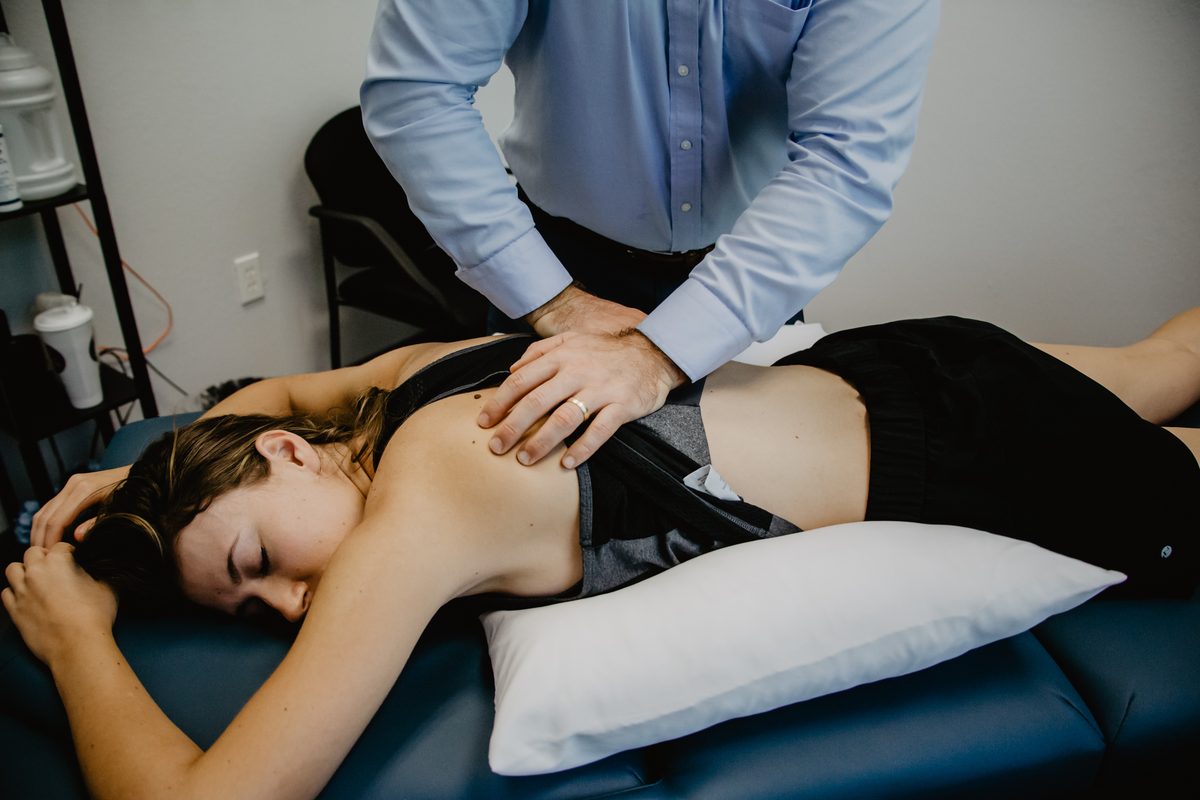
At Back In Motion Physical Therapy & Performance, pelvic floor therapy follows The Gray Method™: find why you’re leaking, then fix it. A one-on-one evaluation looks at your symptoms, your history and how you move. With your consent, it may include an internal pelvic floor assessment, which is always explained first and always your choice.
From there, your plan may include:
- Targeted pelvic floor training: strengthening, relaxing or coordinating the muscles, depending on what yours need
- Bladder retraining: gradually stretching the time between bathroom trips to calm urgency
- Breathing and pressure work: learning to exhale and support your pelvic floor when you lift, cough or exercise
- Hands-on treatment: to ease tight muscles or scar tissue when it is part of the problem
- Habit changes: fluid timing, bladder irritants and bowel habits that make leaks worse
For some people, therapy works alongside medication. For others, it reduces how much they rely on it. Any change to a prescription is a conversation to have with your doctor.
What You Can Start Doing at Home
- Keep a simple bladder diary: for 3 days, note when you leak, what you were doing and what you drank. Patterns show up fast.
- Don’t cut fluids too much: concentrated urine can irritate the bladder, especially in the Florida heat.
- Stop “just in case” trips: going when you don’t need to can train your bladder to signal urgency sooner.
- Exhale when you lift: breathe out as you pick up a grandchild, a bag of mulch or a dumbbell instead of holding your breath.
- Don’t force Kegels: if your muscles are already tight, more squeezing can make things worse. Get assessed first.
Our 5 simple tips to protect your bladder cover more everyday habits.
When to See Your Doctor Right Away
Leaking is common, but some symptoms need medical attention first:
- Blood in your urine: or urine that is dark, cloudy or foul-smelling
- Burning or fever: pain when you urinate, chills or other signs of infection
- Can’t empty your bladder: or a weak stream that is getting worse
- Numbness or weakness: in the groin, saddle area or legs, or a sudden loss of bladder or bowel control
Get Real Relief From Bladder Leaks
If medication hasn’t stopped the leaks, it’s time to look at the cause. Our bladder leakage treatment in Fort Myers starts with The Gray Method™, one-on-one with a Doctor of Physical Therapy at our clinics in Fort Myers, Cape Coral and Estero.
Start with our Fixing the Cause & Not Just the Symptoms Assessment, or Inquire About an Appointment →
Call our office at (239) 223-0484 to schedule your appointment.
About the Author: Ashley Gray


Get Dr. Gray's Best-Selling Book, Free
Why pain keeps coming back, and how The Gray Method™ helps you fix it for good.
Send Me the Free BookOur Most-Read Articles
- 1Three Conditions That Mimic Sciatica PainBack
- 2The Great Plantar Fasciitis Debate: Why Boots & Cortisone Rarely Fix ItFoot
- 3Common Causes of Lower Back Pain: Herniated DiscBack
- 4The 3 Most Common Symptoms of Knee Meniscal TearsKnee
- 5What Is Hip Bursitis?Hip
- 6Pelvic Pain Explained: When It's Not a UTI but Feels Like OnePelvic
What Do You Need Help With?
- 🩺Back, neck & joint pain→
- 💪Fitness for adults 50+→
- 💙Pelvic health→
- ⚡Sports performance→
- ⛳Golf performance→
Talk to a Doctor of Physical Therapy
One-on-one care that finds the cause of your pain. Fort Myers, Cape Coral & Estero.
Inquire About an Appointment Or call (239) 223-0484