
Herniated Disc and Lower Back Pain: Causes, Symptoms & Treatment

A herniated disc is one of the most common causes of lower back pain we see in our Fort Myers and Cape Coral clinics. It can start as a sharp, grabbing pain in your back, or as burning and tingling that travels down your leg, sometimes all the way to your foot.
The good news: most herniated discs get better without surgery. Below, we explain what a herniated disc is, the signs to watch for, the habits that usually cause it, and the treatments that help.
What Is a Herniated Disc?
Between each bone (vertebra) in your spine sits a disc that works like a cushion and shock absorber. Each disc has a tough outer ring (the annulus) and a soft, gel-like center (the nucleus).
When the outer ring weakens or tears, part of that soft center can push outward toward the back of the spine, where your nerve roots are. You may hear it called a bulging, slipped or ruptured disc. Herniated discs happen most often in the lower back, but they can also happen in the neck.
Signs and Symptoms of a Herniated Disc
Symptoms depend on where the disc is and whether it’s pressing on a nerve. Some people with a disc bulge feel little or no pain at all. When a nerve is involved, common signs include:
- Sharp, grabbing pain in the lower back
- Pain down one leg into the buttock, thigh, calf or foot (often called sciatica)
- Tingling, burning or numbness in the leg or foot
- Pain that’s worse with bending forward or sitting for a long time
- Muscle weakness in the leg or foot
A disc in the neck can cause pain between the shoulder blades, or pain and numbness down the arm into the hand. If your leg pain doesn’t fit this picture, read about three conditions that mimic sciatica.
Common Causes We See in the Clinic
Poor Sitting Posture
Sitting slouched, with your lower back rounded, puts steady pressure on the discs. Over time this weakens the outer ring of the disc. It’s one of the biggest causes we see. Learn more in why your lower back hurts when you sit.
Poor Lifting Mechanics
Lifting with your back rounded, especially while twisting, puts a lot of pressure and torsion on the disc. That includes everyday lifting and heavier gym lifts like the deadlift.
A Spine That Moves Too Much
Some people are naturally very flexible (hypermobile). When the lower back moves too much in one direction, it can put abnormal pressure on a disc.
Tight Hips
When your hips don’t move freely, your lower back moves more to make up for it. That extra motion adds stress to the discs.
Wear and Tear, Injury and Lifestyle
Discs lose some of their water content and height with age, which makes them easier to injure. A fall, car accident or sports injury can also cause a herniation. Carrying extra weight, not exercising and smoking all raise the risk too.
How We Treat a Herniated Disc Without Surgery
Most herniated discs can be managed without surgery. Our goal is to take pressure off the nerve first, then fix whatever caused the disc to get irritated in the first place.
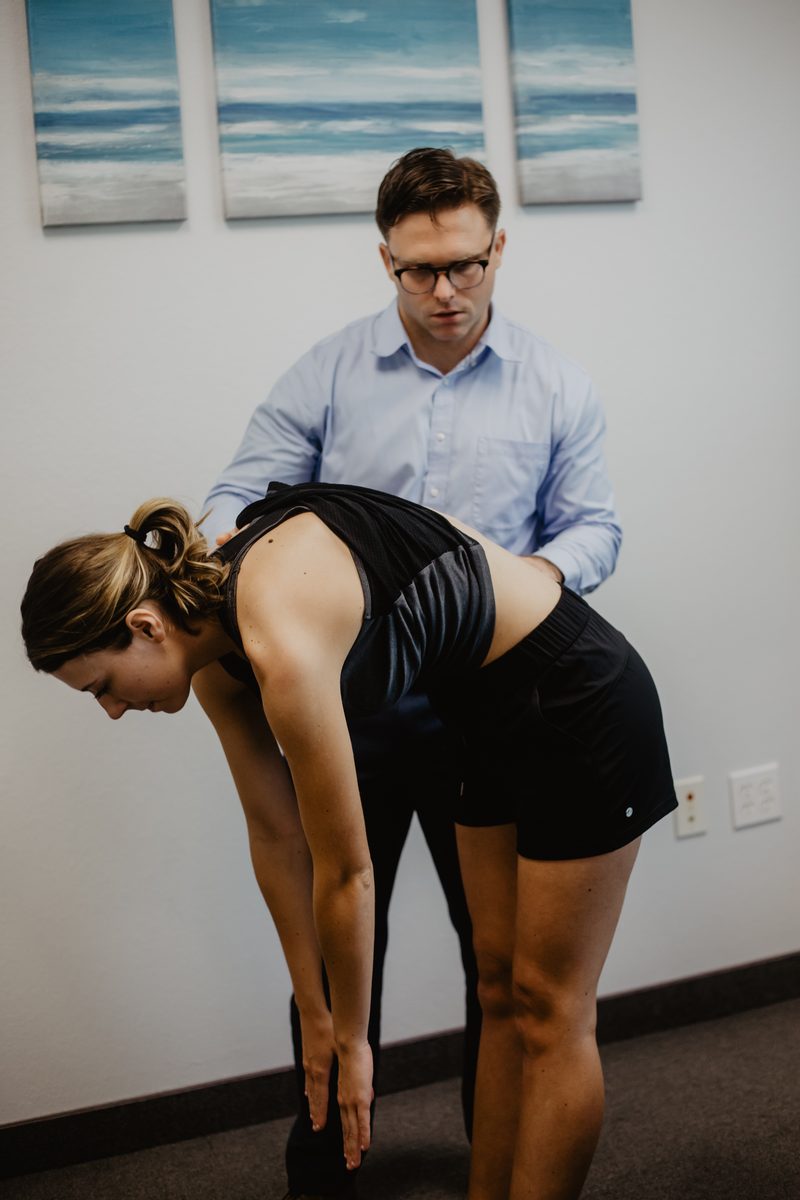
- Finding your directional preference (McKenzie Method): many discs feel better with certain movements, such as repeated gentle back extension. When it’s working, leg pain starts to “centralize,” moving up out of the leg and back toward the spine.
- Traction and positional relief: gentle traction can take pressure off the nerve root.
- Better sitting and lifting habits: lumbar support and a more upright posture help offload the disc.
- Hip mobility: freeing up the hips takes stress off the lower back.
- Spinal stabilization: strengthening the core and back muscles so the spine stays steady.
- Hands-on care: manual therapy and soft tissue work to ease pain and muscle guarding.
Every plan starts with a one-on-one evaluation with a Doctor of Physical Therapy. See how our herniated disc treatment works.
When to See a Doctor Right Away
Get medical care promptly if you have:
- Loss of bladder or bowel control, or numbness in the groin or inner thighs
- Leg or foot weakness that is getting worse
- Severe pain after a fall or accident
- Back pain with fever or unexplained weight loss
Frequently Asked Questions
Can a herniated disc heal on its own?
Many improve over a few weeks, especially with the right movements and activity. Physical therapy helps speed that up and lowers the chance of it coming back.
Should I rest in bed with a herniated disc?
Short rest can help in the first days, but long bed rest usually slows recovery. Gentle, guided movement is better for most people.
Do I need an MRI?
Not always. Many people with disc bulges on an MRI have no pain. Imaging is most useful when there are red flags or symptoms aren’t improving.
For more on the most common reasons backs hurt, read common causes of lower back pain.
Get Relief From Your Herniated Disc
Start with our Fixing the Cause & Not Just the Symptoms Assessment, or Inquire About an Appointment →
Call our office at (239) 223-0484 to schedule your appointment.
About the Author: Dr. Scott Gray


Get Dr. Gray's Best-Selling Book, Free
Why pain keeps coming back, and how The Gray Method™ helps you fix it for good.
Send Me the Free BookOur Most-Read Articles
- 1Three Conditions That Mimic Sciatica PainBack
- 2The Great Plantar Fasciitis Debate: Why Boots & Cortisone Rarely Fix ItFoot
- 3Common Causes of Lower Back Pain: Herniated DiscBack
- 4The 3 Most Common Symptoms of Knee Meniscal TearsKnee
- 5What Is Hip Bursitis?Hip
- 6Pelvic Pain Explained: When It's Not a UTI but Feels Like OnePelvic
What Do You Need Help With?
- 🩺Back, neck & joint pain→
- 💪Fitness for adults 50+→
- 💙Pelvic health→
- ⚡Sports performance→
- ⛳Golf performance→
Talk to a Doctor of Physical Therapy
One-on-one care that finds the cause of your pain. Fort Myers, Cape Coral & Estero.
Inquire About an Appointment Or call (239) 223-0484
