Spinal Stenosis: Symptoms, Causes & Non-Surgical Treatment

Does your lower back or legs start to ache after you’ve been standing or walking for a while, then feel better as soon as you sit down? That pattern is one of the classic signs of spinal stenosis, one of the most common causes of back and leg pain in adults over 50.
Spinal stenosis can often be treated without surgery. Here’s what it is, what causes it, the symptoms to watch for, and how physical therapy helps.
What Is Spinal Stenosis?
Stenosis means “narrowing.” Spinal stenosis happens when the spinal canal, or the openings where nerves exit the spine (the foramen), become narrow. That narrowing puts pressure on the spinal cord or nerve roots, which causes inflammation and pain.
It can happen in the neck, mid-back or lower back, but it’s most common in the lower back. Those nerves give your legs strength, sensation and balance, which is why stenosis often causes leg symptoms, not just back pain.
What Causes Spinal Stenosis?
Your Discs Have Shrunk
We all lose a little height as we age. The discs between your vertebrae dry out and lose height (degenerative disc disease), and the openings for the nerves get smaller. This is the most common cause.
Tightness and Weakness
The other pattern we see often: weak abdominal muscles combined with tight back muscles, which compresses the spine. People with this type tend to do especially well with treatment, because there’s a lot they can improve.
Other Causes
- Bone spurs from arthritis
- Thickening or buckling of a ligament inside the spinal canal (the ligamentum flavum)
- An injury or fracture
- Less common causes, such as Paget’s disease or tumors
- A naturally narrow spinal canal from birth, which often causes symptoms earlier, between about 30 and 50
Signs and Symptoms of Spinal Stenosis
- Pain that’s worse with standing and walking and better when you sit or lean forward (like on a shopping cart)
- Pain, numbness or tingling down the legs or into the feet
- Weakness in the legs
- Trouble walking or with balance
- Lower back pain
Many other problems can look like stenosis, including sciatica, neuropathy and more serious conditions, so a proper evaluation matters. See three conditions that mimic sciatica.
When to See a Doctor Right Away
Severe stenosis can affect nerve function. Get medical care promptly if you notice:
- Loss of bladder or bowel control
- Numbness in the groin or inner thighs
- Leg weakness that’s getting worse, or frequent falls
How Spinal Stenosis Is Treated
Treatment usually starts conservatively. Your doctor may suggest pain medication, injections or a brace for short-term relief. Surgery such as a laminectomy or fusion is generally reserved for severe cases, like significant trouble walking or bladder and bowel problems, and it carries its own risks and recovery time. Talk with your doctor about what it can and can’t do for you.
How Physical Therapy Helps
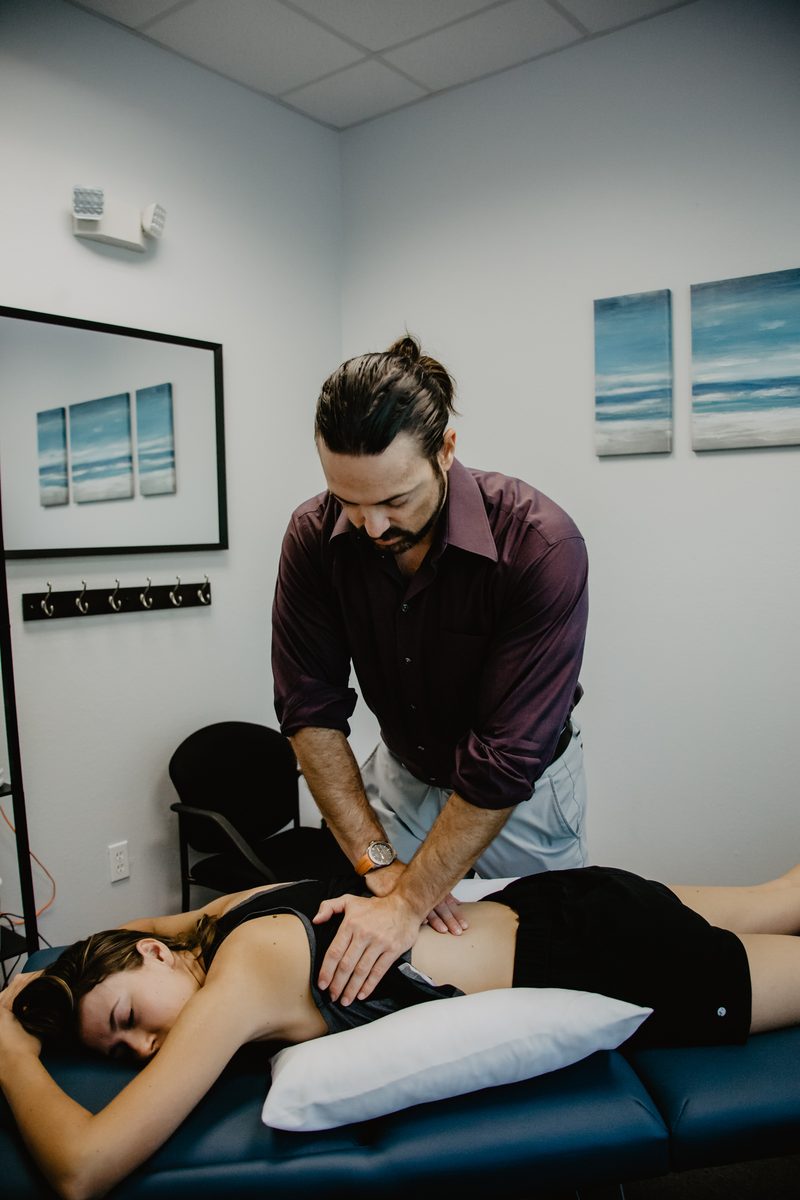
A Doctor of Physical Therapy who focuses on the spine can help many people with stenosis reduce their symptoms and avoid unnecessary surgery. Treatment focuses on:
- Opening up space for the nerves with gentle hands-on techniques and positions that relieve pressure
- Strengthening the muscles around the spine, core and pelvis
- Stretching the muscles that are compressing the spine
- Walking and balance work, so you can stay active and steady on your feet
- Education on posture, positions and activities that ease symptoms
With hands-on care and the right exercises, most patients do well over a few weeks of treatment. Learn more about our spinal stenosis treatment.
Tips You Can Try at Home
- Walk daily, starting with short, comfortable walks. Take breaks and sit or lean forward when symptoms build.
- Use heat or cold: cold for flare-ups, heat (or a warm shower) to loosen tight muscles.
- Manage your weight to reduce pressure on your spine.
- Lift with your legs, not your back, and use a supportive chair.
Frequently Asked Questions
Can spinal stenosis be treated without surgery?
Often, yes. Many people improve with physical therapy that focuses on strength, mobility and positions that take pressure off the nerves.
Why does stenosis feel better when I sit?
Sitting and bending forward open up the spaces where the nerves travel. Standing upright and walking tend to narrow them.
Is walking good for spinal stenosis?
Usually, yes, at a comfortable pace with breaks. A physical therapist can help you build up your walking tolerance safely.
For more on what causes back pain, read common causes of lower back pain, or see our approach to non-surgical treatment for chronic back pain.
Stay Active With Spinal Stenosis
Start with our Fixing the Cause & Not Just the Symptoms Assessment, or Inquire About an Appointment →
Call our office at (239) 223-0484 to schedule your appointment.
About the Author: Dr. Scott Gray


Get Dr. Gray's Best-Selling Book, Free
Why pain keeps coming back, and how The Gray Method™ helps you fix it for good.
Send Me the Free BookOur Most-Read Articles
- 1Three Conditions That Mimic Sciatica PainBack
- 2The Great Plantar Fasciitis Debate: Why Boots & Cortisone Rarely Fix ItFoot
- 3Common Causes of Lower Back Pain: Herniated DiscBack
- 4The 3 Most Common Symptoms of Knee Meniscal TearsKnee
- 5What Is Hip Bursitis?Hip
- 6Pelvic Pain Explained: When It's Not a UTI but Feels Like OnePelvic
What Do You Need Help With?
- 🩺Back, neck & joint pain→
- 💪Fitness for adults 50+→
- 💙Pelvic health→
- ⚡Sports performance→
- ⛳Golf performance→
Talk to a Doctor of Physical Therapy
One-on-one care that finds the cause of your pain. Fort Myers, Cape Coral & Estero.
Inquire About an Appointment Or call (239) 223-0484