Why Sports Injuries Happen: 7 Causes and How to Prevent Them

If you’re an athlete or weekend warrior dealing with a sports injury, it helps to know why it happened. Some injuries are pure bad luck. Many more are preventable, and that difference can decide whether you have a full season or one cut short by an injury that lingers for years.
Below are the seven most common reasons we see athletes get hurt at Back In Motion Physical Therapy & Performance, and what you can do about each one. They cover warm-ups, footwear, nutrition and rest, training plans, trauma, biomechanics, and strength training.
Sports Injury Cause #1: Not Warming Up Properly
A good warm-up raises muscle temperature, increases blood flow to the muscles you’re about to use, and activates your nervous system. It also gives your joints the stability and mobility they need, and it prepares connective tissue to handle the positions your sport demands. A good dynamic warm-up helps prevent injuries like muscle strains and ACL tears.
The two biggest mistakes we see are athletes who don’t warm up at all, and athletes who do static stretching instead of dynamic movement. Dynamic warm-ups use movements like skipping, lunging, and twisting. They increase mobility, switch on the nervous system, and rehearse the movements of your sport.
Long static stretches are better saved for after a workout or game. Before competition, they can lower power output and dull the nervous system’s ability to control and protect your joints. See the best warm-up for athletes for a routine that works.
Sports Injury Cause #2: Wrong Shoes or Missing Orthotics
The feet are the body’s foundation. When shoes or cleats are worn out or don’t fit your foot’s needs, the rest of the body compensates. That can lead to foot pain, knee pain, or back pain, and it makes your body work harder in ways that set you up for injury.
Watch for two foot types:
- Pronated (flat) feet: the arches collapse, which lets the knees and hips cave in and makes it harder for the hip and core muscles to do their job. That is a problem when you’re running, cutting, jumping, and changing direction.
- Supinated (high-arched) feet: the foot can’t absorb shock well. You can often hear these athletes coming, because their feet slap the ground. Those forces travel up into the knees, hips, and back.
If you have flat feet or high arches, make sure your shoes or cleats suit your foot type. You may also benefit from foot orthotics.
Sports Injury Cause #3: Poor Nutrition and Not Enough Rest
Training and competition demand a lot of energy, and your body needs good fats, good protein, and quality carbohydrates to perform and recover. A steady diet of fast food doesn’t deliver the vitamins and minerals athletes need to recover between sessions. Underfueled athletes are more likely to become dehydrated or run low on stored energy. Over time, poor nutrition can lead to problems such as stress fractures or low iron.
Keep it simple: drink plenty of water, eat real, minimally processed food, and limit added sugar and artificial sweeteners. Shopping mostly around the outside of the grocery store is an easy way to start.
Rest matters just as much. Many athletes stay up late on their phones and never keep a consistent bedtime. Go to bed at the same time each night, keep your room cool and dark, and shut down screens before bed. A tired athlete is more likely to get hurt. See our best recovery strategies for athletes.
Sports Injury Cause #4: No Structured Training Plan (Too Much, Too Soon)
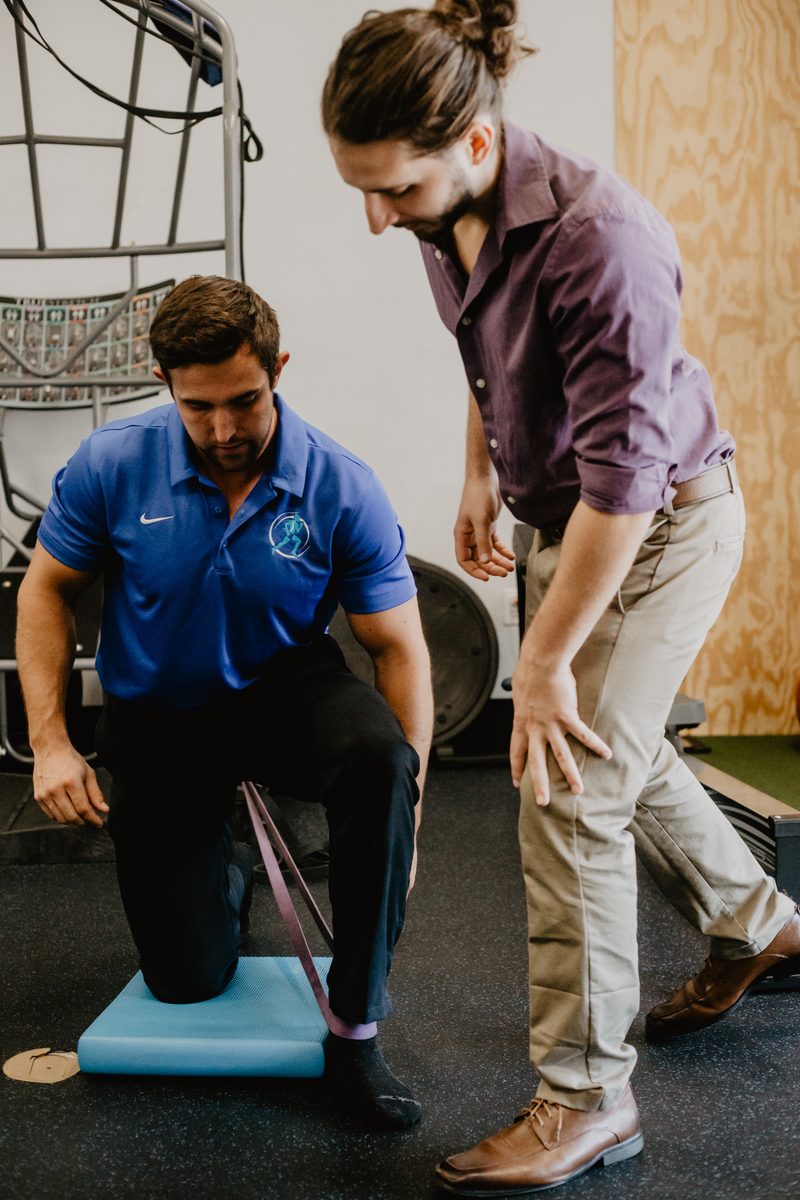
A structured training program raises fitness, strength, and conditioning step by step. When athletes do too much too soon, such as a sudden jump in running distance, weight lifted, or practice time, injury risk spikes. Even small weaknesses or imbalances become a problem under a sudden increase in load. The best program is designed by a qualified professional and accounts for the season, the athlete’s goals, recovery, and any corrective work the athlete needs.
Coaches, athletes, and parents should all keep an eye on how much the athlete is practicing and training. There is a fine line between building fitness and breaking down.
Signs of Overtraining
Overtraining usually comes from training intensity climbing too fast and not leaving enough time to recover. Watch for:
- Fatigue and loss of concentration
- Trouble sleeping
- A higher resting heart rate than normal
- Irritability, and strength, endurance, or performance going backward
To fix it, temporarily reduce training intensity and duration, vary activities to condition the whole body, and build real recovery days into the week.
Overuse Injuries
Repeating the same motion over and over, without enough recovery, causes overuse injuries. Pain usually builds gradually and gets worse during and after activity. Common examples include:
- Jumper’s knee: pain where the kneecap tendon attaches, common in volleyball and basketball
- Runner’s knee: pain around the kneecap with running, walking, cycling, or stairs
- IT band syndrome: pain on the outside of the knee in runners and cyclists
- Little League elbow: stress on the growth plate of the elbow in young throwers
- Tennis and golfer’s elbow: pain on the outside or inside of the elbow from repetitive gripping and swinging
Learn more in the best ways to avoid overuse injuries.
Sports Injury Cause #5: Trauma
Torn ligaments, torn tendons, and broken bones are often the result of contact or collisions in sports like football, rugby, and basketball, and much of that is outside your control. You can still lower the risk. Stronger muscles, tendons, ligaments, and bones are harder to injure, and athletes who eat and rest well are more resilient when contact happens. If you do get hurt, start with our guide to the most common sports injuries.
Sports Injury Cause #6: Biomechanical Problems
Biomechanical problems mean the body is moving inefficiently, and something else has to pick up the slack:
- Golfers without enough hip or upper back rotation often develop shoulder pain or lower back pain, because they twist through the spine instead of rotating through the hips.
- Pitchers who lack hip motion when they push off often make up for it with the arm, which overloads the elbow and shoulder. That is one road to serious elbow injuries, including those that end in Tommy John surgery.
- Runners with limited hip, ankle, or upper back mobility compensate in ways that can lead to knee pain or plantar fasciitis.
A movement assessment finds these weak links before they turn into injuries.
Sports Injury Cause #7: Lack of Strength Training
Many sports injuries can be prevented with proper strength training. It strengthens your connective tissue, fascia, muscles, and bones, which lowers your chance of injury, even in endurance sports. It also improves performance by helping your nervous system produce more force, so you get stronger and faster.
You don’t need a fancy routine. You need a structured program built on the basics, such as push-ups, pull-ups, squats, deadlifts, step-ups, and presses, progressed over time.
Prevent the Next Injury, or Fix the Current One
Address these seven areas and your chances of staying healthy go up. If you’re already hurt, our sports physical therapy team at our Fort Myers, Cape Coral, and Estero clinics finds why it happened with The Gray Methodâ„¢ and builds a plan to get you back. For a prevention plan built around how you move, read injury prevention starts with better movement.
Start with our Fixing the Cause & Not Just the Symptoms Assessment, or Inquire About an Appointment →
Call our office at (239) 223-0484 to schedule your appointment.
About the Author: Dr. Scott Gray


Get Dr. Gray's Best-Selling Book, Free
Why pain keeps coming back, and how The Gray Method™ helps you fix it for good.
Send Me the Free BookOur Most-Read Articles
- 1Three Conditions That Mimic Sciatica PainBack
- 2The Great Plantar Fasciitis Debate: Why Boots & Cortisone Rarely Fix ItFoot
- 3Common Causes of Lower Back Pain: Herniated DiscBack
- 4The 3 Most Common Symptoms of Knee Meniscal TearsKnee
- 5What Is Hip Bursitis?Hip
- 6Pelvic Pain Explained: When It's Not a UTI but Feels Like OnePelvic
What Do You Need Help With?
- 🩺Back, neck & joint pain→
- 💪Fitness for adults 50+→
- 💙Pelvic health→
- ⚡Sports performance→
- ⛳Golf performance→
Talk to a Doctor of Physical Therapy
One-on-one care that finds the cause of your pain. Fort Myers, Cape Coral & Estero.
Inquire About an Appointment Or call (239) 223-0484