What Women Should Really Be Asking About Urinary Incontinence Treatment

Most women struggling with urinary incontinence ask the wrong questions. They ask:
- “Which pad should I buy?”
- “Is surgery my only option?”
- “Aren’t bladder leaks just normal after kids or with age?”
And while these are understandable, they aren’t the right questions. The truth is, urinary incontinence is common, but it’s not normal. It’s also very treatable, often without surgery, medications, or a lifetime of pads.
Here are the 12 questions you should be asking about urinary incontinence treatment: questions that open the door to real healing, long-term solutions, and getting your confidence back. They’re the conversations our pelvic health team wishes every woman had with her provider.
Question #1: Why Am I Leaking in the First Place?

Most women assume bladder leaks are caused by a “weak bladder.” That’s what culture, commercials, and sometimes even doctors tell you. But the real reason isn’t your bladder. It’s your pelvic floor.
Your pelvic floor is a group of muscles at the base of your pelvis. They support your bladder, uterus, and rectum. If these muscles are:
- Weak (can’t hold back urine)
- Overactive (too tight to function correctly)
- Poorly coordinated (don’t contract and relax at the right times)
…you can end up leaking.
This is why pads and surgery don’t always solve the problem: they don’t fix muscle function. Asking “why am I leaking?” shifts the conversation from covering up symptoms to fixing the cause. It’s also why medication alone often doesn’t stop the leaks.
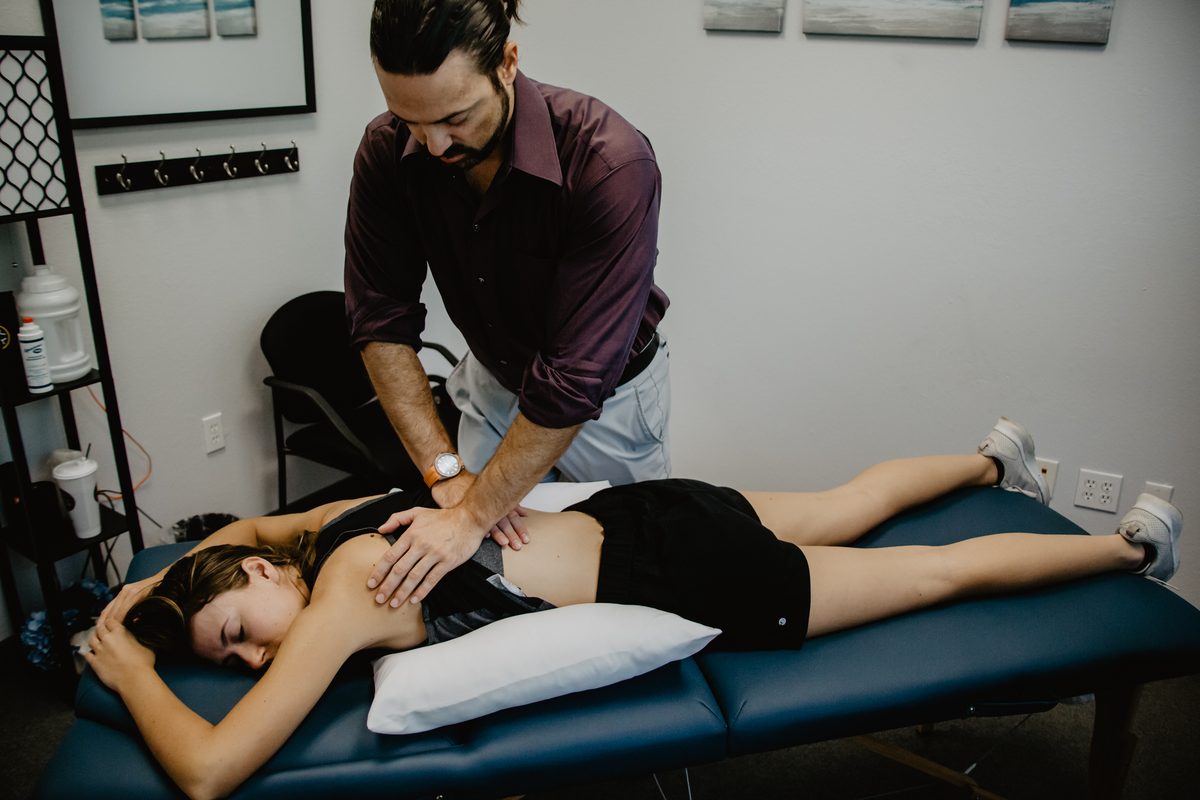
Question #2: Is There a Safe, Natural Way to Fix This?

Yes, pelvic floor physical therapy.
Pelvic floor rehab is widely recommended as a first-line treatment for many types of incontinence, and for many women it means they can avoid surgery.
Through therapy, you’ll learn how to:
- Identify and properly engage your pelvic floor
- Release tension if your muscles are too tight
- Improve core coordination
- Train your bladder to reduce urgency
- Build strength and endurance in the right muscles
This isn’t just about doing “Kegels.” In fact, Kegels alone may make things worse if your muscles are already too tight. A skilled women’s health therapist customizes treatment based on your body’s unique needs.
Question #3: What Type of Incontinence Do I Have?

Not all bladder leaks are the same, and that matters for treatment.
The most common types are:
- Stress incontinence: Leaks when you laugh, sneeze, cough, run, or lift.
- Urge incontinence: Leaks when you suddenly feel a strong urge to go, even if your bladder isn’t full.
- Mixed incontinence: A combination of both stress and urge.
- Functional incontinence: Pain, stiffness, balance or mobility problems keep you from reaching the bathroom in time.
If you don’t know which type you have, you may waste time (and money) on the wrong treatment. For example, doing endless Kegels for urge incontinence often won’t help because the issue is more about bladder signaling than muscle weakness.
A proper evaluation can tell you which type you have and what to do about it. Before your visit, jot down when leaks happen, what you were doing and how urgent the feeling was. Your therapist will ask, and those notes make the evaluation more useful.
Question #4: What’s Happening in the Rest of My Body That Might Be Contributing?

Here’s something most women never hear: incontinence isn’t always just about the pelvic floor.
Your breathing patterns, core stability, hip strength, and even posture affect bladder control. If your core and pelvic floor aren’t working together, pressure builds and causes leaks.
For example:
- Weak glutes can force your pelvic floor to take on too much work.
- Poor posture can place constant pressure on your bladder.
- Abdominal gripping or breath-holding can strain pelvic floor muscles.
This is why women’s health physical therapy looks at the whole body, not just one muscle group.
Question #5: Can This Really Improve, Even If I’ve Had Kids or I’m in Menopause?

Yes.
Many women think they’ve “missed their chance” if it’s been years since childbirth, or if they’re postmenopausal. But here’s the truth: your pelvic floor muscles can respond to training at any age.
We work with new moms just weeks postpartum, and with grandmothers in their 70s who thought they were stuck with pads forever. Age alone doesn’t rule out progress. The body can heal and adapt when given the right treatment.
Question #6: What Does Pelvic Floor Therapy Actually Involve?

This is a big one, because many women are hesitant simply because they don’t know what to expect.
Here’s what typically happens:
- Comprehensive Evaluation, We review your medical history, pregnancies, and symptoms.
- Movement Assessment, We look at how you breathe, use your core, and move in daily life.
- Pelvic Floor Exam (if comfortable), This may involve an internal exam (similar to a gynecological exam, but less invasive) to assess your pelvic floor muscles. You’re always in control of what happens.
- Personalized Plan, We teach you exercises, strategies, and lifestyle changes to regain control.
You’re never rushed, never judged, and never pushed into anything you’re not ready for.
Question #7: How Long Will It Take to See Results?

Many women start noticing changes within a few weeks. The timeline depends on:
- How long you’ve had symptoms
- The type of incontinence
- Consistency with your exercises
Bigger changes usually take several weeks of consistent work. And because you’re retraining your body rather than masking symptoms, the results tend to last.
Question #8: What Else Besides Exercise Can Help?

Great question, because treatment isn’t one-size-fits-all.
Other helpful strategies may include:
- Bladder training: Learning how to delay urination and reset bladder signals.
- Lifestyle changes: Adjusting fluid intake, caffeine, and bowel habits.
- Breathing techniques: Restoring core and pelvic floor coordination.
- Manual therapy: Hands-on release of tight pelvic muscles or scar tissue.
For some women, we even work on hip and spine mobility, since those areas directly affect the pelvic floor.
Question #9: What Happens If I Ignore This Problem?

This is the question that most women avoid, but it’s critical.
Ignoring incontinence often makes it worse. The pelvic floor muscles weaken further, urgency gets stronger, and leaks become more frequent. Some women who wait end up relying on pads for years or considering surgery.
It’s not just a bladder issue. It’s a quality-of-life issue. Incontinence affects confidence, intimacy, sleep, travel, and social activities. The earlier you address it, the faster and easier it is to treat.
Question #10: What’s Possible If I Get Treatment?

Imagine this:
- Laughing with friends without fear.
- Exercising without pads.
- Sleeping through the night.
- Traveling without planning every bathroom stop.
- Feeling confident and in control of your body again.
These aren’t unrealistic goals. We’ve seen many women go from feeling embarrassed and limited to living fully again because they asked the right questions and got the right treatment.
Question #11: Why Didn’t My Doctor Tell Me This?

Pelvic floor therapy isn’t always brought up, even though it’s widely recommended as a first-line option. Common reasons include:
- Short appointments: there isn’t always time to dig into pelvic floor function
- A focus on pills or surgery: the options most people have heard of
- An old myth: that leaks are “just part of aging”
That’s why it’s so important to advocate for yourself. Florida allows direct access to physical therapy, so in most cases you can contact a pelvic health physical therapist directly, without a referral.
Question #12: Where Do I Start?

The best first step is a pelvic floor assessment with a trained women’s health therapist. During this visit, you’ll:
- Finally understand what’s causing your leaks
- Get clarity on whether your muscles are weak, tight, or uncoordinated
- Learn exactly what to do (and what to avoid) to fix it
- Leave with a personalized plan
The hardest part is taking that first step. Our 5 simple tips to protect your bladder are a good place to start in the meantime.
When to See Your Doctor Right Away
Leaks are common, but some symptoms need medical attention first:
- Blood in your urine: or urine that is dark, cloudy or foul-smelling
- Burning or fever: pain when you urinate, chills or other signs of infection
- Trouble emptying: you can’t empty your bladder, or your stream is getting weaker
- Sudden loss of control: of bladder or bowel, or numbness in the groin, saddle area or legs
Final Thoughts
Urinary incontinence is common, but it’s not your destiny. Pads, pills, and surgery are not your only options. With the right questions, and the right treatment, you can get your life back.
The next time you find yourself asking “Which pad should I buy?” or “Am I just stuck with this?”, remember to shift your focus. Ask the questions above. Demand answers that fix the cause, not just the symptoms.
And you don’t have to walk this road alone. See how pelvic floor physical therapy can change your life.
About Dr. Fernanda Paulsen
Dr. Fernanda Paulsen is a women’s health physical therapist who specializes in helping women overcome urinary incontinence, pelvic pain, and postpartum issues without surgery or medications. Her mission is to empower women to reclaim their strength, confidence, and quality of life through personalized, compassionate care.
Ask the Right Questions, Get the Right Treatment
You deserve answers that fix the cause, not just the symptoms. Our urinary incontinence treatment in Fort Myers starts with The Gray Method™, one-on-one with a Doctor of Physical Therapy at our clinics in Fort Myers, Cape Coral and Estero.
Start with our Fixing the Cause & Not Just the Symptoms Assessment, or Inquire About an Appointment →
Call our office at (239) 223-0484 to schedule your appointment.
About the Author: Ashley Gray


Get Dr. Gray's Best-Selling Book, Free
Why pain keeps coming back, and how The Gray Method™ helps you fix it for good.
Send Me the Free BookOur Most-Read Articles
- 1Three Conditions That Mimic Sciatica PainBack
- 2The Great Plantar Fasciitis Debate: Why Boots & Cortisone Rarely Fix ItFoot
- 3Common Causes of Lower Back Pain: Herniated DiscBack
- 4The 3 Most Common Symptoms of Knee Meniscal TearsKnee
- 5What Is Hip Bursitis?Hip
- 6Pelvic Pain Explained: When It's Not a UTI but Feels Like OnePelvic
What Do You Need Help With?
- 🩺Back, neck & joint pain→
- 💪Fitness for adults 50+→
- 💙Pelvic health→
- ⚡Sports performance→
- ⛳Golf performance→
Talk to a Doctor of Physical Therapy
One-on-one care that finds the cause of your pain. Fort Myers, Cape Coral & Estero.
Inquire About an Appointment Or call (239) 223-0484