
Speed & Agility Training in Fort Myers, Cape Coral & Estero, FL
Get Faster, Change Direction Sharper, and Move With More Confidence, Without Guesswork
- Built around your athlete, not a group template
- Youth programs that respect growing bodies
- Trainer-led. PT-designed. Free to start.
 4.9/5 from 180+ reviews from your Fort Myers neighbors
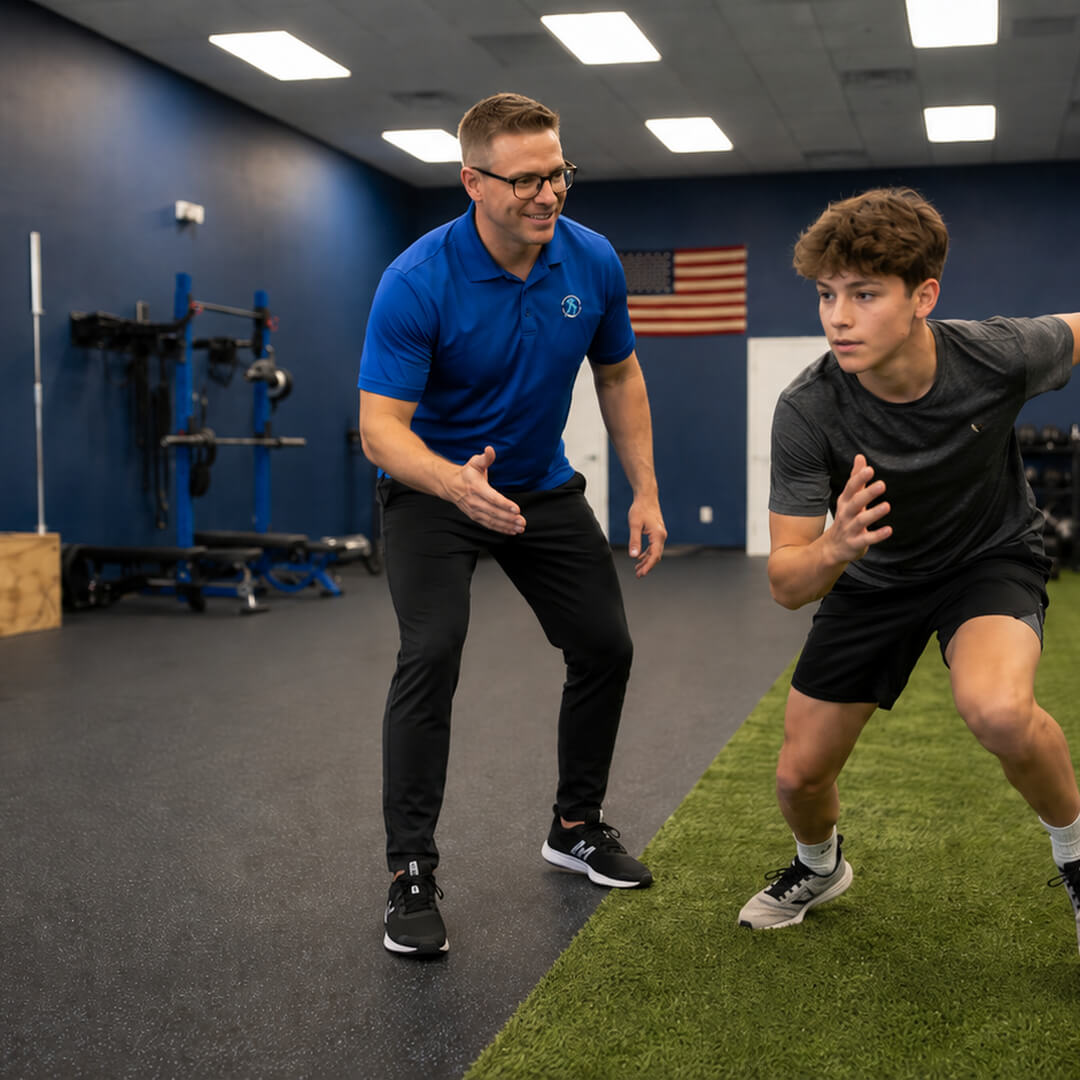
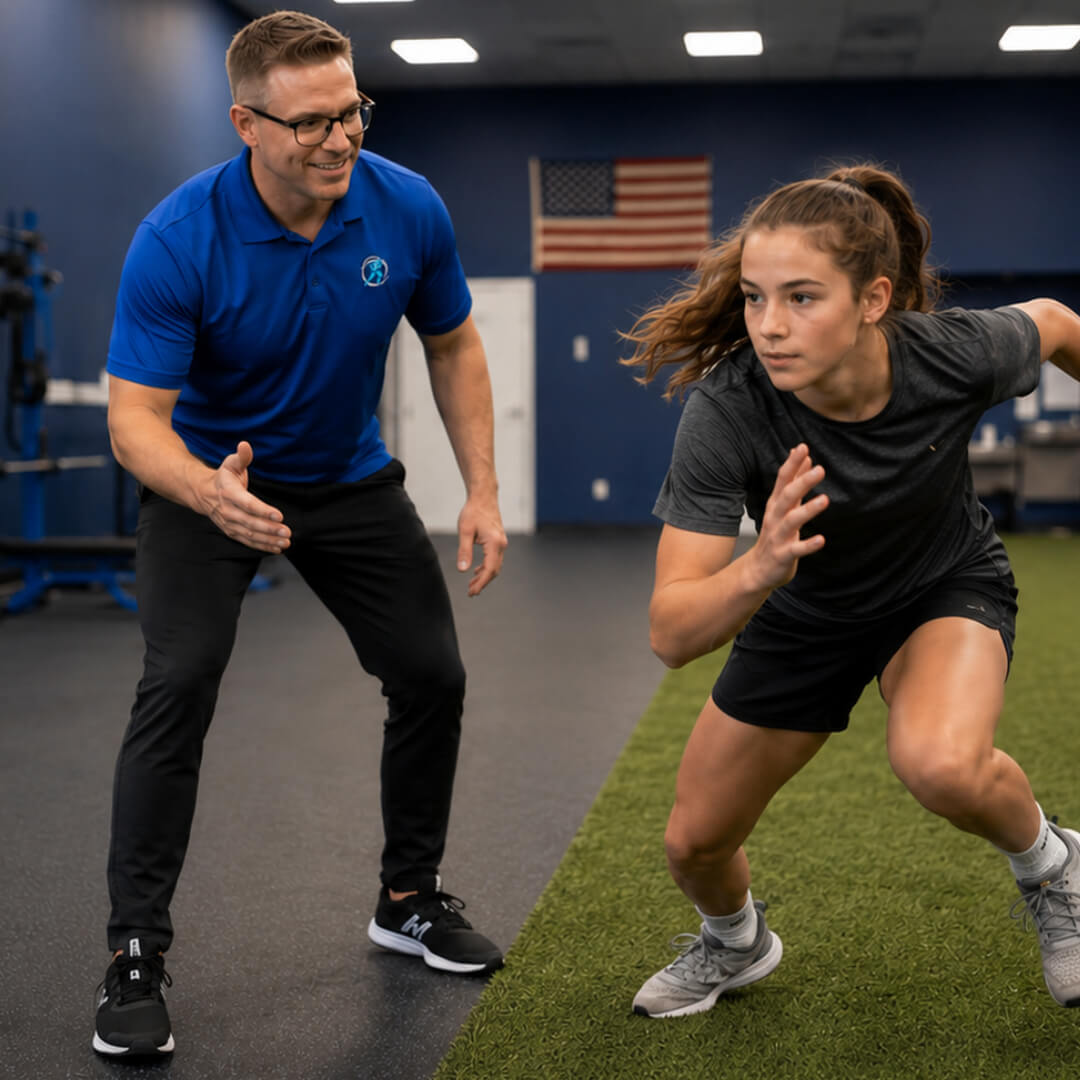
Speed Isn't Just About Running More. Here's What's Actually Holding Most Athletes Back.
Most athletes who come to us aren't lazy. They're already putting in the work: extra reps, offseason camps, private lessons, a speed program from Instagram. And they're still getting beat to the ball.
Speed and agility aren't just conditioning. They come from how well an athlete produces force, absorbs it, and redirects it. If one link is weak or compensating, extra sprinting won't fix it. That's why we built our sports performance training program at Back In Motion.
Does this sound like your athlete?
- Fast in a straight line, slow to change direction
- The first step is the problem: acceleration feels heavy and slow
- They've plateaued: times stopped improving months ago
- Something always tightens up: hamstring, groin, knee, or shins
- Nobody's told them why, just handed them drills
"He was doing speed camps every summer and his 40 time didn't move. Nobody ever looked at how he was actually moving." Parent of a high school athlete
Two Athletes Can Post the Same Time and Need Opposite Fixes
One is losing time because they can't decelerate, so their body slows them down before every cut as a protective reflex. Another has plenty of power but leaks it through a hip or ankle that won't stabilize. Same symptom. Opposite fix. Running both through the same cone drill is why so many families spend a season on speed training and see nothing on the field.
We take a different route. Every athlete starts with an assessment of force production, deceleration, single-leg control, and mobility, so the program targets the real limiter. Then our coaches build it into progressive weekly sessions and track it, so improvement is something you can see on paper.
"For the first time she understood what she was working on and why. That's what made her stick with it." Parent of a club soccer athlete
We train athletes at our Fort Myers, Cape Coral, Estero, and Verandah Club locations, each set up for sprint mechanics, change-of-direction work, and strength development.
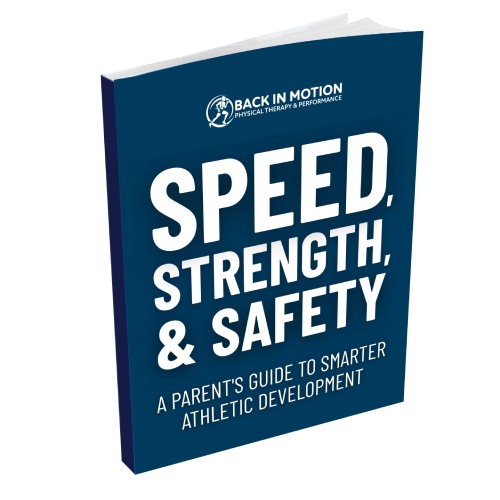
Speed, Strength & Safety: A Parent's Guide to Smarter Athletic Development
Why athletes stop getting faster, how to tell what's holding yours back, and how to build speed and strength safely. No cost, no obligation.
Here's the Good News: Speed Is Trainable, When You Train the Right Thing
Athletes who've been stuck for a year often see meaningful change within a single training block once the real limiter is addressed. We don't hand your athlete a drill list. We find out what's slowing them down first.
A movement-based starting point
Every athlete begins with an assessment of acceleration, deceleration, single-leg stability, and mobility, so the program has a target.
Sprint mechanics coaching
Posture, shin angle, arm action, and ground contact. Technique is the fastest-returning variable in most young athletes.
Change of direction & reactive agility
From planned cuts to reactive, sport-realistic decisions, because games aren't run through cones.
Strength that transfers
Force production and absorption built to support speed, not compete with it.
Progressive programming with real tracking
Sessions build week to week, and we re-test, so progress is measured, not assumed.
Trainer-led. PT-designed.
Coached by our performance staff, using a framework built by our physical therapy team.
Hear From Our Athletes and Their Families
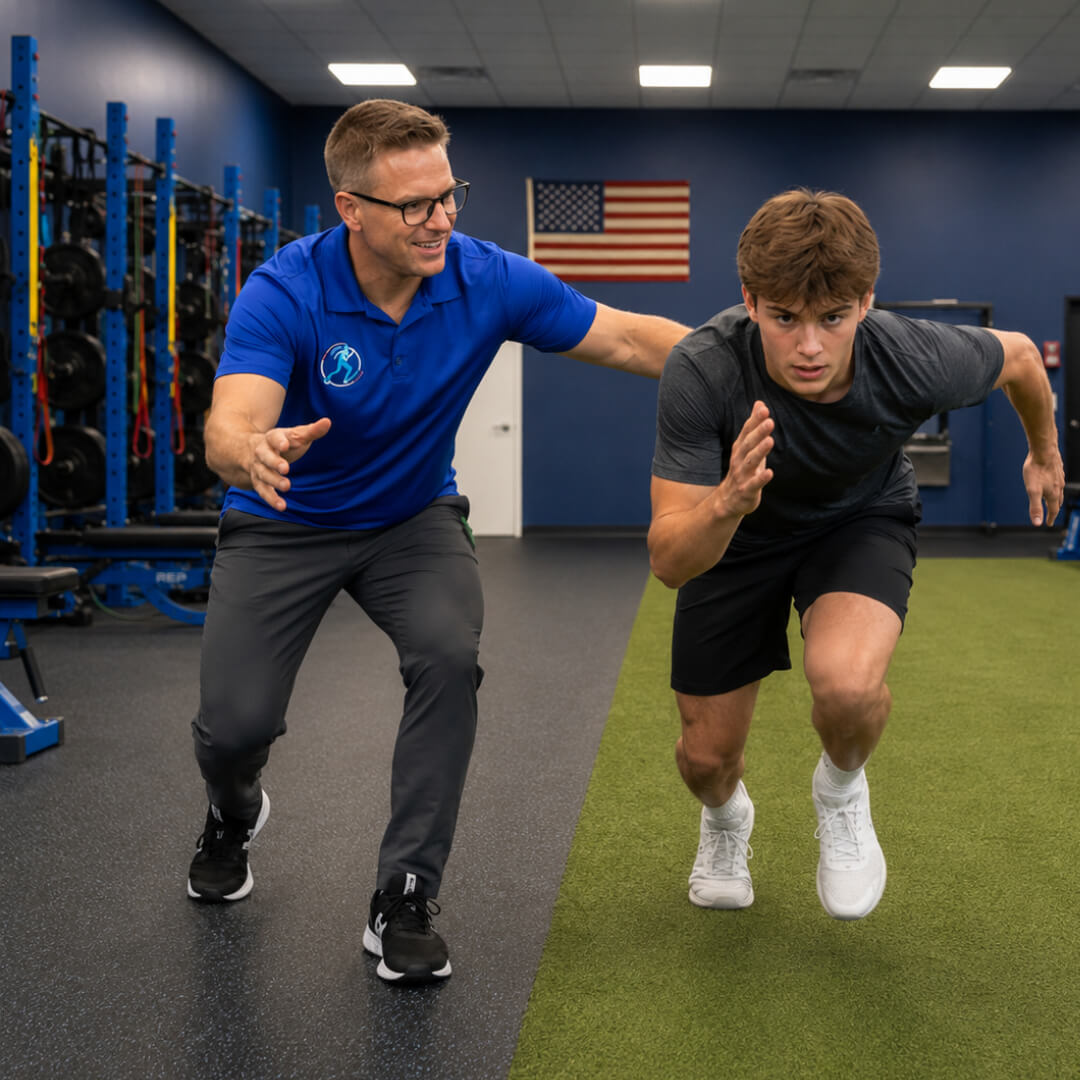
Why Choose Back In Motion for Speed & Agility Training?
Getting Started Is Simple
 Step 1
Request Your Free Athlete Assessment
Tell us about your athlete, their sport, and what you'd like to improve. Takes about 60 seconds.
 Step 2
Talk to Our Team
A short call to understand the goal, the season timeline, and whether we're the right fit.
 Step 3
Start Training With a Plan
Your athlete is matched to the right program and schedule, with a clear target to work toward.
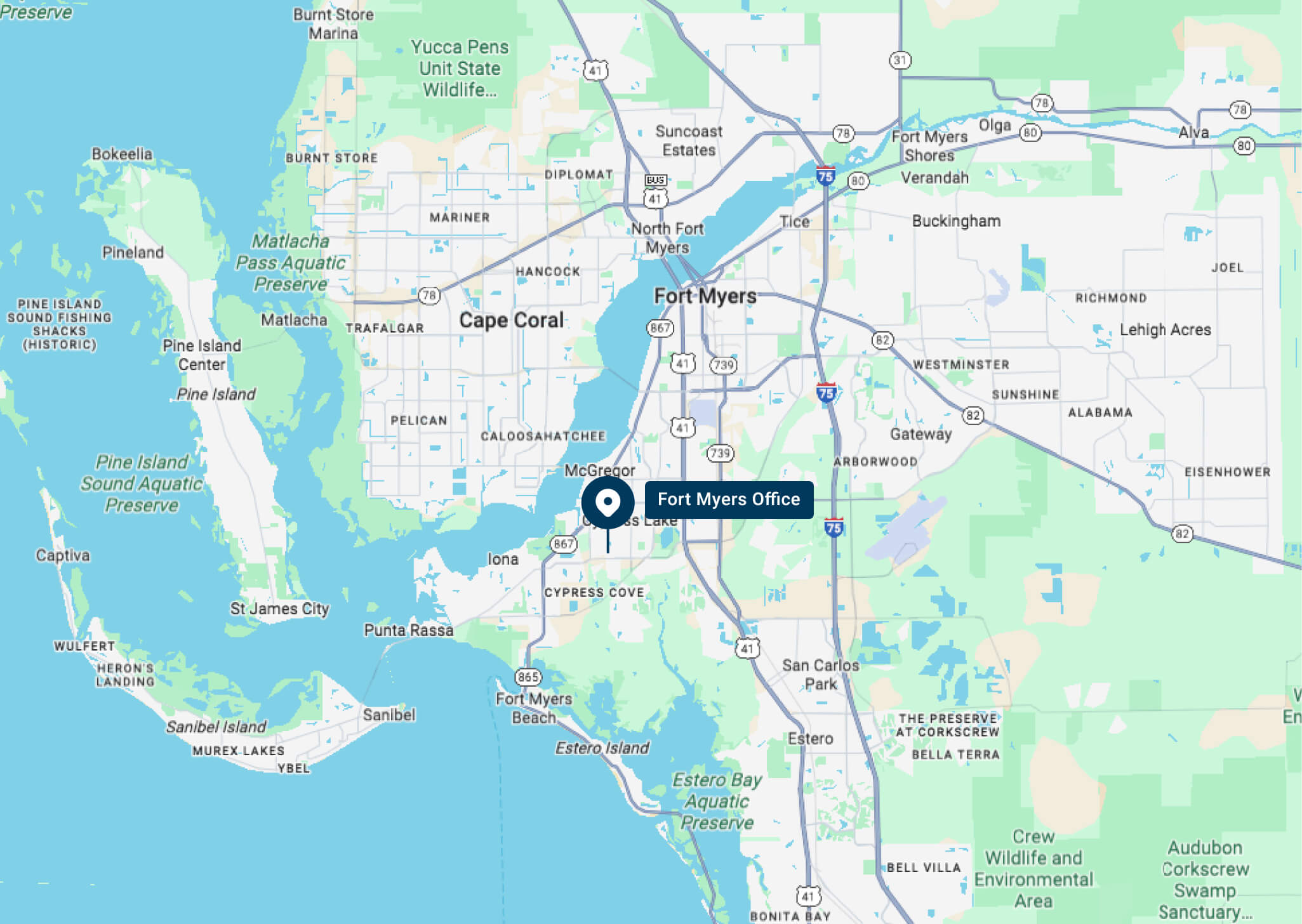
Conveniently Located in Fort Myers
Our facility is equipped for sprint work, change-of-direction training, and strength development in one space.
Fort Myers, FL 33908
Fri: 7AM–5PM
Sat: 8AM–12PM
Speed & Agility Training: Common Questions
What age should an athlete start speed and agility training?
Most athletes are ready around age 9 or 10, though what "training" means changes with age. Younger athletes focus on coordination, body control, and sprint mechanics. Older athletes move into heavier strength work, reactive agility, and sport-specific demands. We scale to the athlete, not the birthday.
How long before we see improvement?
It depends on what's limiting the athlete. Technique issues like a poor first step often improve quickly. Strength and force-absorption limits take longer because you're building tissue capacity. We re-test so you're looking at data, and most families training consistently see change within the first block.
Is this just conditioning or running drills?
No. Conditioning improves how long an athlete can work. Speed training improves how much force they put into the ground and how well they redirect it. Sessions cover sprint mechanics, acceleration, deceleration, change of direction, reactive agility, and supporting strength work.
Who coaches the sessions?
Our performance coaching staff runs every session, using a training framework and movement standards designed by our physical therapy team. That's what we mean by trainer-led, PT-designed.
My athlete has a nagging injury. Can they still train?
Bring it up at the assessment. If something is actively painful or unresolved, the right first step may be physical therapy, and we'll tell you plainly. We have both under one roof, so the handoff is easy. We won't load an athlete on top of an unresolved problem.
Do you work with athletes already training with a team or club?
Yes, most of our athletes are. We program around practice, lifting, and competition so you're adding training intelligently, not stacking fatigue on a full season.
What sports do you work with?
Any sport where getting to a spot faster matters: baseball, softball, soccer, football, basketball, lacrosse, volleyball, track, tennis, and more.
Do you take insurance for performance training?
No. Speed and agility training is a performance service, not a medical one, so it isn't billed to insurance. Pricing is transparent, and we'll go over it before you commit to anything.
How much does it cost?
It depends on session frequency and program length. Request pricing and availability and we'll send you the specifics, or we'll walk you through options on your call.
What happens at the Free Athlete Assessment?
We look at how your athlete accelerates, decelerates and cuts, single-leg control, and any mobility restrictions. You leave knowing what's limiting their speed and what fixing it would involve. It's free, with no obligation.
Ready to See What's Actually Slowing Your Athlete Down?
Start with a Free Athlete Assessment. No cost, no obligation, no pressure. You'll leave knowing what's limiting your athlete's speed, whether you train with us or not.
Speed, Strength & Safety: A Parent's Guide to Smarter Athletic Development
Why athletes stop getting faster, how to tell what's holding yours back, and how to build speed and strength safely. No cost, no obligation.

 Call (239) 788-0838